
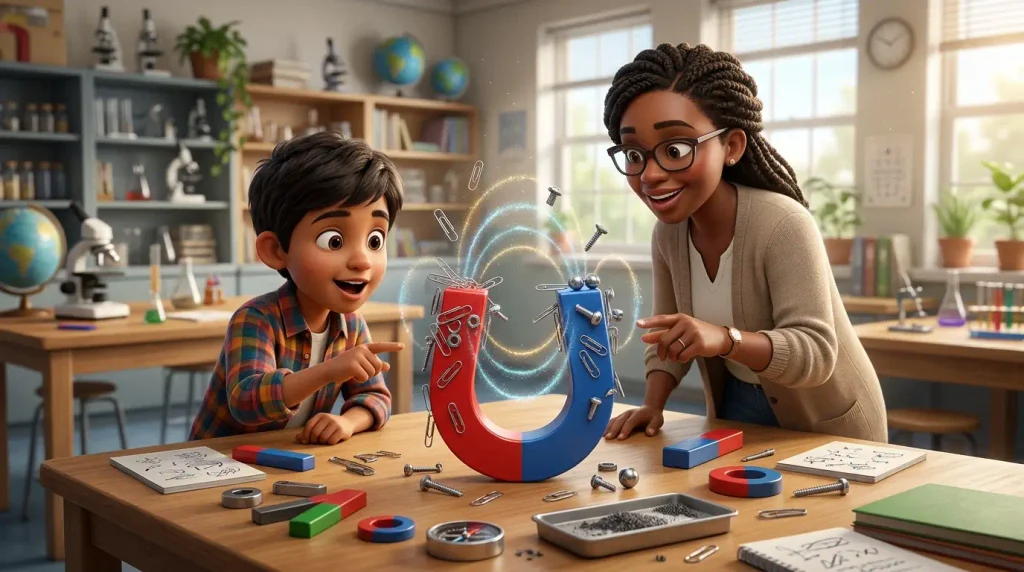
Exploring fun facts magnets helps us understand how invisible force fields shape our daily lives and modern technology. Magnets work because moving electric charges align inside materials, creating magnetic poles that pull or push iron objects.
Learning fun facts magnets explains everything from basic kitchen fridge stickers to high-speed levitating trains across major global cities. These magnetic principles govern naturally occurring minerals, animal navigation routes, medical imaging scanners, and planetary protection shields against harmful solar radiation.
Uncovering fun facts magnets shows how subatomic particle spins generate energy forces without needing any visible physical contact points. Studying magnetic properties gives students, inventors, and curious minds a clear window into how natural physics powers modern human innovation continuously.
Understanding fun facts magnets highlights how simple magnetic metals continue revolutionizing space exploration, clean energy grids, and digital communication tools worldwide. Discovering these scientific phenomena turns basic physics concepts into exciting real-world insights for readers of all ages.
Have you ever held two refrigerator magnets near each other and felt that mysterious invisible push or pull between your fingertips?
When you start exploring fun facts magnets reveal across science and everyday life, you discover a world powered by silent energy forces operating behind the scenes.
In this guide, we will examine fun facts magnets bring to modern technology, natural space phenomena, animal survival skills, and advanced medical equipment.
What Is a Magnet and How Does Magnetic Force Work?

At its most basic level, a magnet is any object that produces an invisible area of magnetic force called a magnetic field. This field attracts certain metals like iron, nickel, and cobalt while ignoring non-magnetic materials like wood, glass, or plastic.
You cannot see a magnetic field with your bare eyes, but you can feel its force working across open spaces. Every magnet has two distinct ends known as the north pole and the south pole.
The Law of Magnetic Attraction and Repulsion
Understanding magnetic behavior becomes very easy once you remember one fundamental rule of physics. Opposite magnetic poles always attract each other, while matching magnetic poles always push each other away.
If you bring the north pole of one magnet near the south pole of another, they snap together tightly. However, if you push two north poles together, they resist and slide sideways to avoid touching.
What Happens Inside a Magnetic Material?
Inside every piece of metal, tiny microscopic regions called magnetic domains contain spinning electrical charges. In ordinary iron nails, these domains point in all different directions, canceling out their magnetic potential completely.
When a material becomes magnetized, millions of tiny domains line up in the same direction. This unified movement turns a simple piece of metal into a permanent magnet with strong north and south poles.
Amazing Fun Facts: Magnets Show Up in Everyday Life
We interact with magnetic forces dozens of times every day without even realizing it. Here are some of the most surprising fun facts magnets demonstrate in consumer electronics, homes, and tools.
Refrigerator Magnets Are Built in Secret Stripes
If you slide a standard flexible fridge magnet along your metal refrigerator door, it sticks easily. However, if you try rubbing the printed side against another fridge magnet, you will feel a strange bumpy resistance.
Manufacturers make these flat magnets by layering micro-stripes of alternating north and south poles side by side. This special alignment concentrates all magnetic strength onto one single face while leaving the decorative front side unmagnetized.
Your Smartphone Contains Dozens of Tiny Magnets
Modern smartphones rely heavily on miniature permanent magnets made from rare earth elements like neodymium. These micro-magnets perform several crucial tasks inside your pocket device continuously.
- Speakers and Microphones: Tiny magnets vibrate delicate paper cones to create clear sound waves for phone calls and music playback.
- Camera Stabilization: Small magnetic coils move camera lenses rapidly to neutralize hand shaking and keep photos sharp.
- Haptic Feedback Motors: Magnetic actuators spin tiny internal weights to create tactile vibrations when you type messages.
Credit Cards Store Data on Magnetic Strips
The dark horizontal stripe on the back of older credit cards consists of millions of tiny iron-based magnetic particles embedded in plastic. A card reader machine decodes your account information by reading the specific pattern of magnetic charges stored in those particles.
Exposing your card to strong external magnets can scramble these tiny particles, corrupting the stored data and rendering the card unreadable. This process is commonly known as demagnetizing or demuxing a card.
How Planet Earth Functions as a Giant Magnet
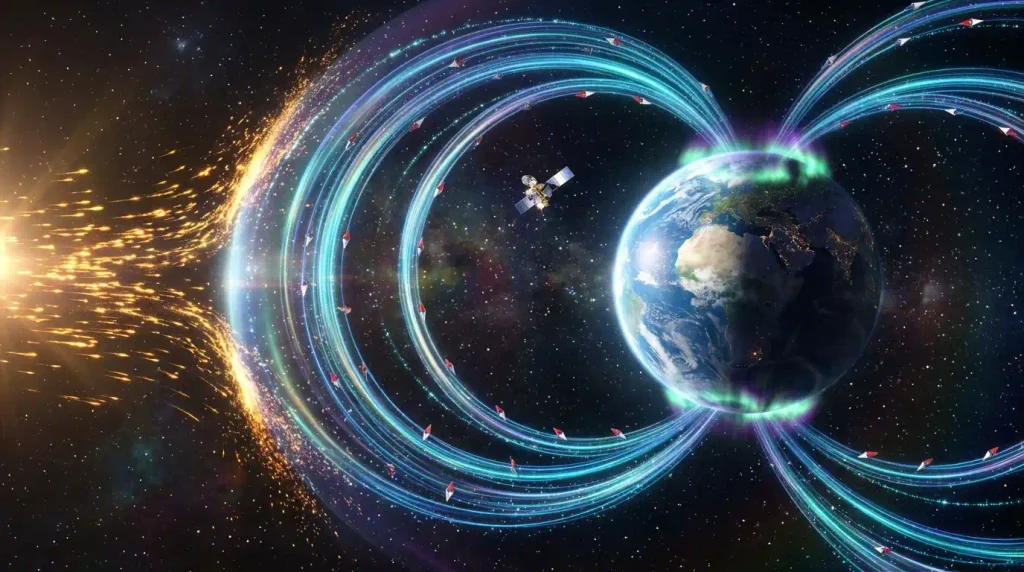
One of the most remarkable natural phenomena in our solar system involves the very planet we walk on every single day. Planet Earth acts like a massive spinning bar magnet suspended in outer space.
The Earth’s Molten Iron Core Creates a Magnetic Shield
Deep beneath the Earth’s rocky crust lies a liquid outer core composed mostly of molten iron and nickel. As our planet rotates, this liquid metal moves in vast swirling currents, generating massive electrical currents that power a planetary magnetic field.
This giant magnetic bubble extends tens of thousands of miles into space, forming a protective shield known as the magnetosphere. Without this magnetic shield, powerful solar winds would strip away our atmosphere and destroy delicate living organisms.
Navigating with Compasses and Magnetic North
A standard pocket compass works because its light magnetic needle floats freely on a central pivot point. The magnetic needle automatically aligns itself with the direction of Earth’s magnetic field lines, pointing steadily toward magnetic north.
However, geographic true north and magnetic north are not located in the same physical spot. Magnetic north shifts location slightly every year as liquid metal currents move deep within Earth’s core.
Northern Lights: A Spectacular Magnetic Show
When energetic particles shot out by the Sun hit Earth’s magnetosphere, our planet’s magnetic field funnels those particles toward the North and South Poles.
As these solar particles crash into oxygen and nitrogen gases in the upper atmosphere, they glow in brilliant green, violet, and red colors. This magical natural light show is known as the Aurora Borealis in the north and Aurora Australis in the south.
Wild Animals That Navigate Using Earth’s Magnetic Field
Humans rely on satellite GPS and pocket compasses to find their way around the globe, but many animals possess an internal magnetic sense built directly into their bodies.
Sea Turtles Travel Thousands of Miles Home
Female sea turtles migrate across entire oceans to lay eggs on the same beaches where they hatched decades earlier. Scientists discovered that sea turtles navigate ocean currents by detecting tiny variations in Earth’s magnetic field intensity.
This natural magnetic mapping skill allows hatchlings to wander open seas for years before accurately swimming back to their birthplace without getting lost.
Homing Pigeons Use Magnetic Nose Minerals
Homing pigeons can find their way back to distant roosts even when released in unfamiliar geographic locations miles away. Biologists found microscopic iron-rich minerals embedded within the nerve tissues inside pigeon beaks.
These magnetic mineral clusters act like built-in biological compasses, helping birds read Earth’s magnetic landscape continuously while flying at high speeds.
Migratory Birds See Magnetic Fields Visually
Recent scientific research reveals that some migratory bird species can actually see magnetic field lines overlapping their normal vision. Special light-sensitive proteins called cryptochromes located in their eyes react to Earth’s magnetic field.
This chemical reaction allows birds to observe magnetic field directions as subtle patterns of light and shadow superimposed over their environmental surroundings.
Mind-Blowing Advanced Uses of Magnets in Science
Moving beyond basic household uses, magnetic technology plays a major role in modern medicine, high-speed transit, and particle physics research.
Magnetic Resonance Imaging (MRI) Scanners in Hospitals
Medical MRI scanners allow doctors to look inside the human body without using harmful ionizing radiation or invasive surgeries. An MRI machine utilizes super-cooled magnetic coils that generate magnetic fields thousands of times stronger than Earth’s magnetosphere.
These intense magnetic forces cause hydrogen atoms inside your body’s cells to align temporarily. When radio waves pass through, these atoms emit subtle signals that computers translate into detailed images of internal organs, muscles, and soft tissues.
High-Speed Maglev Trains Float on Air
Magnetic levitation, or Maglev, represents one of the most exciting transport innovations operating in countries like Japan, South Korea, and China. Maglev trains do not have traditional metal wheels rolling along steel tracks.
Instead, powerful electromagnets installed along the train body and guideway tracks lift the entire vehicle several inches into the air. By eliminating wheel friction, Maglev trains glide smoothly across landscapes at speeds exceeding 300 miles per hour.
Particle Accelerators Smash Atoms Together
Facilities like the Large Hadron Collider in Switzerland use giant superconducting magnets operating near absolute zero temperatures. These massive magnetic rings bend and focus streams of atomic particles as they travel near the speed of light.
By steering particle beams around precise circular paths, physicists collide subatomic particles to study fundamental building blocks of the universe like the Higgs boson.
Quick Overview of Unique Magnetic Traits
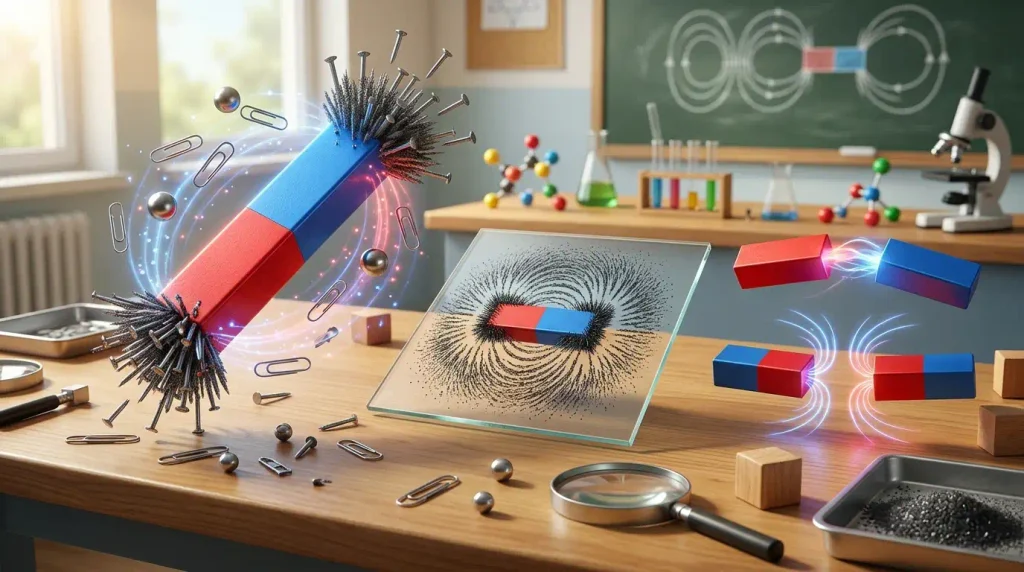
To help you organize these fascinating scientific details, here is a simple reference table highlighting key magnetic terms, traits, and applications.
Magnetic Poles
Every magnet has two poles: north and south. These poles create magnetic forces that attract or repel other magnets and magnetic materials. Opposite poles attract, while matching poles push away from each other. This simple behavior makes magnets useful in countless everyday objects and scientific applications.
Invisible Magnetic Fields
A magnet produces an invisible magnetic field around itself. Although we cannot see this field directly, we can observe its effects when magnetic objects move or respond nearby. Iron filings can also reveal the field’s shape, creating fascinating patterns that show how magnetic forces spread through space.
Powerful Everyday Uses
Magnets may look simple, but they perform important jobs in everyday life. They help speakers produce sound, keep refrigerator doors closed, operate electric motors, and assist in recycling metal. Their unique ability to create force without direct contact makes magnets especially useful in technology and household products.
Is this conversation helpful so far?
How to Make a Simple Electromagnet at Home
You do not need an expensive laboratory to experiment with magnetic forces yourself. Building a simple temporary electromagnet takes just a few inexpensive household supplies.
Items You Will Need
- One long iron nail or bolt
- Two feet of insulated copper wire
- One fresh D-cell battery
- A handful of small steel paperclips
Step-by-Step Instructions
- Wrap the insulated copper wire tightly around the iron nail from top to bottom, leaving several inches of loose wire ends exposed at both sides.
- Carefully strip off a half-inch of plastic insulation from both free ends of the copper wire using scissors or a stripper tool.
- Touch one bare wire end to the positive battery terminal and the other bare wire end to the negative battery terminal.
- Bring the tip of the wrapped nail near small steel paperclips to watch them snap directly to the nail tip like magic.
- Disconnect one wire end from the battery terminal to immediately stop the electrical current and release the paperclips back to the table surface.
Practice Exercise
Test your knowledge with these fun multiple-choice questions about magnets, magnetic fields, attraction, and everyday uses.
Magnet Basics
- What is the invisible area around a magnet where magnetic forces can act?
- A. Electric zone
- B. Magnetic field
- C. Gravity ring
- D. Heat field
- Which two ends of a magnet are called its poles?
- A. Left and right
- B. Top and bottom
- C. North and south
- D. Inner and outer
- What happens when two north poles are brought close together?
- A. They repel each other
- B. They melt together
- C. They become electrically charged
- D. They stop producing a magnetic field
Magnetic Materials and Forces
- Which material is strongly attracted to a typical magnet?
- A. Wood
- B. Glass
- C. Plastic
- D. Iron
- What happens when a north pole and a south pole are placed near each other?
- A. They lose their magnetism
- B. They attract each other
- C. They produce heat
- D. They become identical poles
- Which object commonly uses a magnet to help keep its door closed?
- A. Refrigerator door
- B. Wooden spoon
- C. Paper notebook
- D. Glass cup
Magnets in Everyday Life
- Which device uses magnets to produce sound?
- A. Thermometer
- B. Ruler
- C. Speaker
- D. Flashlight
- Why are magnets useful in some recycling facilities?
- A. They can separate certain magnetic metals from other materials
- B. They make plastic heavier
- C. They turn paper into metal
- D. They remove water from bottles
- Which natural mineral is well known for having magnetic properties?
- A. Quartz
- B. Calcite
- C. Gypsum
- D. Magnetite
- What happens to the magnetic force of a magnet as you move farther away from it?
- A. It becomes infinitely strong
- B. It usually becomes weaker
- C. It changes into gravity
- D. It disappears instantly
Answer Key
1. B | 2. C | 3. A | 4. D | 5. B | 6. A | 7. C | 8. A | 9. D | 10. B
FAQs
1. Why do magnets attract iron objects but ignore aluminum cans?
Iron atoms contain unpaired electrons that align easily into strong magnetic domains when exposed to external fields. Aluminum lacks this internal structural domain alignment, preventing magnets from pulling or sticking to aluminum surfaces.
2. Can a permanent magnet lose its magnetic power over time?
Yes, dropping permanent magnets repeatedly or exposing them to high temperatures scrambles their internal magnetic domain alignments. Storing magnets properly with magnetic keepers prevents gradual loss of magnetic strength over extended years.
3. What happens if you cut a bar magnet directly in half?
Cutting a bar magnet in half creates two smaller, complete magnets, each containing its own new north and south pole. You can never isolate a single magnetic pole regardless of how many times you slice a magnet.
4. Are magnets safe to keep around modern electronics?
Modern solid-state storage devices like flash drives and smartphones ignore standard household magnets because they do not rely on magnetic storage. However, keep strong magnets away from traditional mechanical hard drives and magnetic credit cards.
5. What is the strongest type of permanent magnet available today?
Neodymium magnets represent the strongest commercially available permanent magnets engineered today. Made from an alloy of neodymium, iron, and boron, these compact magnets hold incredible magnetic pull relative to their small sizes.
Conclusion
Exploring the fascinating world of fun facts magnets reveal gives us a clearer appreciation for the invisible forces shaping our surrounding universe. From protecting our atmosphere against solar radiation to enabling high-speed transportation, magnetic principles remain vital to natural ecosystems and human engineering alike.
Understanding how magnetic fields operate helps you make sense of daily technologies like smartphones, medical scanners, and home appliances. Sharing these engaging, fun facts about magnets with friends, family, and classmates turns complex physics concepts into enjoyable learning experiences everyone can appreciate.
Next time you use a compass or hang a note on your refrigerator door, pause to reflect on the unseen magnetic field hard at work right before your eyes!

Zoey Carter is the creator and writer behind funsvibe.com, a friendly website where readers can discover interesting, entertaining, and useful content. She enjoys exploring different topics and turning fresh ideas into simple, engaging articles that are easy to understand. Zoey believes that good content should be informative while still feeling natural and enjoyable to read.
Through funsvibe.com, Zoey Carter focuses on sharing original, reader friendly content with a warm and conversational style. She enjoys researching new subjects, discovering helpful information, and presenting ideas in a clear way. Her goal is to make every visit enjoyable while giving readers something valuable to discover and remember.