
Photography has a fascinating history packed with surprising secrets, incredible science, and quirky stories. Exploring fun facts photography enthusiasts cherish reveals how early cameras worked, why people never smiled in vintage portraits, and how digital sensors changed our visual world forever. Searching through fun facts and photography trivia helps us appreciate every snapshot we take.
Ever held a camera and wondered about the bizarre history hiding behind that little glass lens? You snap a quick photo on your phone in less than a second, but making that simple action possible took centuries of wildly strange experiments and scientific discoveries.
Exploring these fun facts photography lovers adore reveals a world where photos took eight hours to expose, and cat images ruled long before the internet existed.
Whether you are a casual smartphone shooter or a camera gear collector, learning fun facts photography history has kept secret will change how you look at every picture you take. Let us jump right into the fascinating story of light, chemistry, and human curiosity.
The Secret Origins of the World’s First Photographs
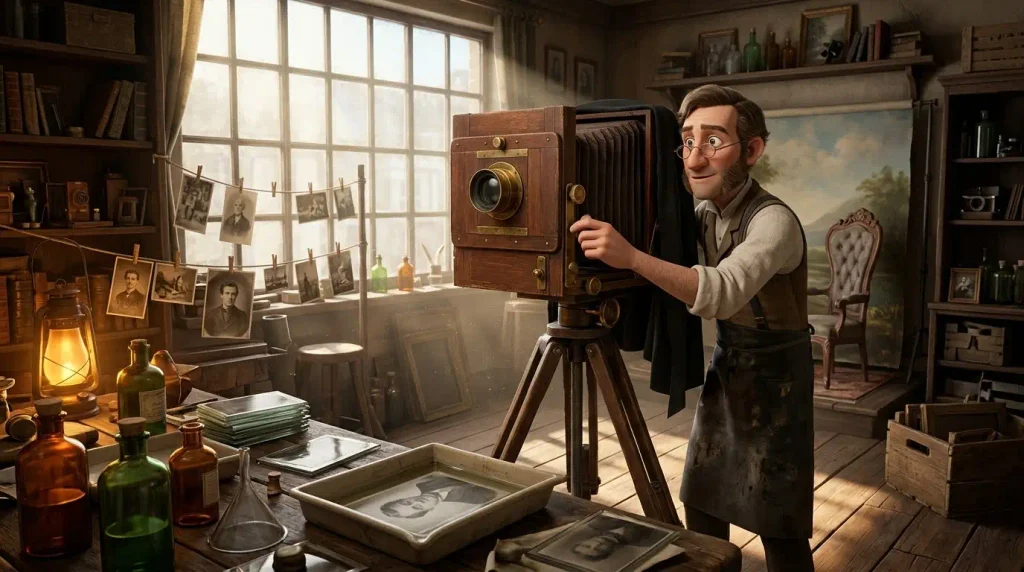
Long before modern digital cameras existed, scientists and artists used basic light principles to project images onto walls and canvases. Understanding where photography came from helps us appreciate how simple pushing a button has become today.
The Camera Obscura and Ancient Light Tricks
The foundation of modern photography began with a simple device called the camera obscura, which translates from Latin as dark room. Ancient scholars discovered that if light passes through a tiny pinhole into a pitch-black room, it projects an inverted image of the outside world onto the opposite wall.
Sutori
Renowned painter Leonardo da Vinci frequently used the camera obscura to study light patterns and draw precise perspective lines for his masterpieces. Artists literally sat inside giant black boxes, tracing flipped projections of landscapes onto paper to get their drawings right.
Sutori
Why the Very First Photo Took Eight Hours
In 1826, French inventor Joseph Nicéphore Niépce successfully captured the world’s oldest surviving photograph, titled View from the Window at Le Gras. He coated a polished pewter plate with a light-sensitive asphalt mixture called bitumen of Judea and placed it inside a camera box.
Because the chemical mixture reacted to light extremely slowly, the exposure took roughly eight full hours to capture the blurry rooftop scene. If you look closely at the image today, the sun appears to shine on both sides of the buildings because it moved across the sky while the lens remained open all day.
The Bitumen Secret and Early Chemical Chemistry
Niépce chose bitumen because it hardened when exposed to sunlight, allowing him to wash away the soft, unexposed areas with lavender oil. This crude chemical breakthrough laid the groundwork for silver-based photographic papers that dominated the nineteenth and twentieth centuries.
Later inventors realized that mixing silver with halogen gases created compounds that reacted to light in seconds rather than hours. This chemical leap forward quickly turned photography from a tedious laboratory experiment into a practical artistic medium.
Quirky Victorians and Early Portrait Secrets
Victorian portrait sessions were completely different from modern photo shoots. Sitting for a portrait required immense patience, specialized support equipment, and physical endurance.
The Real Reason No One Smiled in Vintage Photos
When looking through old family photo albums, you will quickly notice that practically nobody is smiling. People often assume Victorians were perpetually sad or embarrassed by bad teeth, but the truth comes down to exposure times and mechanical limits.
Early camera processes like daguerreotypes required subjects to stay completely still for anywhere between two and fifteen minutes. Maintaining a fake, toothy grin for ten straight minutes is nearly impossible and causes muscles to twitch, resulting in a blurry photo.
Hidden Iron Headrests and Sitting Clamps
To help people remain perfectly motionless during long exposure sessions, portrait studios used heavy iron stands hidden behind the subjects. These iron devices featured adjustable clamps that gripped the back of the person’s neck and spine to hold their head still.
If a subject shifted even a tiny fraction of an inch during the exposure, their face would turn into a ghostly smear on the glass plate. Many stiffness patterns seen in vintage portraits came directly from people fighting the urge to move while locked into metal headrests.
Post-Mortem Photography and Memorial Keepsakes
During the Victorian era, photography was expensive, and many people never had their picture taken while they were alive. When a family member passed away, relatives would pay photographers to create a post-mortem portrait as a final physical memory.
Photographers often used clever wiring systems, subtle makeup, and clever posing techniques to make the deceased appear as though they were sleeping naturally. While this practice seems unusual today, it provided grieving families with deeply treasured keepsakes during an era of high mortality rates.
Strange Animals and Unbelievable Camera Milestones
Animals have always played a central role in photographic history. Long before social media platforms were flooded with pet videos, early pioneers used animals to test new optical technology.
The First Cat Pictures Were Created in the 1870s
If you think cat photos are an internet-era obsession, photographic history proves otherwise. In the 1870s, British photographer Harry Pointer created a famous series of whimsical portraits featuring his pet cats in everyday human situations.
Pointer photographed his felines riding tricycles, posing with roller skates, and sitting at small tea tables to sell as collectible greeting cards. His playful feline portraits became wildly popular across Europe, proving that humans have loved cute animal photos for over a hundred and fifty years.
Pigeons and the Invention of Early Aerial Reconnaissance
Before airplanes and automated drones were invented, military strategists used carrier pigeons equipped with lightweight cameras to gather aerial intelligence. In 1907, German apothecary Julius Neubronner patented a miniature camera fitted with a mechanical timer that was strapped directly to a pigeon’s chest.
The birds were released into enemy territory, and the camera automatically took aerial photographs at set intervals as the pigeon flew back home. The resulting aerial images provided detailed top-down views of land long before satellite technology existed.
The Giant Mammoth Camera Built for a Single Train
In 1900, the Chicago and Alton Railway built a magnificent luxury train named the Alton Limited and wanted a single, massive photograph to showcase its beauty. Photographers realized no existing camera was large enough to capture the entire train in crisp detail, so they built the Mammoth Camera.
This giant camera weighed over 1,400 pounds, required fifteen men to operate, and used a single glass negative measuring eight feet by four and a half feet. The resulting photographic print was the largest seamless photograph in the world at the time and astonished audiences nationwide.
The Wild Science Behind Colors and Flash Powder
Modern digital cameras capture millions of vibrant colors instantly with a single sensor click. Early photographers, however, had to rely on dangerous chemical reactions and complex glass filters to achieve colored images.
How Explosive Explosions Lit Up Early Studios
Before electronic speedlights were created, indoor photography relied on flash powder made from a volatile blend of magnesium powder and potassium chlorate. Photographers loaded the dry mixture onto a handheld metal trough and ignited it with a small spark to create a sudden, brilliant flare of white light.
This ignition produced a loud bang, a blinding flash, and a thick plume of smelly white smoke that filled the studio room instantly. Photographers frequently burned their eyebrows, singed their hands, or set studio curtains on fire when handling dangerous flash powders.
The Tartan Ribbon and the First Color Photo
The world’s first durable color photograph was produced in 1861 by Scottish physicist James Clerk Maxwell. He took three separate black-and-white photographs of a colorful tartan ribbon through red, green, and blue glass filters.
Maxwell then projected all three photographic slides onto a screen using three separate lanterns fitted with the same colored glass filters. When the light beams overlapped perfectly on the wall, they created a fully colored reproduction of the original plaid ribbon.
Why Old Film Was Blind to the Color Red
Early photographic emulsions were orthochromatic, meaning they were sensitive only to blue and ultraviolet light waves while completely blind to red light. As a result, red clothing appeared pitch black in photos, while bright blue eyes often looked ghostly white or washed out.
Landscape photographers had to deal with bright blue skies blowing out to solid white, while green trees looked dark and muddy. Photographers had to wait until panchromatic film was invented in the early twentieth century to capture all visible spectrum colors accurately.
Space Cameras and Extreme Environment Photography
Taking pictures on Earth presents plenty of challenges, but photographing outer space and deep underwater depths pushed engineering to its absolute limits.
The Abandoned Hasselblad Cameras Left on the Moon
During the Apollo space missions between 1969 and 1972, NASA astronauts carried specially modified Hasselblad medium-format cameras to document moonwalks. These cameras featured silver coatings to reflect harsh heat and large control levers designed for bulky pressurized space suit gloves.
To save weight and ensure astronauts could carry heavy moon rocks back to Earth, NASA left thirteen camera bodies sitting on the lunar surface. The film magazines were detached and brought safely home, but those original silver cameras still rest on the moon’s surface today.
The Deepest Photograph Ever Recorded Underwater
Capturing photos in the ocean depths requires camera housings capable of withstanding immense water pressure and complete darkness. Deep-sea research submersibles drop heavy photographic rigs thousands of feet down into deep ocean trenches to photograph strange creatures.
These specialized deep-sea cameras feature thick sapphire glass viewports and high-powered LED illuminators that prevent the pressure from crushing delicate components. Without these rugged camera systems, deep-sea hydrothermal vents and marine species would remain entirely unknown to science.
Cold War Spy Satellites Dropped Film from Space
Long before digital image transmission existed, Cold War reconnaissance satellites photographed secret locations using high-resolution film rolls. Satellites like the U.S. Corona system shot miles of film from orbit and then ejected heavy film canisters back into Earth’s atmosphere.
As the canisters plunged toward the ocean, parachutes opened to slow their descent while specialized military aircraft flew past to catch them in mid-air using trailing hooks. This airborne capture method ensured valuable intelligence photos never fell into enemy hands or sank into sea waters.
The Digital Revolution and Modern Snapshots
The transition from physical film rolls to digital pixels completely reshaped how human society creates, stores, and shares visual memories.
The First Digital Camera Weighed Eight Pounds
In 1975, an engineer named Steven Sasson, working for Eastman Kodak,k built the world’s very first digital camera prototype. The crude device was constructed using spare parts, a movie camera lens, a portable digital cassette recorder, and early electronic sensor chips.
It weighed over eight pounds, captured black-and-white images at a resolution of just 0.01 megapixels, and took 23 seconds to record each picture onto a magnetic tape. Users had to remove the cassette tape and plug it into a custom television playback system just to view the grainy image.
Why Kodak Didn’t Sell Digital Cameras Early On
Despite inventing the core digital camera technology, Kodak executives hesitated to market digital photography heavily because they feared it would destroy their profitable film business. Kodak made vast fortunes manufacturing chemical photographic papers, film rolls, and developing liquids.
By delaying their entry into the digital market to protect traditional film sales, Kodak fell behind competitors who embraced digital image sensors. This missed business opportunity eventually led the historic photography giant into bankruptcy decades later when film sales collapsed.
How Many Photos Are Taken Every Single Minute?
In the era of film, people carefully saved their thirty-six exposures for special occasions like birthdays, vacations, and family holidays. Today, smart mobile phones have transformed photography into a continuous daily language of social communication.
Researchers estimate that humanity takes over five billion photos every single day across the globe. That means more photos are taken every few minutes today than were produced during the entire nineteenth century combined.
Mind-Blowing Photography Science Secrets
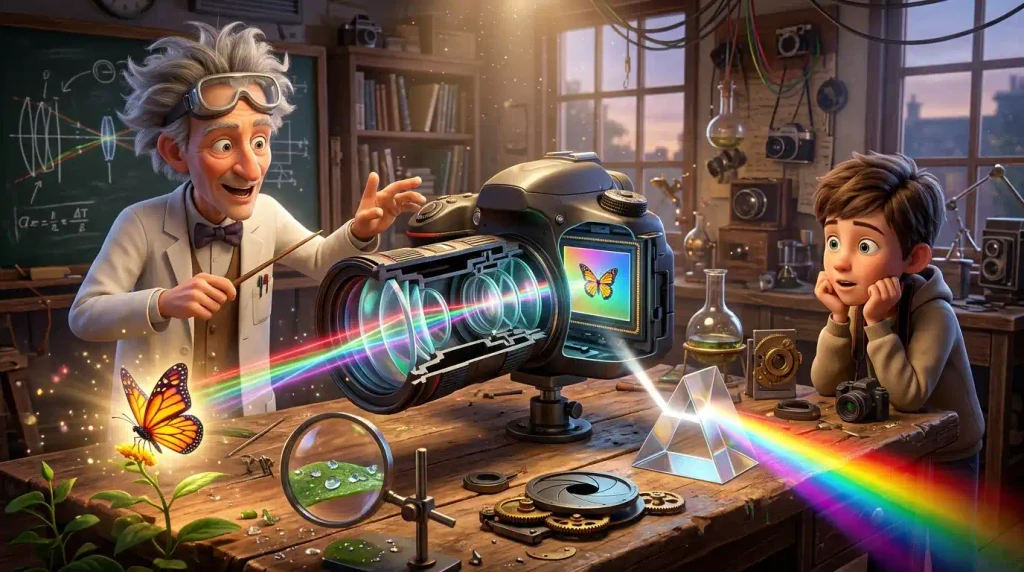
Behind every photo you capture lies a surprising mix of optical physics, chemical reactions, and human brain perception tricks.
Why Your Face Looks Different in Mirrors vs. Photos
Have you ever noticed that you look great in the mirror, but strange or unfamiliar when someone takes your picture? This phenomenon is called the mere-exposure effect, which states that people prefer things they see most frequently.
When you look into a bathroom mirror, you see a flipped reflection of your face that your brain recognizes as your normal appearance. A camera, however, captures your face as it actually looks to other people, exposing natural facial asymmetries that your brain finds unfamiliar.
How Focal Length Warps Your Nose and Face Shape
Different camera lenses can alter the apparent shape and width of a person’s face due to perspective distortion. Wide-angle lenses, like the default camera lens on most smartphones, require you to stand close to your subject, which accentuates features near the center of the frame.
This close distance causes a person’s nose to look larger and their ears to look pushed back in the final picture. Telephoto lenses, on the other hand, allow you to shoot from further away, flattening perspective and making facial features look naturally proportioned.
The Invisible Infrared World Hiding Around Us
Human eyes can only see light wavelengths within a specific visible spectrum ranging from red light to violet light. Infrared photography uses special sensors and dark glass filters to capture long light wavelengths that bounce off living plant leaves and clouds.
In an infrared photograph, green grass and tree leaves appear snow white because chlorophyll reflects invisible infrared light waves strongly. Sky backgrounds turn dramatic dark charcoal colors, creating surreal, dreamlike landscapes from ordinary outdoor locations.
Practice Exercise
Camera Basics and Photography History
1. Who is widely credited with creating the first permanent photograph?
- A. Louis Daguerre
- B. George Eastman
- C. Joseph Nicéphore Niépce
- D. Ansel Adams
2. What does DSLR stand for?
- A. Digital Single-Lens Reflex
- B. Digital Standard Light Resolution
- C. Direct Sensor Lens Recording
- D. Dual-Shutter Lens Reflection
3. Which camera setting controls how long light enters the camera?
- A. ISO
- B. Aperture
- C. White balance
- D. Shutter speed
Lighting, Lenses, and Creative Techniques
4. What is the main purpose of aperture in photography?
- A. To change image resolution
- B. To control the amount of light entering the lens
- C. To adjust battery power
- D. To change the camera’s storage capacity
5. Which lens is commonly used for capturing wide landscapes?
- A. Macro lens
- B. Telephoto lens
- C. Wide-angle lens
- D. Fisheye lens
6. What does the ISO setting control?
- A. The camera sensor’s sensitivity to light
- B. The distance between subjects
- C. The speed of autofocus
- D. The size of the memory card
Famous Photography and Interesting Facts
7. Which photographer is famous for dramatic black-and-white landscape images?
- A. Henri Cartier-Bresson
- B. Steve McCurry
- C. Dorothea Lange
- D. Ansel Adams
8. What is macro photography mainly used for?
- A. Capturing distant mountains
- B. Photographing tiny subjects in great detail
- C. Recording fast-moving sports
- D. Taking panoramic city pictures
9. Which file format usually preserves more image data for editing?
- A. RAW
- B. GIF
- C. JPEG
- D. BMP
Photography Skills and Fun Trivia
10. What does the rule of thirds help photographers achieve?
- A. Better battery performance
- B. Faster image processing
- C. More balanced image composition
- D. Higher camera resolution
Answer Key: 1. C | 2. A | 3. D | 4. B | 5. C | 6. A | 7. D | 8. B | 9. A | 10. C
FAQs
What is the rarest camera in the world today?
The 1923 Leica 0-Series prototype is widely considered the rarest and most valuable camera in the world. Only twenty-five units were produced for testing before commercial manufacturing began, and very few survive today. One unit was recently sold at an auction for over fourteen million dollars.
Who took the first selfie in human history?
Robert Cornelius took the world’s first self-portrait photograph in 1839 outside his family’s lamp store in Philadelphia. He set up his camera box, uncovered the lens, ran into the frame to sit still for a minute, and then ran back to cover the lens.
Why do old black-and-white photos look so sharp?
Old photos often look amazingly sharp because photographers used large glass plates instead of small film strips. These large physical plates captured immense visual detail across their surface area, creating photographic resolution that rivals modern high-end digital sensors when preserved properly.
Can light from a camera flash damage old oil paintings?
Yes, high-intensity light flashes emit ultraviolet radiation that can gradually fade delicate paint pigments over time. Museum curators ban flash photography to protect priceless historical artworks from chemical breakdown caused by millions of bright light exposures over many years.
What was the first photograph ever posted to the internet?
The first photo posted on the World Wide Web in 1992 was a picture of Les Horribles Cernettes, a comedy pop band formed by employees at CERN. Tim Berners-Lee, the inventor of the web, edited the image on a Mac computer before uploading it to the network.
Why did film cameras use a 35mm format standard?
The 35mm film standard was adapted from Thomas Edison’s early movie theater film strips. George Eastman and Thomas Edison realized that perforating thirty-five-millimeter-wide plastic film allowed mechanical gears to advance frames smoothly through both movie projectors and handheld still cameras.
Conclusion
From eight-hour exposures on metal plates to billions of instant smartphone uploads every day, exploring fun facts about photography reveals an extraordinary human journey of innovation. Early pioneers risked chemical burns and carried massive cameras just to record simple glimpses of the world around them.
Learning these fun facts about photography history helps us appreciate the unbelievable engineering inside every digital sensor and lens we use. It reminds us that photography is both an incredible scientific achievement and a deeply creative human art form.
Next time you pull out your smartphone to snap a quick photo, remember these fun facts photography lovers treasure, and enjoy sharing your newly gained camera trivia with fellow photography friends!
Zoey Carter is the creator and writer behind funsvibe.com, a friendly website where readers can discover interesting, entertaining, and useful content. She enjoys exploring different topics and turning fresh ideas into simple, engaging articles that are easy to understand. Zoey believes that good content should be informative while still feeling natural and enjoyable to read.
Through funsvibe.com, Zoey Carter focuses on sharing original, reader friendly content with a warm and conversational style. She enjoys researching new subjects, discovering helpful information, and presenting ideas in a clear way. Her goal is to make every visit enjoyable while giving readers something valuable to discover and remember.