
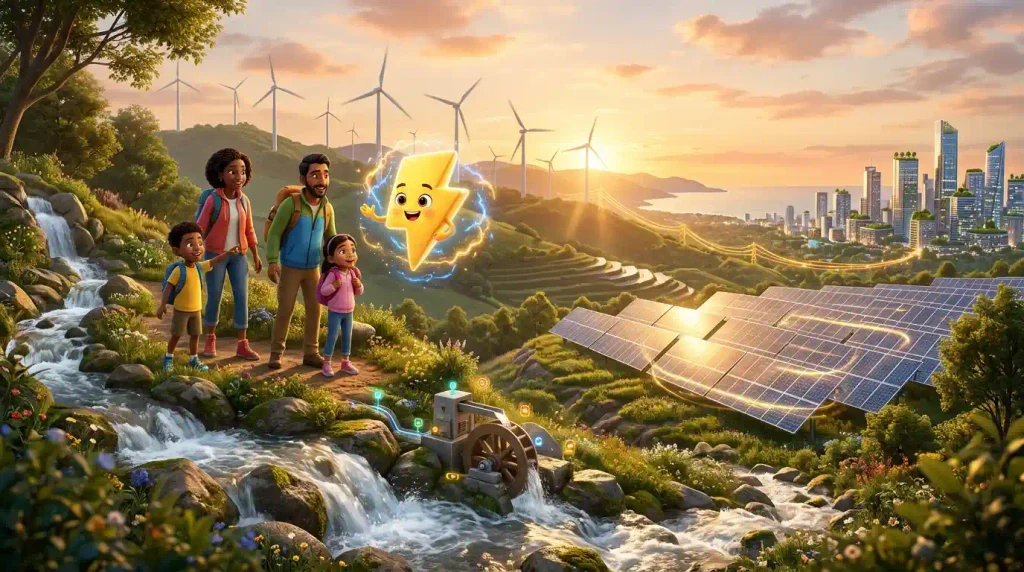
Energy powers everything around us, from the beating of our hearts to the shining of distant stars. Exploring these incredible fun facts energy experts share reveals how power transforms, moves through ecosystems, fuels modern technology, and shapes the future of our universe in astonishing ways.
Have you ever stopped to wonder where the electricity in your phone or the heat in your coffee actually comes from? The universe is constantly moving, shifting, and transforming power in ways that feel like pure magic.
If you are searching for jaw-dropping fun facts energy enthusiasts adore, you have arrived at the perfect spot. Let us explore the remarkable forces that power our daily lives and the vast cosmos around us!
These amazing fun facts energy reveal how invisible forces shape our world every single second. Prepare to see light, heat, and electricity in a whole new way!
The Fundamental Rules of Power in Our Universe
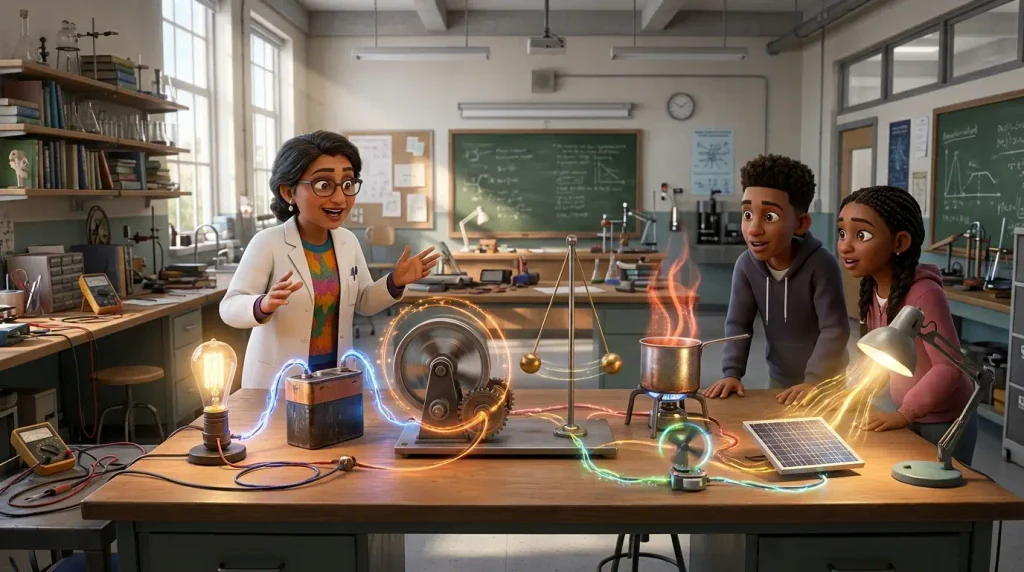
Energy is never really created or destroyed; it simply changes from one form into another. Physics shows us that the total amount of power in the cosmos stays completely constant over time.
The First Rule of Energy Conservation
Scientists call this the Law of Conservation of Energy, and it is a core rule of physics. When you burn a piece of wood in a campfire, the stored chemical energy does not vanish.
Instead, it transforms into heat energy, light energy, and sound energy as the wood crackles. Every bit of power in existence today has existed since the very beginning of the universe!
Potential vs. Kinetic Power in Daily Life
Every object around you holds potential energy or kinetic energy depending on what it is doing. Potential energy is stored power waiting to be released, while kinetic energy is the power of motion.
- A roller coaster sitting at the top of a giant hill holds massive potential energy.
- As the coaster zooms down the track, that stored potential transforms into fast kinetic energy.
- When the coaster hits the brakes, kinetic energy turns into heat energy in the brake pads.
Chemical Magic in Everyday Reactions
Chemical energy is stored inside the bonds that hold atoms and molecules together. When those bonds break apart during a reaction, they release power that we can use for work.
Your car engine burns gasoline to break molecular bonds, converting chemical energy into mechanical motion. Similarly, your stomach breaks down food molecules so your muscles can move and stretch.
Mind-Blowing Lightning and Electrical Phenomena
Electricity is one of the most powerful and visible forms of natural energy on Earth. Lightning bolts demonstrate just how incredible natural electrical forces can be when released instantly.
Heat Hotter Than the Surface of the Sun
A single bolt of lightning can heat the air around it to nearly 50,000 degrees Fahrenheit (28,000 degrees Celsius). That is roughly five times hotter than the visible surface of the Sun!
This intense spike in heat causes the air to expand rapidly and explode outward. That sudden explosive wave of air pressure is what creates the booming thunder you hear during storms.
Supercharged Energy in a Single Strike
A standard lightning strike carries around one billion joules of electrical energy. That is enough electrical power to run a standard household light bulb for over 100 years without stopping!
It is also enough power to toast over 100,000 slices of bread in a single fraction of a second. Imagine trying to catch that much power in a giant kitchen toaster!
The Rare World of Ball Lightning
One of the mysterious electrical events on Earth is known as ball lightning. Witnesses describe seeing glowing, floating spheres of electricity that move slowly through the air during thunderstorms.
Scientists are still researching how ball lightning forms in nature. Some experts believe it happens when lightning strikes soil and vaporizes silicon particles into a glowing ball.
The Sun and Solar Forces Powering Earth
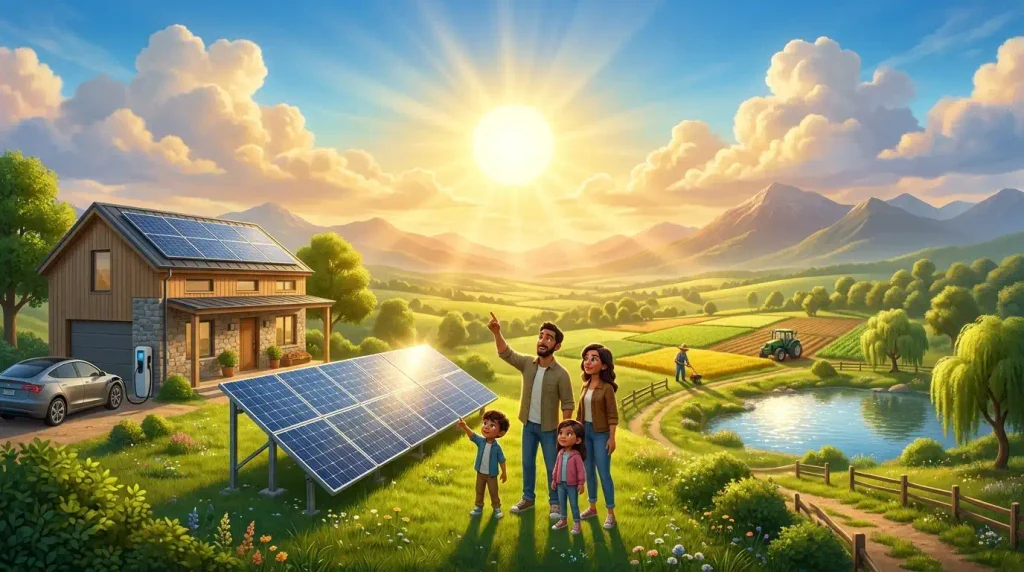
The Sun is the ultimate power station for our planet, giving us warmth, light, and life. Without the constant nuclear reactions inside solar cores, Earth would be a frozen, lifeless rock.
Eight Minutes Across Space
Light travels through space at an incredible speed of roughly 186,000 miles per second (300,000 kilometers per second). Even at that extreme speed, light from the Sun takes about eight minutes and twenty seconds to reach Earth.
That means when you look outside at daylight, you are seeing solar energy that left the Sun over eight minutes ago. You are literally looking back in time every single day!
Earth’s Hourly Solar Gift
The amount of solar energy hitting Earth in just one single hour is staggering. Our planet receives more energy from the Sun in one hour than the entire global human population uses in a whole year.
Capturing even a small fraction of this free solar power could meet all modern human energy needs forever. Solar panel technology continues to improve every year to help us collect this abundance.
Nuclear Fusion in the Solar Core
Inside the Sun, extreme pressure and heat smash hydrogen atoms together to form helium. This process is called nuclear fusion, and it releases massive amounts of light and heat energy.
Scientists are working to recreate nuclear fusion on Earth in high-tech laboratories. If we master artificial fusion, we could generate clean, limitless power with virtually zero waste.
The Surprising Human Body Energy Factory
Your body is a walking power plant that constantly converts calories into motion, thoughts, and heat. The biology inside human cells is just as impressive as any artificial engine.
How Many Watts Does Your Brain Use?
Your brain is a hungry organ that works non-stop, even when you are fast asleep. It uses about 20 watts of electrical power to transmit signals across billions of neurons every day.
That means your complex thoughts, memories, and dreams run on the same amount of power needed for a dim refrigerator light bulb. Nature is remarkably efficient at designing biological processing power!
Humans as Walking Space Heaters
The human body constantly radiates thermal energy as a byproduct of metabolism. On average, a resting adult body produces about 100 watts of heat energy every single minute.
When you pack a room full of people at a party, the room gets warm quickly because everyone acts like a small heater. Large venues actually adjust their air conditioning based on crowd size!
Chemical Fuel from Your Dinner Table
Every piece of food you eat contains chemical energy measured in calories. A single Calorie from food is actually a kilocalorie, which is enough energy to raise the temperature of one kilogram of water by one degree Celsius.
- An average apple provides around 95 calories of chemical fuel.
- That apple gives your body enough power to go on a brisk 15-minute walk.
- Your body stores extra unused food energy as fat for later use.
Renewable Energy and Planet-Friendly Technologies
As humanity moves away from fossil fuels, green energy solutions are transforming our world. Clean energy technologies harness natural forces without harming the environment.
Wind Turbines and Massive Blades
Modern wind turbines are giant engineering marvels designed to capture the kinetic power of moving air. A single turn of a large offshore wind turbine blade can power an average home for an entire day!
The tips of giant wind turbine blades can spin at speeds exceeding 180 miles per hour (290 km/h). That high speed helps generators produce huge amounts of electricity efficiently.
Geothermal Energy Beneath Our Feet
Beneath Earth’s crust lies an immense amount of thermal energy left over from the planet’s formation. Geothermal power plants pump water deep underground where hot rocks heat it into high-pressure steam.
That steam rises to turn giant turbines on the surface, generating clean electricity around the clock. Countries like Iceland get over a quarter of their electricity directly from geothermal sources!
Hydroelectric Power and Gravity
Hydroelectric dams use gravity to turn moving water into clean electric power. Water trapped behind a high dam rushes down large pipes to spin heavy turbines located at the base.
The Grand Coulee Dam in the United States produces over 20 billion kilowatt-hours of electricity each year. That is enough power to supply millions of homes with reliable, renewable energy.
Bizarre and Unusual Sources of Power

Scientists and engineers are always searching for strange new ways to generate electricity. Some of the most innovative power ideas sound like science fiction!
Electricity Produced from Salty Water
Osmotic power generates clean electricity by mixing fresh water and salty ocean water across a special membrane. When fresh water flows toward saltwater, pressure builds up that can drive a generator turbine.
Coastal areas around the world could one day use osmotic plants to generate constant renewable power. It works day and night regardless of weather conditions!
Harvesting Power from Human Footsteps
Engineers have developed smart kinetic floor tiles that convert human foot pressure into usable electricity. Every time someone steps on a tile, internal sensors squeeze piezoelectric crystals to produce small electrical charges.
Busy places like subway stations, dance floors, and soccer fields now test these smart floors. The steps of thousands of commuters help power streetlights and display screens nearby!
Coffee Grounds as Biofuel Power
Did you know your morning coffee habit could help power buses and cars? Used coffee grounds contain rich natural oils that can be extracted and converted into clean biodiesel fuel.
Cities like London have experimented with blending coffee oil into public transit fuel mixtures. It reduces carbon emissions while giving a whole new meaning to morning energy boosts!
Deep Space Energy and Cosmic Discoveries
The universe beyond Earth contains mind-boggling amounts of energy that dwarfs anything created on our planet. Astronomy reveals cosmic phenomena that stretch human imagination to its limits.
Black Holes and Massive Energy Jets
Supermassive black holes at the centers of galaxies are famous for pulling in nearby gas and stars. As material spirals into a black hole at extreme speeds, it heats up and creates massive magnetic fields.
These cosmic engines launch incredible jets of plasma across millions of light-years of space. These plasma jets release more energy in a second than our Sun will produce in its lifetime!
Supernovas and Element Creation
When a massive star reaches the end of its life, it collapses and explodes in a violent supernova. A single supernova explosion outshines an entire galaxy of billions of stars for several weeks.
The extreme shockwaves created during supernovas forge heavy elements like gold, silver, and uranium. Every piece of gold jewelry on Earth was created during a giant cosmic explosion long ago!
Dark Energy Holding the Cosmos
Despite everything we can see, visible matter and light make up only five percent of the universe. About 68 percent of the universe consists of a mysterious force scientists call dark energy.
Dark energy works like anti-gravity, pushing galaxies apart at an accelerating rate over time. Scientists are actively researching this cosmic puzzle to understand how space behaves.
Practice Exercise
Test your knowledge with this fun multiple-choice quiz! Select the best answer for each question based on what you have learned above.
Energy Basics
- Which fundamental law of physics states that energy cannot be created or destroyed?
- A. Newton’s Third Law
- B. Law of Conservation of Energy
- C. Ohm’s Law of Resistance
- D. Einstein’s Theory of General Relativity
- How hot can a single lightning bolt heat the surrounding air?
- A. 10,000 degrees Fahrenheit
- B. 25,000 degrees Fahrenheit
- C. 50,000 degrees Fahrenheit
- D. 100,000 degrees Fahrenheit
- How long does it take solar light energy to travel from the Sun to Earth?
- A. 30 seconds
- B. 3 minutes and 10 seconds
- C. 8 minutes and 20 seconds
- D. 24 hours
Energy in the Human Body
- How much electrical power does an average human brain consume while active?
- A. About 5 watts
- B. About 20 watts
- C. About 100 watts
- D. About 500 watts
- What type of energy is stored inside an object sitting at the top of a hill?
- A. Kinetic energy
- B. Solar energy
- C. Thermal energy
- D. Potential energy
- Which country generates over 25 percent of its electricity from underground geothermal power?
- A. Australia
- B. Iceland
- C. Egypt
- D. Brazil
Amazing Natural Energy
- What natural process powers the Sun inside its central core?
- A. Chemical combustion
- B. Nuclear fusion
- C. Geothermal heating
- D. Electrical friction
- What percentage of the universe is composed of mysterious dark energy?
- A. About 12 percent
- B. About 35 percent
- C. About 68 percent
- D. About 95 percent
- How much thermal heat energy does a resting human body produce on average?
- A. 10 watts
- B. 50 watts
- C. 100 watts
- D. 300 watts
Energy Around Us
- What material in floor tiles can turn human foot pressure directly into electricity?
- A. Piezoelectric crystals
- B. Silicon solar cells
- C. Copper wiring coils
- D. Carbon fiber mesh
Answer Key: 1. B | 2. C | 3. C | 4. B | 5. D | 6. B | 7. B | 8. C | 9. C | 10. A
FAQs
1. What is the most abundant source of energy on Earth?
Solar energy is by far the most abundant power source available on our planet. The Sun bathes Earth with enough radiant light and heat every hour to meet all global human power needs for an entire year.
2. Can energy ever run out completely?
No, energy itself can never run out because it cannot be destroyed under physical laws. However, usable forms of power can transform into scattered thermal heat that becomes much harder for humans to collect and use.
3. How do solar panels turn sunlight into usable electricity?
Solar panels use photovoltaic cells made of silicon to capture light particles called photons. When photons strike the silicon layer, they knock electrons free, creating an electric current that flows into your home.
4. Why do lightning strikes create thunder sounds?
Lightning heats the surrounding air instantly to extreme temperatures, causing the air to expand violently outward. This rapid expansion creates a high-pressure shockwave that travels through the atmosphere as thunder.
5. What is kinetic energy in simple terms?
Kinetic energy is simply the energy an object possesses because of its motion. Anything that is moving, whether it is a running dog, a spinning fan, or a falling drop of rain, has kinetic energy.
6. Is nuclear energy considered a clean power source?
Nuclear energy is considered clean in terms of carbon emissions because operating reactors do not produce greenhouse gases. However, facility operators must carefully store and manage radioactive waste products long after use.
7. How do human bodies turn food into physical energy?
Your body breaks down food through chemical digestion into simple molecules like glucose. Cells then use oxygen to convert glucose into chemical compounds that power your muscle contractions and organ functions.
Conclusion
Exploring these remarkable fun facts energy proves just how interconnected and exciting our universe really is. From lightning bolts and solar rays to human heat, power shapes every second of our lives.
Understanding how forces move and transform helps us build smarter technology and appreciate the world around us. Remembering these fun facts energy experts share makes everyday science feel like an ongoing adventure.
What was your favorite power secret from this article? Share these amazing fun facts energy lovers enjoy with your friends and spark a great conversation today!

Zoey Carter is the creator and writer behind funsvibe.com, a friendly website where readers can discover interesting, entertaining, and useful content. She enjoys exploring different topics and turning fresh ideas into simple, engaging articles that are easy to understand. Zoey believes that good content should be informative while still feeling natural and enjoyable to read.
Through funsvibe.com, Zoey Carter focuses on sharing original, reader friendly content with a warm and conversational style. She enjoys researching new subjects, discovering helpful information, and presenting ideas in a clear way. Her goal is to make every visit enjoyable while giving readers something valuable to discover and remember.