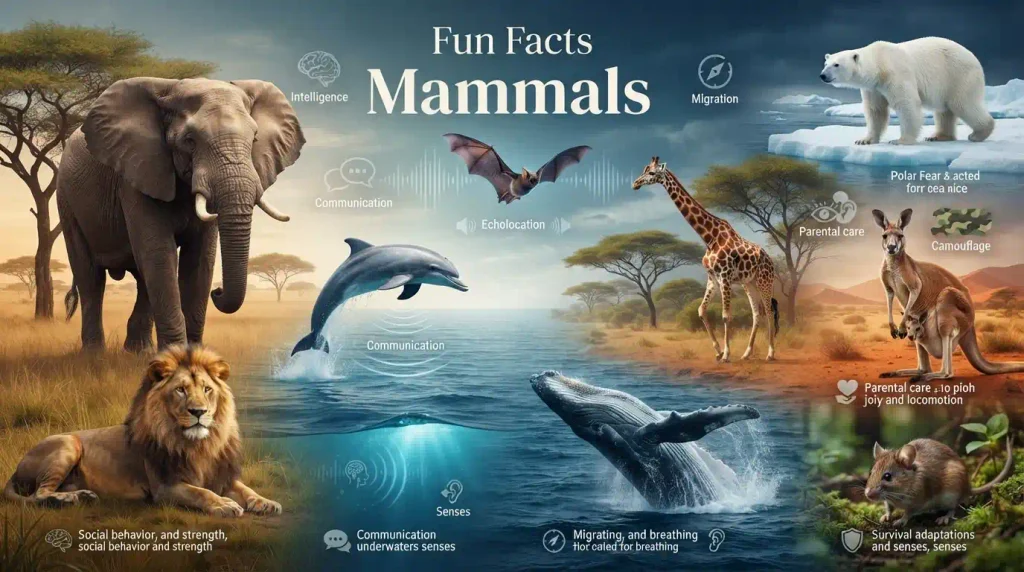
Mammals are warm-blooded vertebrates defined by hair, milk production, and high intelligence. They range from massive blue whales to tiny bumblebee bats. Exploring fun facts mammals showcase reveals extraordinary survival traits like venomous spurs, natural bioluminescence, echolocation, and complex social networks that make our furry relatives truly mind-blowing.
Mammals surround us in every corner of the Earth, yet their secret lives are full of shocking surprises. If you love animal trivia, exploring fun facts about mammals is one of the best ways to rediscover the natural world.
From oceans to high mountaintops, these warm-blooded creatures have evolved unbelievable traits to stay alive. Let us explore the bizarre, hilarious, and inspiring world of mammals together.
What Makes a Mammal a Mammal?
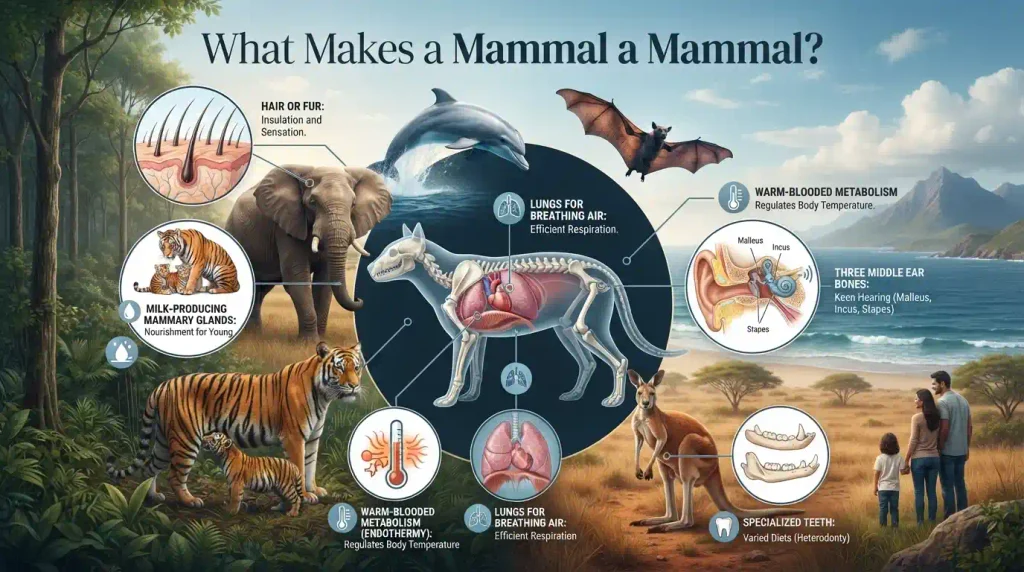
Before we jump into the wild facts, let us talk about what makes these animals special. Mammals seem completely different at first glance. A dolphin looks nothing like a dog, and a bat looks nothing like a human.
Yet, all these creatures share basic traits that put them in the same biological class. Knowing these fundamentals makes their weird evolutionary adaptations even more fun to explore.
Hair and Fur Basics
Every single mammal grows hair or fur at some point during its life. Even giant blue whales are born with tiny hair follicles around their snouts.
Fur acts as an insulated coat, a camouflage tool, or a sensory system. For example, cat whiskers are specialized hairs that detect tiny changes in air currents.
Milk Production and Warm Blood
Mammals are famous for nursing their young with milk produced by mammary glands. This rich nutrient source gives baby mammals a massive head start in life.
Additionally, mammals are endothermic, which means warm-blooded. They create their own internal body heat, allowing them to live in freezing blizzards or burning deserts.
The Weird World of Egg-Laying Mammals
Most mammals give live birth, but nature loves to break its own rules. Monotremes are a rare group of mammals that lay eggs instead of giving live birth.
The Platypus Has No Stomach
Platypuses do not have a stomach to dissolve food with acid. Their food goes straight from their throat into their intestines.
Platypuses Glow Under UV Light
If you shine a blacklight on a platypus, its brown fur glows a vibrant blue-green. Scientists still do not fully understand why this fluorescence happens.
Venomous Ankles
Male platypuses carry sharp spurs on their hind ankles. These spurs connect to venom glands that can cause severe pain to predators or rival males.
Echidnas Have Four-Headed Penis Structures
Echidnas are spiny egg-laying mammals with strange reproductive traits. Males possess a four-headed structure, using alternating sides during mating.
Milk Without Teats
Monotremes do not have nipples to feed their babies. Instead, milk is secreted directly through specialized skin pores, and babies lap it off the mother’s belly fur.
Marine Mammals: Superstars of the Ocean
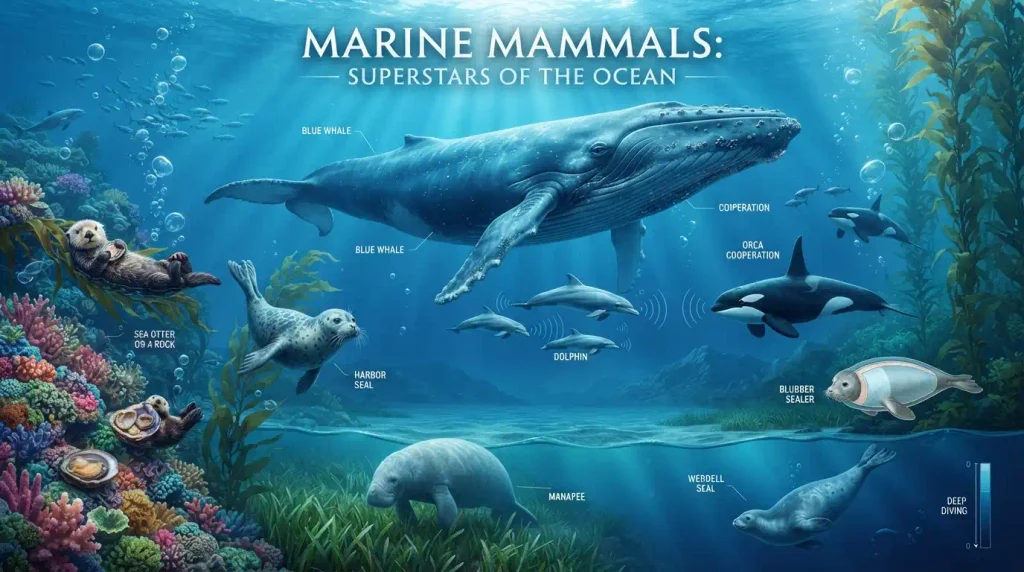
Ocean mammals face unique challenges because they must breathe air while living entirely underwater. Their evolutionary solutions are nothing short of incredible.
Blue Whales Have Massive Hearts
A blue whale’s heart is as big as a small golf cart and weighs around 400 pounds. You can hear its slow beat from over two miles away underwater.
Dolphins Sleep with One Eye Open
Dolphins utilize unihemispheric sleep, meaning only half their brain sleeps at a time. The opposite eye stays wide open to watch for danger and remind the dolphin to breathe.
Sea Otters Hold Hands
Sea otters sleep floating on their backs in large floating kelp forests. They hold hands while sleeping so currents do not drift them away from each other.
Sea Otter Pocket Pouch
Sea otters have loose folds of skin under their arms. They use these hidden pockets to store their favorite rocks for cracking open clam shells.
Sperm Whale Super Loud Clicks
Sperm whales make the loudest sounds of any animal on Earth. Their echolocation clicks can reach over 230 decibels, which can easily stun prey underwater.
Manatees Use Gas to Swim
Manatees control their buoyancy by storing and releasing digestive gas. When they want to sink to eat plants, they simply let out a giant fart.
Land Giants: Elephants, Giraffes, and Bears
The largest land mammals use their size to dominate habitats, but their bodies work in surprisingly gentle ways.
Elephants Hear with Their Feet
Elephants send low-frequency rumbles across the ground. Other elephants pick up these vibrations using sensitive nerve endings located in their large foot pads.
Elephants Cannot Jump.
Due to their heavy body structures and rigid ankle joints, elephants are the only land mammals that cannot hop or jump off the ground.
Blue Tongues Prevent Sunburns
Giraffes have extremely long dark blue or purple tongues. This dark pigmentation acts as natural sunscreen while they strip leaves off high trees all day.
Giraffes Need Minimal Sleep
Giraffes survive on the shortest sleep schedule of any mammal. They often sleep for only 30 minutes to two hours per day in short standing naps.
Polar Bear Skin is Pitch Black
Underneath all that thick white fur, a polar bear actually has coal-black skin. The dark skin absorbs heat from the sun to keep the bear warm.
Polar Bear Fur is Clear
Polar bear fur is not actually white at all. Each hair follicle is a clear, hollow tube that scatters light, making the bear look white to our eyes.
Grizzly Bear Bites Crack Bones
Grizzly bears have a bite pressure of over 1,200 pounds per square inch. That is strong enough to crush a bowling ball or split heavy tree branches effortlessly.
Small Mammals with Superpowers
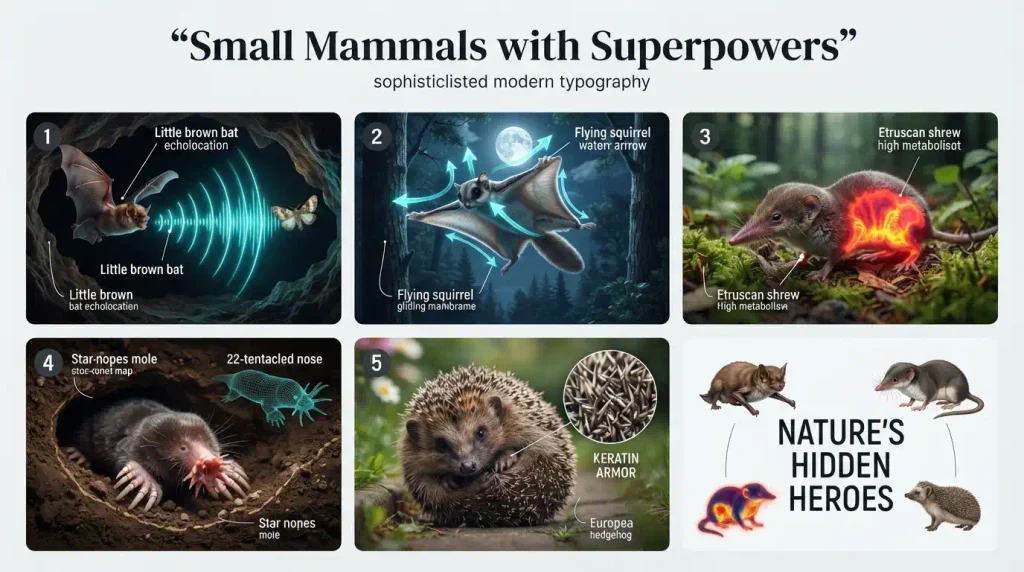
Do not let tiny sizes fool you. Small mammals pack some of the most outrageous survival abilities in the entire animal kingdom.
Bats Are the Only Flying Mammals
Flying squirrels can only glide through the air. Bats are the only mammals capable of true, sustained powered flight thanks to flexible wing membranes.
Bat Poop Built Historic Industries
Bat droppings, known as guano, are packed with nitrogen and phosphate. Guano was so valuable for farming and gunpowder that countries fought wars over bat caves.
Shrews Must Eat Constantly
Etruscan shrews have such fast metabolisms that their hearts beat up to 1,500 times per minute. They must eat up to two times their body weight daily or starve.
Woodchucks Freeze and Thaw
During winter hibernation, a woodchuck’s heart rate drops from 80 beats per minute to just 4. Their body temperature plummets, yet their tissue remains healthy.
Honey Badgers Resist Deadly Snake Venom
Honey badgers have evolved special cell receptors that block snake toxins. A honey badger can get bitten by a cobra, pass out, and wake up fine a few hours later.
Naked Mole Rats Do Not Suffer Cancer
Naked mole rats possess extremely flexible skin and unique cellular structures. They rarely develop cancer and can survive in underground tunnels with almost zero oxygen.
Naked Mole Rats Feel No Acid Pain
The skin of naked mole rats lacks the neurotransmitters needed to send pain signals from chemical burns or stinging acid to the brain.
Sloths Move So Slowly Algae Grows on Them
Sloths move so deliberately that green algae grows directly inside the grooves of their fur coats. This algae gives them green camouflage among tree branches.
Sloths Risk Life to Poop
Sloths only poop once a week, and they travel down to the forest floor to do it. Nearly half of all sloth deaths happen while they are on the ground pooping.
Bizarre Mammalian Communication and Quirks
Mammals use strange sounds, smells, and visual tricks to talk to each other and navigate their worlds.
Kangaroos Cannot Walk Backward.d
Due to their large muscular tails and long foot structures, kangaroos are physically unable to walk backward easily.
Wombat Poop is Shaped Like Cubes
Wombats produce square, cube-shaped droppings. The flat edges keep their poop from rolling off rocks and logs when they mark their territory boundaries.
Armadillos Always Give Birth to Quadruplets
Nine-banded armadillos always give birth to identical quadruplets. A single fertilized egg splits twice, producing four genetically identical babies every single time.
Koalas Have Human-Like Fingerprints
Koala fingerprints are so detailed and similar to human fingerprints that they have accidentally confused crime scene investigators in Australia.
Reindeer Eyes Change Color
Reindeer have eyes that change color with the seasons. Their eyes are golden-yellow in the summer sun and deep blue during cold, dark Arctic winters.
Cats Cannot Taste Sugar
Felines lack the sweet taste receptor gene entirely. Whether it is a house cat or a lion, cats cannot taste sweet flavors at all.
Humpback Whales Sing Pop Songs
Humpback whales in the same ocean region sing the same complex song. Over time, new tunes spread across entire whale populations as viral music hits.
Cheetahs Do Not Roar
Big cats like lions and tigers roar, but cheetahs cannot. Instead, cheetahs meow, purr, chirrup, and make soft squeaking noises just like small domestic housecats.
Rats Laugh When Tickled
When young rats play or get tickled on their bellies by researchers, they emit high-frequency ultrasonic chirps that represent mammalian laughter.
Beavers Have Orange Iron Teeth
Beavers have enamel packed with iron, which makes their front teeth bright orange. The iron creates extra strength so they can chew through hardwood trees.
Evolution and Adaptation Curiosities
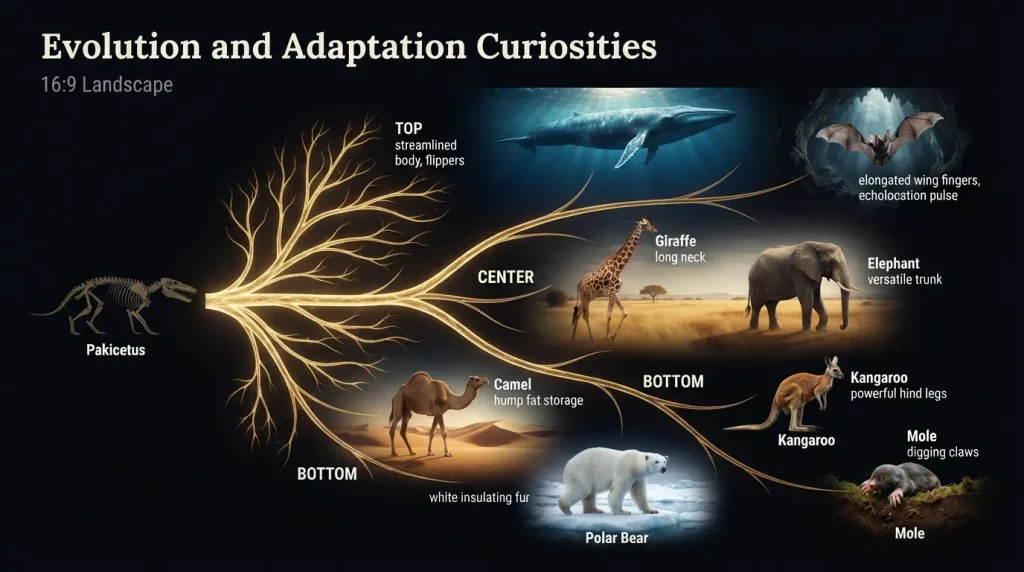
Mammals have conquered air, land, and sea through millions of years of natural selection.
Hippos Sweat Red Sunscreen
Hippos secrete a reddish oily liquid from their skin known as blood sweat. This fluid acts as a natural moisturizer, sunblock, and antibacterial ointment.
Red Panda Tails Are Blankets
Red pandas live in high, snowy mountain forests. They wrap their thick, bushy tails around their faces like warm winter blankets while sleeping in trees.
Narwhal Tusks Are Giant Left Teeth
A narwhal’s long spiral tusk is actually an overgrown upper left canine tooth. The tooth contains millions of nerve endings used to sense ocean saltiness and temperature.
Vampire Bat Blood Sharing
Vampire bats will regurgitate blood to feed starving roost mates who failed to find a meal. If a bat never shares, other bats remember and refuse to help it later.
Opossums Play Dead Automatically
When threatened, an opossum does not just pretend to be dead. Its body enters an involuntary comatose state induced by extreme fear, emitting a foul, decaying smell.
Camels Store Fat, Not Water
A common myth says camel humps store liquid water. In reality, the humps store rich fat deposits, which camels break down for energy when food is scarce.
Camel Eyelashes Block Sandstorms
Camels feature three sets of eyelids and two rows of extra-long, bushy eyelashes to protect their eyes from blowing desert sand.
Flying Lemurs Are Not Lemurs
Colugos, often called flying lemurs, are not true lemurs at all. They are gliding mammals that possess the largest skin membranes of any creature.
Pangolins Are the Only Scaly Mammals
Pangolins look like pinecones, but their scales are made of keratin—the same protein found in human fingernails and rhino horns.
Lions Sleep Up to 20 Hours a Day
Big predators require massive energy reserves for hunts. Lions conserve energy by sleeping or lounging around for up to 20 hours every single day.
Comparing Weird Mammal Traits
Mammals have evolved some truly unusual traits that help them survive in different environments. From animals with powerful echolocation to species that lay eggs, these adaptations make mammals fascinating. Comparing these traits shows how differently mammals solve challenges involving food, movement, communication, defense, and survival.
Extreme Senses and Communication
Bats use echolocation to navigate and hunt in darkness, while elephants rely on low-frequency sounds and vibrations to communicate over long distances. These specialized senses help mammals find food, avoid danger, and stay connected even when visibility is limited.
Unusual Defense Mechanisms
Some mammals have remarkable ways to protect themselves. Hedgehogs curl into a ball and expose their spines, while porcupines use sharp quills as a powerful deterrent. Armadillos can use their tough armor for protection, showing how different body structures can serve the same survival purpose.
Strange Body Features and Abilities
The platypus stands out because it lays eggs despite being a mammal, while the naked mole-rat can survive with surprisingly low oxygen levels. These unusual characteristics demonstrate that mammalian evolution has produced an incredible variety of adaptations suited to specific environments.
Why Learning Animal Trivia Matters
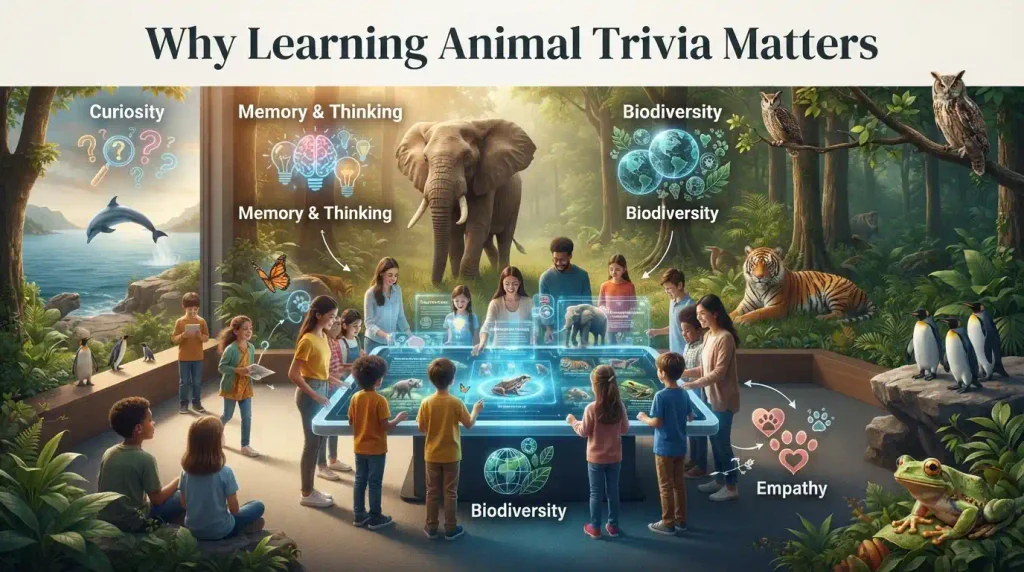
Discovering fun facts mammals hold is more than just a great way to win trivia nights. It helps us appreciate how delicate and complex natural ecosystems really are.
Every strange adaptation—from a narwhal’s sensory tooth to a sloth’s slow movement—serves an important role in helping animals survive alongside one another.
When we understand how unique these creatures are, we become much more motivated to protect their habitats from environmental threats.
Practice Exercise
- What color does platypus fur glow under ultraviolet light?
A. Bright red
B. Neon yellow
C. Blue-green
D. Purple - How do sea otters prevent themselves from drifting away while sleeping?
A. They tie themselves together with vines
B. They hold hands with each other
C. They wedge their feet in mud
D. They stay awake all night - What shape is wombat poop?
A. Spherical
B. Flat
C. Cube-shaped
D. Oval - Why are beaver teeth orange?
A. Dirt stains from wood
B. High concentrations of iron
C. Lack of enamel
D. Calcium buildup - Which mammal is physically unable to walk backward?
A. Elephant
B. Kangaroo
C. Sloth
D. Grizzly bear - What are polar bear skin and fur actually like?
A. White skin and white fur
B. Pink skin and clear fur
C. Black skin and clear fur
D. Brown skin and white fur - How do elephants pick up seismic rumbles from other herds?
A. Through their giant ears only
B. Using nerve endings in their foot pads
C. By smelling the air
D. Through their trunks touching trees - What metabolic adaptation lets honey badgers survive venomous snake bites?
A. Thicker skin that venom cannot penetrate
B. Specialized cell receptors that block toxins
C. Stomachs that neutralize venom instantly
D. Cold blood that slows venom down - Which mammal is the only one capable of true, powered flight?
A. Flying squirrel
B. Flying lemur
C. Bat
D. Sugar glider - Why do giraffes have dark blue or purple tongues?
A. To scare off predators
B. To cool down their bodies
C. To prevent sunburn while eating
D. To taste bitter leaves better
Answer Key
- C, 2. B, 3. C, 4. B, 5. B, 6. C, 7. B, 8. B, 9. C, 10. C
FAQs
1. What is the rarest mammal on Earth?
The vaquita is currently considered the rarest mammal on Earth. This small porpoise lives exclusively in the northern Gulf of California, and scientists estimate fewer than ten individuals remain in the wild today due to illegal fishing nets.
2. Are humans considered mammals?
Yes, humans are classified as mammals. Humans share all defining mammalian traits, including warm blood, hair, bearing live young, and nourishing infants with milk produced by mammary glands, along with high brain-to-body size ratios.
3. Which mammal has the longest lifespan?
The bowhead whale holds the record for the longest-living mammal. These Arctic ocean giants can live for well over 200 years, thanks to cold water temperatures and slow cellular aging processes that protect them against age-related diseases.
4. Why do some mammals lay eggs?
Monotremes lay eggs because they split off early in mammal evolution. They preserved ancient reproductive traits from reptile-like ancestors while still evolving mammalian features like hair, warm blood, and milk production for their young.
5. What is the smallest mammal in the world?
The bumblebee bat, also known as Kitti’s hog-nosed bat, is the world’s smallest mammal. Weighing less than a single penny, this tiny creature measures just over one inch long and lives inside limestone caves in Thailand and Myanmar.
Conclusion
Exploring these surprising fun facts mammals display reminds us just how creative nature can be. From deep ocean divers to flying nocturnal hunters, mammals have adapted to thrive in virtually every habitat on Earth.
Whether it is a wombat’s square droppings or a polar bear’s hidden black skin, animal trivia keeps our curiosity alive. Next time you see a pet or wild animal, remember there is likely a strange evolutionary story hiding right under its fur.
Share these fun facts with your friends, keep exploring the natural world, and never stop asking questions about the amazing creatures that share our planet!

Zoey Carter is the creator and writer behind funsvibe.com, a friendly website where readers can discover interesting, entertaining, and useful content. She enjoys exploring different topics and turning fresh ideas into simple, engaging articles that are easy to understand. Zoey believes that good content should be informative while still feeling natural and enjoyable to read.
Through funsvibe.com, Zoey Carter focuses on sharing original, reader friendly content with a warm and conversational style. She enjoys researching new subjects, discovering helpful information, and presenting ideas in a clear way. Her goal is to make every visit enjoyable while giving readers something valuable to discover and remember.