
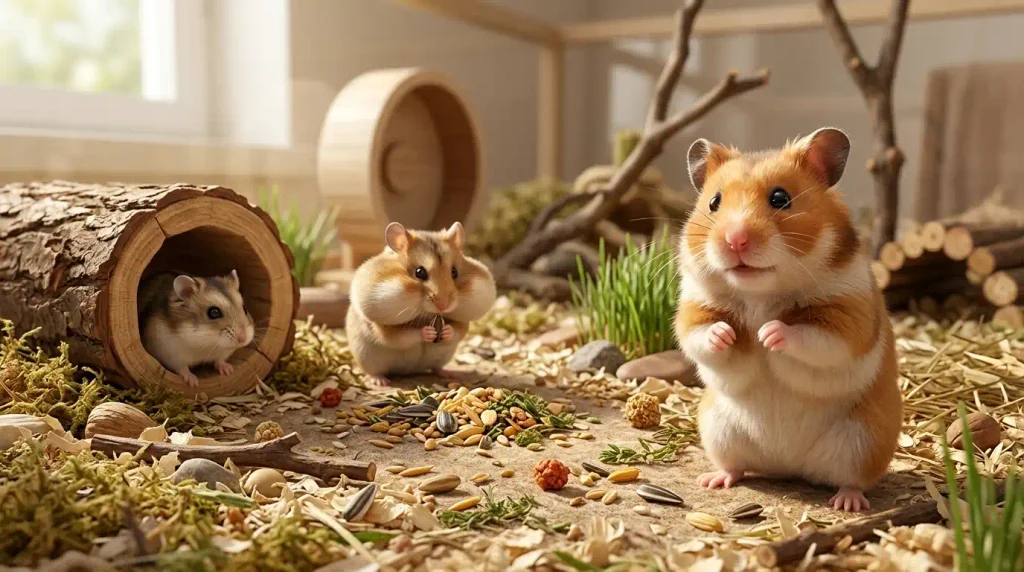
A fun fact hamster lovers adore is that these pets carry up to half their body weight inside expandable cheek pouches. Another fun fact that hamster research shows is that their incisor teeth never stop growing throughout their lives. Furthermore, every fun fact hamster study confirms that hamsters run up to five miles on exercise wheels every night. These incredible behavioral traits make studying hamster biology both surprising and deeply rewarding for pet parents.
Have you ever caught your tiny pet staring at you while stuffing an entire baby carrot into its cheek? Learning every surprising fun fact about hamster behavior reveals just how astonishingly clever and quirky these pocket-sized rodents truly are.
These compact creatures are far more complex than simple wheel-running fluffballs living in a cage. Once you discover every incredible fun fact and hamster secret hidden beneath their furry coats, you will look at your little companion with fresh eyes.
Whether you are a lifelong pet parent or considering your very first fur baby, exploring these rodent mysteries is pure joy. Let us explore the remarkable world of hamsters together and uncover what makes them so extraordinarily special!
Unlocking the Secret Anatomy of Your Tiny Companion
When you observe a hamster going about its daily routine, you are looking at a masterclass in biological adaptation. Their small bodies contain features perfectly engineered for survival, foraging, and navigating underground environments.
The Phenomenal Power of Expandable Cheek Pouches
One iconic fun fact hamster owners quickly notice is the breathtaking capacity of those chubby cheeks. A hamster’s cheek pouches are actually muscular pockets of unlined skin that extend all the way down to their shoulders and hips.
These pouches lack salivary glands, which means the food stored inside stays completely dry during transport. This ingenious evolutionary trait prevents seeds from spoiling or sprouting while the hamster carries them back to its main burrow.
The Omlet Blog+ 1
In the wild, carrying massive loads is a life-or-death necessity. A hamster can haul food equivalent to its own head size without losing mobility or balance while dodging predators.
Teeth That Never Stop Growing Clarington Animal Hospital
Have you ever wondered why your pet loves chewing on wooden blocks, cardboard, and treats so relentlessly? A crucial fun fact hamster teeth reveal is that their front incisors grow continuously throughout their entire lives.
Chewy
- Hamster enamel is naturally orange or dark yellow because it contains heavy iron deposits that make teeth super strong.
- Without constant gnawing on fibrous materials, their incisors would grow too long, making eating impossible.
- The upper and lower teeth rub against each other naturally while chewing, which keeps them continuously sharp.
This continuous growth means providing safe chew toys is not just an optional entertainment idea. It is an essential medical requirement that keeps your furry buddy happy, healthy, and pain-free.
Petco
Eyesight Limitations and Sensory Superpowers
If you place a hamster on a high bed or table, you might notice they show almost no fear of heights. This dangerous habit occurs because hamsters suffer from extremely poor vision and virtually zero depth perception.
The Omlet Blog
They are naturally nearsighted and cannot see more than a few inches past the tip of their nose. To make matters even trickier, hamsters are colorblind and rely primarily on instinct to process visual shapes in the dark.
To compensate for weak eyes, hamsters rely on long whiskers called vibrissae to build a three-dimensional mental map of their environment. They also possess an extraordinarily sensitive sense of smell that lets them identify owners, track food, and navigate complex tunnels effortlessly.
Wild Origins and Evolutionary History
Understanding where hamsters come from helps explain why they act so strangely inside our homes. Their domestic behaviors are direct reflections of survival strategies developed over thousands of years in harsh natural habitats.
From the Syrian Desert to Modern Living Rooms
Every golden hamster kept as a pet today traces its ancestry back to a single female and her litter captured in Syria. In 1930, a zoologist named Israel Aharoni dug up a nest near Aleppo, Syria, marking the beginning of domestic breeding.
Wild hamsters adapted to survive extreme dry climates, freezing nights, and baking afternoon heat across desert regions. These tough environmental conditions forged an animal capable of running long distances and storing huge amounts of resources.
Knowing this history makes watching your hamster dig in its bedding much more meaningful. They are simply expressing ancient survival instincts honed over generations of desert life.
The Different Breeds and Their Unique Quirks
Not all hamsters share the same physical traits, social preferences, or energy levels. Understanding the differences between popular species helps prospective owners choose the perfect match for their lifestyle.
Solitary Masters versus Social Dwarf Communities
A common error made by new owners is housing multiple Syrian hamsters together in one enclosure. Syrian hamsters are fiercely territorial solitary creatures that will fight aggressively over territory if forced to share space.
In stark contrast, certain dwarf species like Roborovskis can sometimes thrive in family groups if raised together from birth. However, even social dwarf species require careful monitoring, double resources, and vast living quarters to avoid conflict.
Respecting these natural social boundaries ensures your pet remains stress-free. Forcing a solitary animal to share space leads to severe anxiety, injury, and shortened lifespans.
Night Owls: Nocturnal Habits and Daily Energy
If you expect a hamster to play during the bright afternoon, you will likely find a sleeping ball of fluff. These creatures operate on a completely different biological clock than humans, making them night owls.
Clarington Animal Hospital
Why Hamsters Run Miles on Wheels Every Night Petco
Have you ever wondered how much distance that little spinning wheel actually covers during late-night sessions? Wild hamsters travel vast distances across open desert ground every single night searching for scattered seeds and vegetation.
- Domestic hamsters retain this instinct and regularly run up to five miles on their exercise wheels in a single evening.
- Running releases endorphins that burn excess energy, combat cage stress, and prevent boredom-induced bar chewing.
- A solid plastic wheel with a flat running surface is vital to prevent limb injuries caused by wire rungs.
This incredible athletic drive means a high-quality wheel is the single most important accessory inside any enclosure. A hamster without a wheel quickly grows stressed, lethargic, and unhealthy.
Crepuscular Rhythms and Sleep Cycles
While many people call hamsters nocturnal, scientists often classify them as crepuscular animals. This term means they are most active during twilight hours, specifically around dawn and dusk.
In the wild, emerging during dawn and dusk offers protection from harsh midday sun and daytime predators like hawks. It also avoids cold desert nighttime temperatures, allowing hamsters to forage during moderate conditions.
Respecting your hamster’s sleep schedule is vital for building trust and maintaining health. Waking up a deeply sleeping hamster startles them badly, which can lead to defensive nipping or chronic stress.
The Scent-Marking Rituals You Never Noticed
Have you ever seen your pet rub its flanks against cage walls, hideouts, or wooden toys? This repetitive behavior is scent marking, a primary way hamsters communicate ownership and navigate their territory.
Syrian hamsters possess prominent scent glands located on their hips, which often look like small dark spots. Dwarf hamsters feature a visible scent gland located directly on their belly near the navel area.
When a hamster rubs these glands against surfaces, it leaves behind a unique fragrance profile. Cleaning the entire cage at once strips away these familiar scents, causing temporary confusion and anxiety for your pet.
Strange, Silly, and Surprising Behaviors Explained
Hamsters display a fascinating range of unusual behaviors that leave many pet owners scratching their heads. Understanding these odd habits helps you distinguish between playful quirks and potential health warnings.
Why Do Hamsters Hoard Food So Obsessively?
You might carefully fill your hamster’s food bowl every morning, only to find it empty ten minutes later. Where does all that food go when their little bellies are not actually full?
Hamsters do not eat everything they collect immediately; instead, they hoard it in designated stash rooms within their bedding. In the wild, a single Syrian hamster can store over twenty pounds of seeds inside underground chambers!
Clarington Animal Hospital
This hoarding instinct provides a profound sense of psychological security and safety. Even in a home with unlimited food, keeping a secret stash makes your pet feel safe and prepared.
The Truth Behind Coprophagy: Eating Their Own Droppings
Watching your adorable furry friend reach down and eat its own droppings can be quite shocking. However, this natural digestive practice is called coprophagy, and it is crucial for their long-term health.
Hamsters possess a specialized digestive system that breaks down tough plant fibers in two distinct stages. The initial pass through the digestive tract produces soft pellets rich in essential vitamins, minerals, and beneficial bacteria.
- Re-ingesting these soft pellets allows the digestive tract to absorb vital nutrients like Vitamin B12 and Vitamin K.
- The second pass through the body creates dry, hard droppings that are discarded in a designated toilet corner.
- Preventing a hamster from practicing coprophagy can lead to severe nutritional deficiencies and illness.
While it seems strange to human sensibilities, coprophagy is a healthy, natural habit you should never interrupt.
Burrowing Masters: Building Complex Underground Castles
If you offer your hamster deep bedding, you will witness incredible architectural engineering skills. Wild hamsters build complex underground burrows featuring separate chambers for sleeping, food storage, and waste management.
Given deep substrate—at least six to ten inches—domestic hamsters dig intricate tunnel networks that hold shape without collapsing. They pack bedding walls tightly using their head and front paws, creating warm, secure burrows.
Providing ample bedding depth satisfies this deep survival urge better than any store-bought toy can. Watching your pet construct custom underground burrows is incredibly rewarding for any owner.
Surprising Health and Physical Traits
Behind their cute appearance lie unique physiological traits that make hamsters distinct from other small mammals. Learning about these features helps you provide better care and spot health problems early.
Torpor versus True Hibernation
When temperatures drop significantly, hamsters can enter a deep sleep state called torpor. Many owners mistake torpor for true hibernation or think their pet has passed away.
- Torpor is an emergency survival mechanism triggered by cold temperatures, poor lighting, or lack of food. The Omlet Blog
- During torpor, a hamster’s body temperature drops, breathing slows dramatically, and their body feels stiff and cold.
- Unlike true hibernation, torpor is dangerous for domestic pets and can cause dehydration or death if unaddressed.
If your pet enters torpor, warm the room gradually and gently hold them wrapped in a towel against your skin. As their body warms, breathing increases, and they slowly wake up.
Tail Lengths and Body Adaptations
Unlike mice and rats with long tails for balance, hamsters feature extremely short stubby tails. A Syrian hamster’s tail is usually under half an inch long, while dwarf species have almost hidden tails.
Because hamsters live in compact underground burrows, a long tail would get caught or injured in narrow spaces. Their compact bodies allow them to turn around easily inside tight tunnels without getting stuck.
Their flexible spine and loose skin also let them squeeze through amazingly tiny gaps. Rule of thumb: if a hamster’s head fits through an opening, its body usually follows!
Reproduction Milestones That Will Shock You
The reproductive capabilities of hamsters are astounding, earning them a reputation as incredibly fast breeders. Syrian hamsters have one of the shortest gestation periods of any mammal, lasting just sixteen to eighteen days.
Millamore
A mother hamster can give birth to a litter of up to twenty pups, although average litters range from six to ten. Pups are born completely hairless, blind, and deaf, relying on their mother’s milk and smell to survive.
Clarington Animal Hospital
Remarkably, young hamsters reach sexual maturity at just four to six weeks of age. This rapid development makes separating young males and females essential to prevent accidental litters.
Creating the Ultimate World for a Happy Hamster
Knowing these biological facts makes creating an optimal living environment much easier. Upgrading your pet’s enclosure improves their physical health, mental wellbeing, and lifespan significantly.
Enclosure Size Standards That Matter
Forget small plastic wire cages sold at traditional pet shops; modern hamster care requires far more space. Minimum floor space recommendations sit at 775 square inches of continuous floor space, with larger sizes being preferred.
Hamsters process space horizontally rather than vertically because they are poor climbers with bad depth perception. A large, flat enclosure allows space for deep bedding, wide wheels, multiple hideouts, and enrichment items.
Petco
Large glass terraria, wooden enclosures, or DIY bin cages provide ideal living environments. Giving your pet ample space reduces stress behaviors like bar gnawing, pacing, and cage aggression.
Essential Enrichment and Mental Stimulation
A barren cage leads to a bored, anxious pet, even if the enclosure itself is large. Adding varied textures, scatter-feeding habits, and natural foraging opportunities keeps your pet’s sharp mind engaged.
- Ditch traditional food bowls and scatter food mixes directly across bedding to encourage natural foraging.
- Add a large sand bath filled with calcium-free reptile sand for natural coat cleaning and grooming.
- Provide multiple hideouts made of ceramic, wood, and cork log tubes to give a feeling of security.
- Include fresh sprays like millet, oat, and flax for chew enrichment and natural decor.
These simple additions turn a plain cage into an interactive habitat where your hamster can thrive. Observing your pet forage, bathe in sand, and explore new setups provides daily joy.
🐹Practice Exercise
Hamster Basics
1. What type of animal is a hamster?
A. Reptile
B. Rodent
C. Amphibian
D. Bird
2. Which feature helps hamsters carry food?
A. Long tail
B. Sharp claws
C. Expandable cheek pouches
D. Large ears
3. When are many hamsters naturally most active?
A. During the middle of the day
B. Mostly at night
C. Only at sunrise
D. During rainy weather
Amazing Hamster Facts
4. What do hamsters commonly use their front paws for?
A. Grooming and handling food
B. Swimming long distances
C. Building nests underwater
D. Climbing tall trees
5. Why do hamsters store food in their cheek pouches?
A. Keeping their teeth clean
B. Carrying food back to a safe place
C. Making their fur softer
D. Cooling their bodies
6. Which sense is especially useful to hamsters when exploring?
A. Smell
B. Taste
C. Hearing music
D. Color vision
Hamster Behavior & Care
7. What activity can help a pet hamster stay active?
A. Sleeping all day
B. Sitting in direct sunlight
C. Eating continuously
D. Running on a suitable exercise wheel
8. Why do hamsters often build nests?
A. Creating a comfortable resting space
B. Attracting birds
C. Storing water
D. Growing plants
9. What should a hamster have access to every day?
A. Fresh drinking water
B. Sugary drinks
C. Salty snacks
D. Chocolate
Quick Fun Fact Challenge
10. Which statement about hamsters is true?
A. Every hamster species has the same personality
B. Hamsters never groom themselves
C. Different hamster species can vary in size and behavior
D. Hamsters naturally live only in tropical forests
Answer Key:
1. B | 2. C | 3. B | 4. A | 5. B | 6. A | 7. D| 8. A | 9. A | 10. C
FAQs
1. Why do hamsters stuff their cheeks so full?
Hamsters stuff their cheeks because of an instinct to forage and store food safely in their underground burrows. Their dry, expandable pouches allow them to carry large amounts of food back to their nest without spoiling it or slowing down while running from potential predators.
2. Can hamsters see color and long distances?
No, hamsters cannot see long distances or vibrant colors clearly. They are naturally nearsighted, colorblind, and lack depth perception, meaning they rely almost entirely on their sharp sense of smell, long sensitive whiskers, and keen hearing to explore and safely navigate their surroundings.
3. Is it normal for a hamster to eat its own droppings?
Yes, it is entirely normal and essential for a hamster to eat specific soft droppings through a process called coprophagy. This natural digestive behavior allows their body to fully absorb vital nutrients, vitamins, and beneficial bacteria that were not fully processed during the initial digestive pass.
4. Do Syrian hamsters prefer to live with friends?
No, Syrian hamsters are strictly solitary animals that must always live alone in domestic environments. Forcing two Syrian hamsters to share an enclosure causes extreme stress, territorial disputes, and dangerous physical fighting, making individual housing necessary for their safety and mental well-being.
5. Why does my hamster run on its wheel all night long?
Your hamster runs on its wheel all night because they are nocturnal animal built with tremendous physical endurance. In the wild, they naturally cover miles of territory every night searching for food, so a wheel allows domestic pets to burn energy and stay healthy.
6. What should I do if my hamster seems cold and unmoving in winter?
If your hamster seems cold and unmoving during cold weather, they may have entered a state called torpor. You should slowly and gently warm them using your body heat wrapped in a warm towel, while gradually raising the ambient room temperature to help them wake safely.
Conclusion
Uncovering every surprising fun fact hamster research has to offer opens a window into an extraordinarily rich animal world. From expandable cheek pouches to continuous tooth growth, these tiny creatures possess unique biological adaptations.
Understanding each remarkable fun fact about hamster behavior—such as nocturnal wheel running, solitary preferences, and deep burrowing—allows you to design an ideal living environment where your furry friend can truly thrive.
Share this fun fact hamster guide with fellow rodent enthusiasts today, upgrade your cage setup with deep bedding and foraging toys, and celebrate the wonderful world of hamsters!

Zoey Carter is the creator and writer behind funsvibe.com, a friendly website where readers can discover interesting, entertaining, and useful content. She enjoys exploring different topics and turning fresh ideas into simple, engaging articles that are easy to understand. Zoey believes that good content should be informative while still feeling natural and enjoyable to read.
Through funsvibe.com, Zoey Carter focuses on sharing original, reader friendly content with a warm and conversational style. She enjoys researching new subjects, discovering helpful information, and presenting ideas in a clear way. Her goal is to make every visit enjoyable while giving readers something valuable to discover and remember.