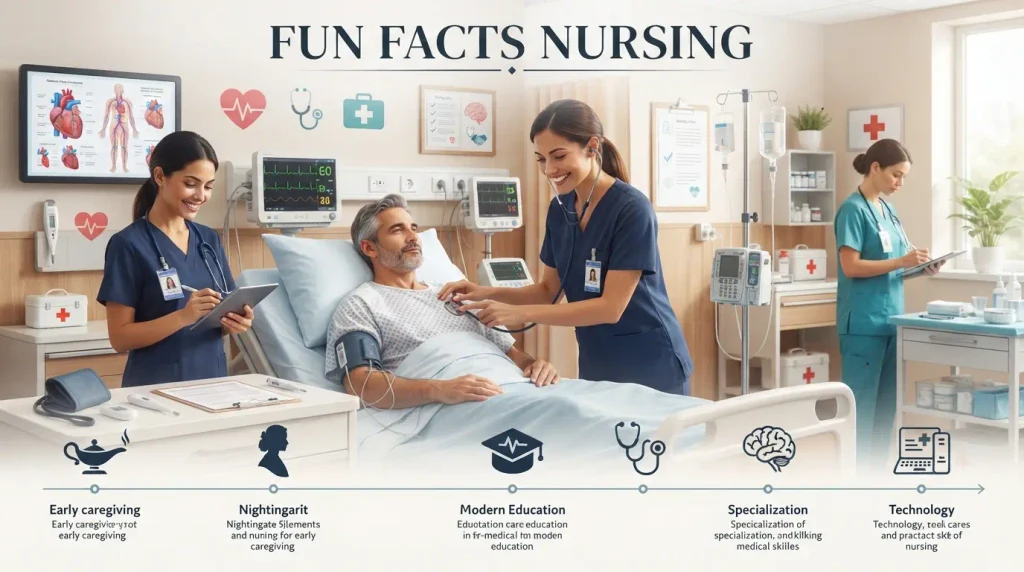
Nursing is one of the world’s most fascinating professions, combining deep history, incredible skill, and unexpected everyday moments. Learning fun facts about nursing history—from ancient remedies to modern brainpower—reveals how dedicated caregivers have shaped human medicine, saved millions of lives, and transformed healthcare across the globe over centuries.
Nursing is so much more than vital signs, scrub colors, and hospital shifts. Beyond the daily clinical routines lies a rich history filled with jaw-dropping stories, surprising origins, and remarkable human feats.
When you explore the most interesting fun facts nursing has to offer, you quickly realize how incredible this calling really is. Caregivers have invented life-saving tools, survived war zones, and even pioneered computer programming.
Whether you are a nursing student, a medical veteran, or just curious, these insights will change how you see scrubs forever. Let’s take a look at the fascinating world of healthcare secrets.
The Secret Origins of Modern Nursing
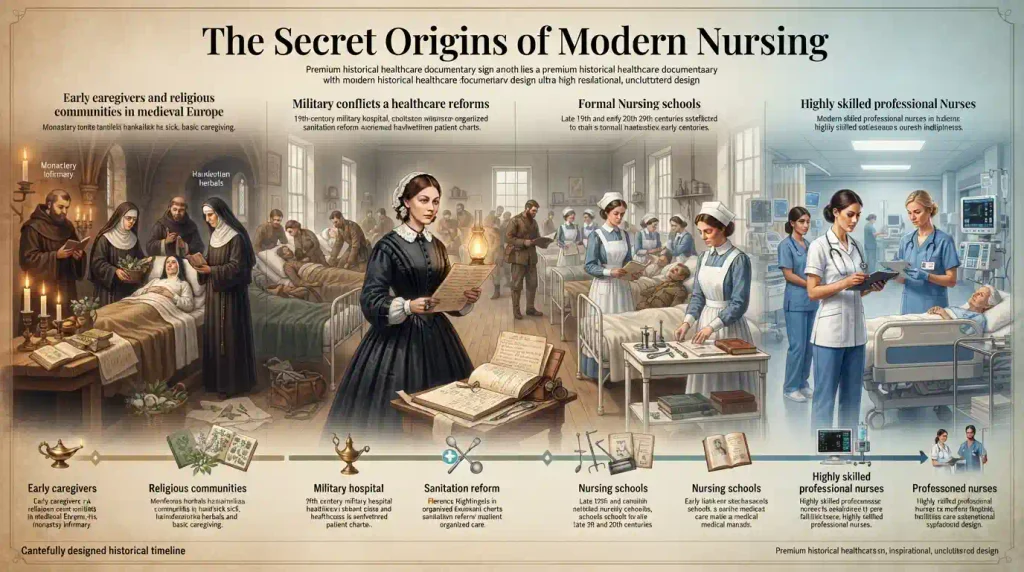
Long before modern hospitals existed, early societies cared for the sick using pure instinct and spiritual traditions. You might picture nursing as a modern career, but its roots stretch back thousands of years. Early civilizations viewed caregiving as a sacred duty long before medical degrees were created.
Ancient Beginnings and Monastery Care
In ancient Rome and Greece, caregiving was closely tied to religious temples and military camps. Roman soldiers established early field hospitals where designated caregivers treated battlefield wounds. During the Middle Ages, Christian monasteries took over medical care, turning monks and nuns into the primary nurses of Europe.
These early caregivers offered basic comfort, clean water, and herbal treatments. They did not have antibiotics or sterile bandages, but they understood the power of clean bedding and nutritious food. Their compassionate efforts laid the groundwork for the modern hospital system we rely on today.
The Surprising Gender Shift in Caregiving
Did you know that the earliest organized nurses were almost entirely men? In ancient India around 300 BCE, medical texts explicitly stated that nurses should be male, educated, and physically strong. Monastic orders during the Crusades also consisted of male knights who cared for wounded travelers.
The shift toward a female-dominated profession happened much later, primarily during the 19th century. Figures like Florence Nightingale reorganized nursing during the Crimean War, redefining it as a respectable profession for women. Today, men are steadily returning to the field, proving that compassionate care knows no gender limits.
Iconic Heroes Who Changed Healthcare Forever
Every famous field has its legendary pioneers who broke barriers and challenged the status quo. Nursing is packed with visionary figures who refused to accept poor hospital conditions. Their bravery transformed simple bedside care into an exact science.
Florence Nightingale: The Lady with the Lamp and Math Genius
Florence Nightingale is world-famous for carrying an oil lamp through military hospitals at night to comfort wounded soldiers. But one of the coolest fun facts nursing historians share is that she was also a brilliant statistician. She created colorful visual charts to prove that poor hygiene killed more soldiers than actual bullets.
Nightingale used her mathematical data to convince government leaders to overhaul hospital sanitation standards worldwide. Her pioneering work in data visualization saved thousands of military lives and made her the first female member of the Royal Statistical Society.
Clara Barton and the Birth of the Red Cross
Clara Barton began her career as a schoolteacher before rushing to the front lines of the American Civil War. She personally drove supply wagons directly into active battle zones to deliver bandages, food, and medicine to bleeding soldiers. Her courage earned her the nickname “Angel of the Battlefield.”
After the war, Barton traveled to Europe, where she learned about international relief organizations. She returned to America and founded the American Red Cross in 1881. She led the humanitarian agency for over two decades, helping millions during natural disasters and wartime crises.
Mary Eliza Mahoney: Breaking Racial Barriers
Mary Eliza Mahoney made history in 1879 by becoming the first African American professionally licensed nurse in the United States. She completed a brutal 16-month training program at the New England Hospital for Women and Children, where only three students out of forty passed the rigorous course.
Mahoney spent her career advocating for equal rights, professional dignity, and fair wages for minority healthcare workers. She later co-founded the National Association of Colored Graduate Nurses to support future generations. Her legacy continues to inspire diversity and inclusion in medical fields across the globe.
Mind-Blowing Inventions Created by Nurses
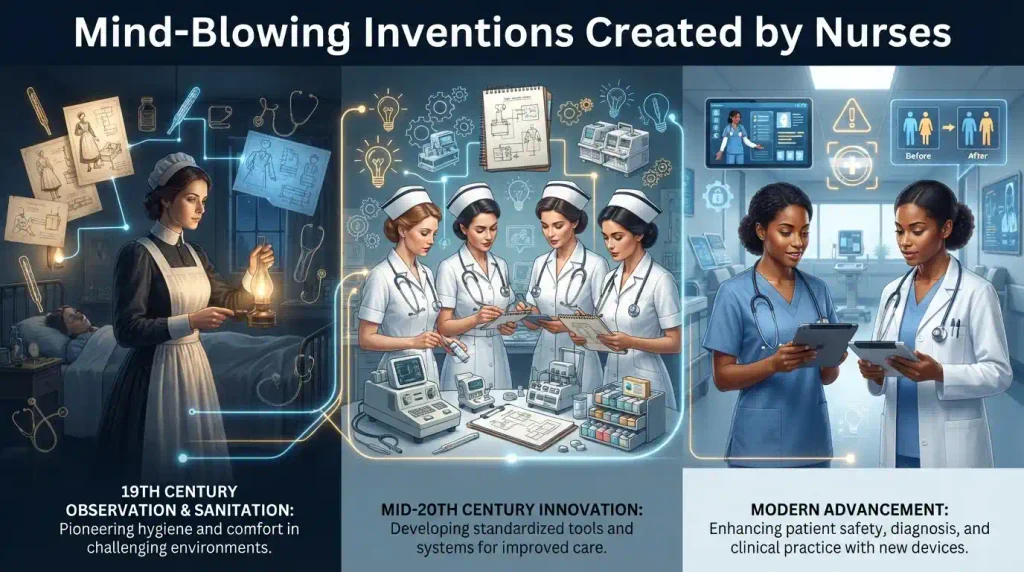
When nurses run into daily problems while treating patients, they do not wait for someone else to fix them. They roll up their sleeves and invent practical solutions on the spot. Many common items found in homes and hospitals today were created by innovative nurses.
Color-Coded IV Bags and Crash Carts
In the mid-20th century, medication errors occasionally happened because all intravenous fluid bags looked identical on the shelf. A nurse named Anita Dorr noticed this danger while working in an emergency room. In 1968, she built a mobile wooden cart packed with emergency supplies, creating the world’s very first ER crash cart.
Similarly, nurses pushed for distinct color-coding on medication labels and fluid bags to prevent accidental mix-ups during fast-paced traumas. These simple design tweaks cut down hospital mistakes dramatically and are now global safety standards.
The Menstrual Pad and Disposable Syringes
During World War I, French nurses discovered that cellulose cotton—a super-absorbent wood-pulp bandage material—worked exceptionally well for personal feminine hygiene. Their clever adaptation led directly to the creation of the first commercial sanitary napkins by Kotex shortly after the war ended.
Another breakthrough came from practical clinical needs. Nurses tired of re-sterilizing heavy glass syringes helped test and advocate for disposable plastic syringes. This single switch reduced cross-contamination between patients and made routine injections far safer for everyone.
Bili Lights for Newborn Jaundice
In the 1950s, Sister Jean Ward, a nurse in England, noticed that newborn infants with jaundice seemed to heal faster when their cribs were placed near sunny windows. She brought her observation to hospital doctors, who initially dismissed the idea as a coincidence.
Further research proved that her sharp observation was completely accurate. Sunlight breaks down bilirubin in an infant’s bloodstream naturally. This discovery led to the development of specialized blue phototherapy lights, which now save thousands of premature babies from brain damage every year.
Historical Milestones in Nursing Development
Nursing has developed significantly over centuries, moving from basic caregiving to a professional healthcare discipline. Important milestones shaped modern nursing practices, education, and patient care.
Florence Nightingale’s Influence
Florence Nightingale revolutionized nursing by improving hospital hygiene, sanitation, patient care, and nursing education during the Crimean War.
Rise of Nursing Education
The establishment of formal nursing schools introduced structured training, professional standards, and specialized healthcare knowledge for nurses.
Modern Nursing Practices
Today, nurses use advanced technology, evidence-based care, specialized skills, and research to improve patient outcomes and support healthcare systems.
Surprising Day-in-the-Life Secrets and Scrub Quirks
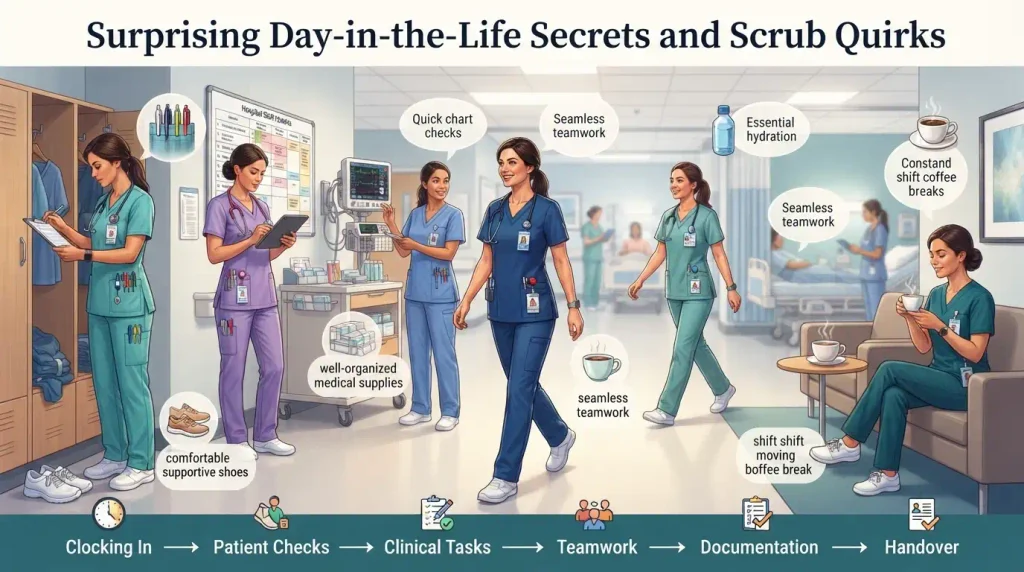
Have you ever wondered why hospital staff wear specific colors or walk so fast down the hallways? The daily routine of a nurse is filled with fascinating quirks, intense physical demands, and strange historical customs that most visitors never notice.
The Origin and Evolution of Scrubs
Historically, nurses wore heavy dresses, starched white aprons, and stiff caps designed to keep their hair neat. White uniforms symbolized purity and cleanliness, but they had a major flaw. They showed every single drop of blood, dirt, and stain instantly, making them difficult to keep clean during long shifts.
In the 1970s, hospitals transitioned to simple green and blue scrubs. Green and blue rest the eyes of surgeons by providing contrast against red body tissues. Today, comfortable scrubs come in hundreds of colors and patterns, allowing staff to express their personalities while staying clean.
The Shocking Distance Nurses Walk Each Shift
If you think your daily step count is impressive, try tracking an acute care nurse. Studies show that the average bedside nurse walks between 4 and 5 miles during a single 12-hour shift. That is roughly 10,000 to 12,000 steps every time they punch the clock!
Over a normal three-day workweek, a nurse can easily log nearly 15 miles on foot inside a hospital building. That is equivalent to running more than a half-marathon just by caring for patients, visiting medication rooms, and walking down hospital corridors.
Why Nursing Caps Vanished
For nearly a century, the crisp white nursing cap was a universal symbol of professional pride and graduation achievement. Each school had its own unique fold, stripe pattern, or design to identify where a graduate trained. So why did these classic caps suddenly disappear from modern hospitals?
The answer comes down to infection control and physical practicality. Caps easily caught on overhead curtain tracks, fell off during emergencies, and trapped dust and bacteria. By the late 1980s, hospitals phased them out entirely in favor of easy-to-wash scrubs and functional hair ties.
Wild, Weird, and Rare Medical Encounters
Working on the front lines of healthcare means seeing things that sound like science fiction. Nurses frequently encounter rare physical conditions, bizarre human instincts, and incredible body resilience that keep them on their toes every day.
The Phenomenon of Phantom Spills
Ask any veteran bedside caregiver, and they will tell you about the mysterious sensation known as the “phantom spill.” Nurses often feel a sudden wet drop on their arm, scrub pants, or shoes, even when nothing has spilled on them at all.
This happens because their brains are constantly hyper-aware of bodily fluids, IV line leaks, and spilled medications. The brain triggers a false physical warning signal just in case a real liquid splash occurred. It is a weird psychological side effect of constantly staying alert on the job.
Night Shift Magic and the Full Moon Myth
If you step into any hospital nurses’ station during a full moon, you will likely hear stories about bizarre patient behavior. Medical staff swear that full moons bring chaotic emergency room visits, sudden labor births, and strange behavioral outbreaks among patients.
Scientists have analyzed millions of emergency room logs and found no actual statistical link between lunar phases and hospital admissions. Yet, the belief remains strong among healthcare workers. It stands as one of the most enduring and fun facts nursing culture keeps alive today.
Human Superpowers in High-Stress Moments
Nurses often experience intense adrenaline surges during unexpected cardiac arrests or critical traumas. In these high-stakes moments, caregivers have been known to lift heavy equipment, perform chest compressions for hours, or react with lightning speed to save lives.
This acute stress reaction sharpens human reflexes and temporarily blocks physical fatigue. Caregivers often report feeling completely exhausted only after the emergency resolves, realizing their body went into overdrive to keep a patient breathing.
Modern Nursing Innovation and Technology
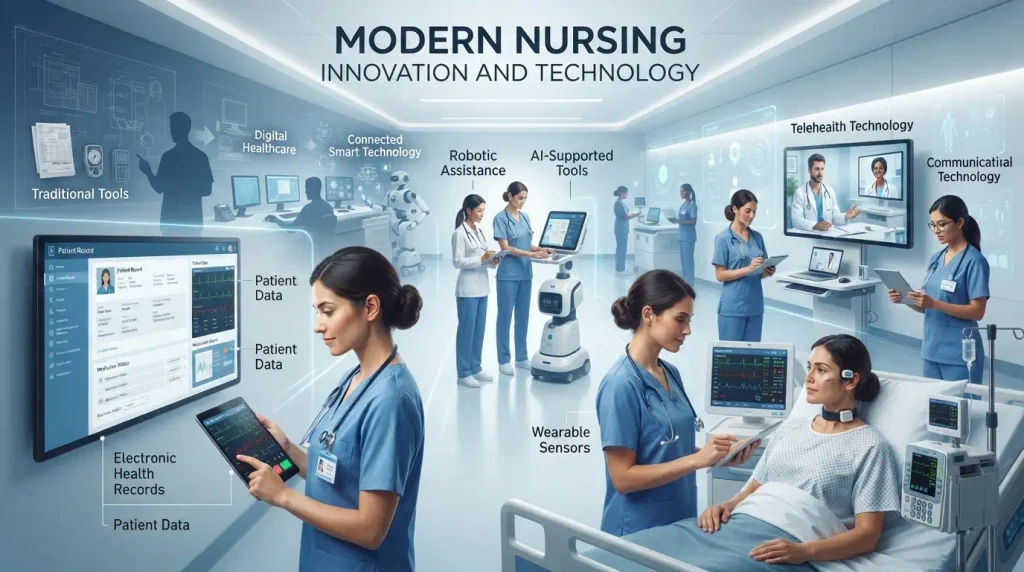
Healthcare is evolving faster today than at any point in human history. Modern caregivers do not just check blood pressure with manual cuffs; they work with cutting-edge artificial intelligence, wearable body sensors, and high-tech robotic assistants every day.
High-Tech Smart Beds and Sensors
Modern hospital beds are no longer simple mattresses on wheels. Today’s smart beds are complex computers that continuously monitor a patient’s weight, heart rate, and movement patterns. They can even tilt automatically to prevent painful bedsores and prevent accidental falls.
These advanced beds alert nurses via smartphone apps the instant a confused patient attempts to stand up unassisted. This smart technology allows caregivers to jump into action instantly, preventing serious injuries before they happen.
Virtual Reality Training for Nursing Students
Gone are the days when nursing students practiced invasive procedures solely on plastic dummies or each other. Today’s top nursing schools utilize high-definition virtual reality (VR) headsets and simulated software to practice complex clinical care.
Students can step inside a 3D simulation of an emergency room, hear realistic alarms, and interact with virtual patients. This immersive tech lets them make mistakes safely in a digital world before ever touching a real human being in a hospital setting.
AI Assistants and Predictive Care
Artificial intelligence is quickly becoming a valuable assistant at the hospital bedside. Smart algorithms analyze patient charts, lab results, and vital signs continuously to spot hidden patterns of dangerous conditions like sepsis hours before symptoms appear outwardly.
These early AI warnings give nurses a critical head start to administer life-saving antibiotics before a patient’s health deteriorates. Technology does not replace human empathy, but it gives caregivers powerful tools to protect their patients.
Fun Facts Nursing Career Opportunities Offer
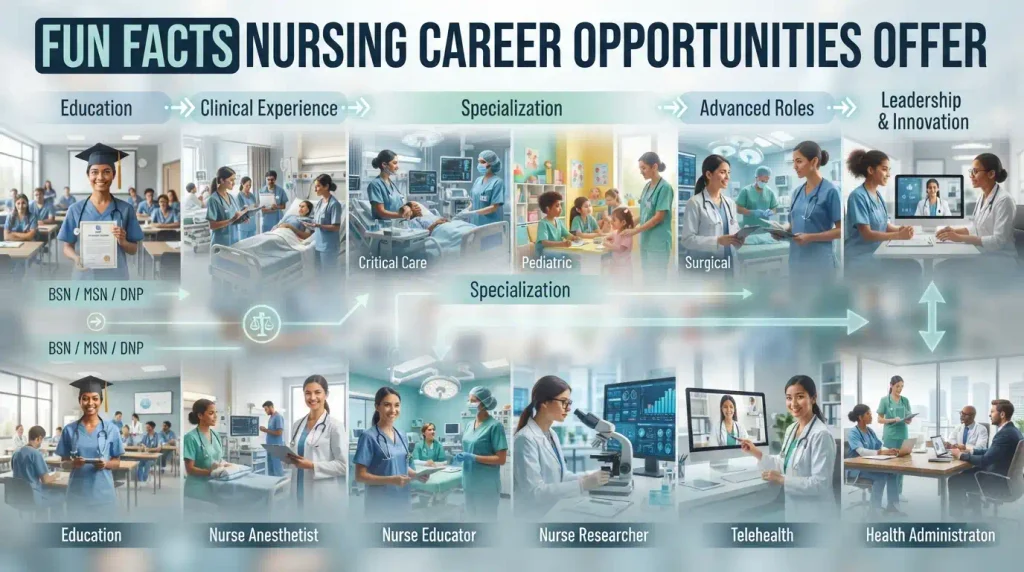
When people hear the word “nurse,” they usually picture someone working in an emergency room or doctor’s office. However, a nursing degree opens doors to some of the most unconventional, adventurous, and surprising careers imaginable.
Flight Nurses and Cruise Ship Medical Care
If you love travel and adrenaline, flight nursing might be your dream job. Flight nurses work inside helicopters and fixed-wing airplanes, caring for critically injured patients during high-speed emergency transports to major trauma centers.
Prefer the open ocean? Cruise ships employ full medical teams to handle everything from motion sickness to complex cardiac events while sailing across the globe. These nurses get to explore unfamiliar ports during their off-duty hours while delivering care at sea.
Forensic Nurses and Crime Scene Investigation
Did you know that some nurses work closely with law enforcement and the legal system? Forensic nurses receive specialized training to gather medical evidence, treat crime victims, and examine physical trauma in legal cases.
They often testify as expert witnesses in court, collect DNA samples, and provide compassionate support to survivors of violence. It is a unique blend of medicine, law enforcement, and social justice that makes a tangible difference in communities.
Hollywood Medical Advisors
Have you ever wondered how medical TV shows make emergency room scenes look so realistic? Film and television studios hire experienced nurses as technical advisors on movie sets to teach actors how to hold surgical tools, apply bandages, and speak medical jargon convincingly.
These Hollywood advisors ensure that TV doctors check pulses correctly, use stethoscopes properly, and handle props like real professionals. It is an exciting career path where medical expertise meets the entertainment world!
Practice Exercise
- Who established the American Red Cross after serving on Civil War battlefields?
A. Florence Nightingale
B. Clara Barton
C. Mary Eliza Mahoney
D. Anita Dorr - What useful item was developed after WWI nurses adapted wood-pulp bandages?
A. Disposable gloves
B. Sanitary pads
C. Adhesive tape
D. Plastic syringes - In ancient India around 300 BCE, who made up the majority of trained nurses?
A. Men
B. Women
C. Monks only
D. Soldiers only - What math tool did Florence Nightingale use to reform military hospital sanitation?
A. Algebra equations
B. Visual statistics and charts
C. Calculus formulas
D. Financial balance sheets - Why did modern hospitals replace white dresses with blue and green scrubs?
A. White fabric was too expensive
B. Blue and green reduce eye strain during surgery
C. White fabric faded too quickly in hot water
D. Patients disliked the color white - Who was the first African American professionally licensed nurse in the United States?
A. Clara Barton
B. Anita Dorr
C. Sister Jean Ward
D. Mary Eliza Mahoney - What everyday ER item did nurse Anita Dorr invent in 1968?
A. Digital thermometer
B. Emergency crash cart
C. Stethoscope
D. Automatic heart monitor - How many miles does an average bedside nurse walk during a typical 12-hour shift?
A. 1 to 2 miles
B. 4 to 5 miles
C. 8 to 10 miles
D. 12 to 15 miles - Sister Jean Ward discovered that sunlight helped cure which condition in newborns?
A. Jaundice
B. Dehydration
C. Low weight
D. Respiratory infections - Why were traditional starched nursing caps phased out of modern hospitals?
A. They became too expensive to make
B. They caused headaches for staff
C. They posed infection control and safety risks
D. Students refused to wear them
Answer Key:
- B, 2. B, 3. A, 4. B, 5. B, 6. D, 7. B, 8. B, 9. A, 10. C
FAQs
1. What are some fun facts nursing students should know?
Nursing students should know that caregiving is an ancient profession with a deep history of innovation. Nurses invented crash carts, bili lights, and sanitary pads. Plus, working three 12-hour shifts means logging up to 15 miles on foot each week!
2. Why do nurses wear different colored scrubs?
Hospitals use different scrub colors to help identify staff roles quickly during busy shifts. For example, ER nurses might wear dark blue, while pediatric staff wear bright patterns to comfort children. Blue and green also reduce eye fatigue during surgical procedures.
3. Who is considered the pioneer of modern nursing?
Florence Nightingale is universally recognized as the founder of modern nursing. During the Crimean War, she revolutionized hospital sanitation, introduced clean air and water protocols, and used statistical data to prove that hygiene saves patient lives on a massive scale.
4. Can men become professional nurses?
Yes, men can absolutely become nurses, and their numbers are growing rapidly worldwide. Historically, early caregiving in ancient times was dominated by men, and today male nurses excel in emergency, flight, surgical, and administrative healthcare roles everywhere.
5. What is the origin of the word nurse?
The word nurse comes from the Latin word “nutrire,” which means to nourish, feed, or foster. Over time, the term evolved to describe anyone who cares for the sick, injured, infirm, or vulnerable members of a community.
6. What is the rarest nursing specialty?
Space nursing and forensic nursing are among the rarest specialties today. Space nurses work with aerospace teams to monitor astronaut health, while forensic nurses combine medical knowledge with criminal law to collect evidence and support crime victims.
Conclusion
Exploring these fun facts nursing history holds reminds us just how dynamic, resilient, and exciting the healthcare world truly is. From ancient temple caregivers and Civil War heroes to modern innovators operating AI tools, nurses have always been at the heart of human healing.
Caregivers do far more than take temperatures and give medications—they invent life-saving medical devices, break social barriers, and walk miles every day to keep communities healthy. Their unique blend of scientific skill, physical endurance, and deep compassion makes nursing one of the most rewarding professions on Earth.
Whether you are pursuing a medical degree, working on the hospital floor, or simply admiring healthcare workers, share these amazing facts with a friend today. You might inspire the next great pioneer in modern healthcare!
Zoey Carter is the creator and writer behind funsvibe.com, a friendly website where readers can discover interesting, entertaining, and useful content. She enjoys exploring different topics and turning fresh ideas into simple, engaging articles that are easy to understand. Zoey believes that good content should be informative while still feeling natural and enjoyable to read.
Through funsvibe.com, Zoey Carter focuses on sharing original, reader friendly content with a warm and conversational style. She enjoys researching new subjects, discovering helpful information, and presenting ideas in a clear way. Her goal is to make every visit enjoyable while giving readers something valuable to discover and remember.