

Carbon is the ultimate building block of life on Earth, forming over ten million unique compounds. These fun facts about carbon reveals show how a single element can create soft pencil lead, ultra-hard diamonds, and every living organism around us.
Have you ever wondered what connects the sparkling diamond on a ring to the charcoal sizzle of a weekend barbecue? The secret lies in discovering these fun facts carbon keeps hidden right in plain sight.
Carbon is truly the shapeshifting superstar of the periodic table. From shaping our weather to making up a huge part of your own body, exploring fun facts carbon offers opens up a whole new view of our world.
Let’s take a friendly journey through the wild, weird, and downright amazing universe of carbon science!
What Makes Carbon the King of the Periodic Table?
Carbon holds a very special spot in chemistry. It sits as element number six on the periodic table, meaning every single carbon atom carries exactly six protons in its center.
Because of how its electrons are arranged, carbon can hold hands with up to four other atoms at the same time. This simple trick allows it to form endless chains, complex rings, and sturdy 3D webs that no other element can easily match.
The Ultimate Chemical Lego Brick
Think of carbon atoms as the ultimate set of atomic Lego blocks. They snap together smoothly with other carbon atoms, but they also love linking up with oxygen, hydrogen, and nitrogen.
Because these atomic bonds are strong yet flexible, carbon forms the sturdy scaffolding for complex biological molecules. Without this unique snapping ability, life as we know it simply could not exist.
How Four Simple Bonds Change Everything
A single carbon atom has four open slots for chemical bonding. Scientists call this property tetravalency, which is just a fancy word meaning it has four helpful hands.
These four hands let carbon build flat sheets, long spiral staircases, or solid spatial cages. It is this exact flexibility that makes carbon the primary element for all living organisms.
The Shapeshifting Wonders: Allotropes of Carbon
One of the coolest features of carbon is its ability to appear in totally different physical forms called allotropes. Even though these materials are made of 100% pure carbon, they look, feel, and act completely differently.
Diamonds: The Ultimate Hardness Champion
Diamonds are created deep underground under extreme heat and crushing pressure over billions of years. Inside a diamond, every carbon atom binds tightly to four neighbors in a rigid, three-dimensional pyramid structure.
This tight atomic grid makes diamond the hardest naturally occurring mineral on Earth. It is so tough that industry uses diamonds to cut through steel, drill deep oil wells, and polish dense stone.
Graphite: Soft Enough to Write Your Name
Graphite is made of the same carbon atoms as a diamond, but they are arranged in flat, stacked sheets. The bonds inside each sheet are super strong, but the bonds holding the stacked sheets together are incredibly weak.
Because these layers slide off with almost zero effort, graphite leaves a smooth gray trail on paper. That means pencil lead is not lead at all; it is actually just slippery, sheeted carbon!
Graphene: The Miracle Material of the Future
If you take a single layer of graphite that is just one single atom thick, you get a revolutionary material called graphene. Discovered by peeling stacked graphite with simple adhesive tape, graphene is a true modern marvel.
It is roughly 200 times stronger than steel, almost completely transparent, and conducts electricity better than copper. Engineers are currently using graphene to build flexible phone screens, lightning-fast batteries, and super-strong sports gear.
Buckyballs and Nanotubes: Futuristic Carbon Cages
In 1985, scientists discovered that carbon can wrap itself into hollow microscopic soccer balls known as buckminsterfullerenes, or buckyballs. These tiny geometric spheres opened up a brand-new field of nanotechnology.
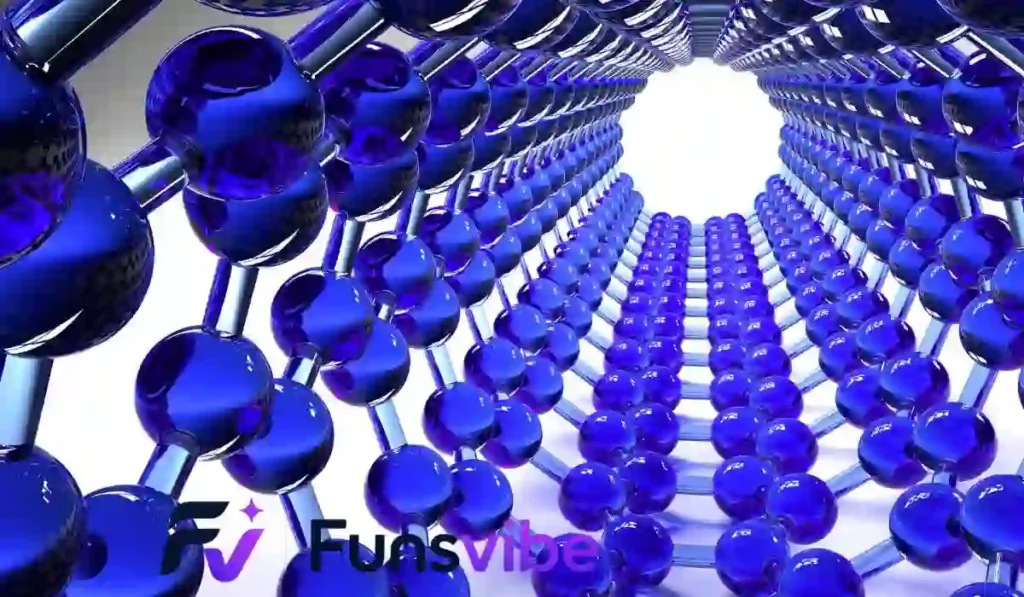
Carbon can also roll itself into microscopic hollow tubes called carbon nanotubes. These tiny cylinders are lighter than plastic yet far stronger than titanium, making them ideal for space exploration materials.
Carbon and Life: The Backbone of Earth’s Ecosystems

Every living creature on our planet is built around a structural backbone of carbon. In fact, carbon makes up roughly 18% of your total body weight, making it the second most abundant element in human bodies right behind oxygen.
Organic Chemistry Is Really Just Carbon Chemistry
Scientists divide chemistry into two main branches: inorganic and organic. Organic chemistry is simply the dedicated study of compounds built out of carbon atoms.
From the proteins building your muscles to the DNA storing your genetic code, carbon provides the main frame. Its ability to form stable, complex rings lets biological systems carry out life’s daily functions.
The Great Biological Cycle: Photosynthesis and Respiration
Carbon is constantly traveling around our planet in a giant global balance known as the carbon cycle. Plants absorb carbon dioxide gas from the air and use sunlight to turn it into sugary food.
Animals then eat those plants, utilize the energy, and breathe carbon dioxide back out into the sky. This continuous exchange keeps the planetary engine running smoothly day in and day out.
Outer Space Carbon: From Cosmic Dust to Diamond Planets
Carbon is not just an Earthly phenomenon; it is widely scattered across the vast universe. It is manufactured deep inside the burning cores of aging stars through nuclear fusion.
Stars Are Giant Carbon Factories
When medium and massive stars run low on hydrogen fuel, they begin fusing helium atoms. This fiery stellar process creates vast amounts of fresh carbon inside the star’s nuclear furnace.
When these old stars eventually blow up in giant explosions called supernovas, they blast their carbon out into space. That cosmic dust eventually settles to form new planets, asteroids, and living beings.
Rain of Diamonds on Alien Worlds
Deep inside giant gas planets like Neptune and Uranus, extreme pressure crushes atmospheric methane gas. Scientists believe this crushing force splits the gas apart and turns the carbon directly into hard diamonds.
These glowing gems then sink through the deep planetary atmosphere like glittering hail. That means it literally rains valuable real diamonds on distant outer planets!
Cosmic Carbon in Meteorites and Comets
Space rocks crashing into Earth frequently contain rich traces of complex carbon compounds. Some space meteorites even carry microscopic interstellar diamonds formed before our solar system was even born.
Comets also hold frozen carbon dioxide, often known as dry ice, along with dark organic sludge. Studying these space rocks helps scientists understand how the basic ingredients for life arrived on early Earth.
Everyday Carbon: Surprising Places You Find It Now

You do not need an advanced science lab or an outer space telescope to see carbon in action. It is hiding inside everyday household objects, foods, and tools you use constantly.
Activated Charcoal: The Ultimate Sponge
When wood or coal is heated to high temperatures without oxygen, it transforms into porous carbon called activated charcoal. This process creates millions of microscopic pockets across its surface area.
Because these tiny pockets trap toxins and odorous compounds easily, activated charcoal is used in home water filters, emergency medicine, and air purifiers. A single gram of activated charcoal has an internal surface area larger than a standard basketball court!
Fizzy Drinks and Carbonation
When you pop open a cold can of soda, that satisfying hiss comes directly from pressurized carbon dioxide gas. The gas dissolves into liquid under high pressure to form weak carbonic acid.
This acidic reaction gives carbonated beverages their sharp, refreshing tang. As soon as you open the container, the pressure drops and the carbon gas bubbles up to escape into the room.
The Fire-Resistant Wonder of Carbon Fiber
Carbon fiber is made by twisting thin strands of carbon together and weaving them into dense cloth sheets. When set with strong plastic resin, these woven sheets become remarkably lightweight and rigid.
Engineers use carbon fiber to build high-performance race cars, modern airplanes, and professional athletic bicycles. It gives objects immense structural strength without adding heavy weight.
Carbon as a Cosmic Clock: Carbon Dating

Carbon helps historians, archaeologists, and geologists figure out the exact age of ancient organic artifacts. This groundbreaking scientific method relies on a special radioactive form of carbon called Carbon-14.
How Radioactive Carbon Works
Most carbon on Earth is stable Carbon-12, but cosmic rays hitting our upper atmosphere constantly create tiny amounts of unstable Carbon-14. Living plants and animals absorb both forms of carbon throughout their active lives.
When an organism dies, it stops taking in new carbon from its surrounding environment. The standard Carbon-12 stays locked in place, while the unstable Carbon-14 slowly decays away at a predictable speed.
Measuring Time with Carbon Half-Lives
Scientists know that half of any given sample of Carbon-14 decays every 5,730 years. By carefully measuring how much Carbon-14 remains inside an old bone, wooden tool, or piece of cloth, experts can calculate its age.
This clever technique works reliably on organic objects up to roughly 50,000 years old. It has helped us date ancient Egyptian mummies, prehistoric tools, and prehistoric campfire sites!
The Double-Edged Sword: Carbon and Climate Science
Carbon is essential for life on Earth, but the way it moves through our modern atmosphere requires careful balance. Understanding how carbon interacts with heat is critical for protecting our global climate.
The Blanket Effect of Carbon Dioxide
Carbon dioxide is a natural greenhouse gas that acts like a cozy, clear blanket wrapped around our planet. It lets bright sunlight pass through to heat the ground, but traps outgoing warmth from escaping directly back into cold space.
Without this natural trapping effect, planet Earth would be a frozen ball of ice with average temperatures far below freezing. Carbon dioxide keeps our world comfortable, warm, and wonderfully livable.
Restoring Balance to the Planet’s Carbon Cycle
Over the last two centuries, burning fossil fuels like coal, oil, and gas has released ancient trapped carbon back into the air. This rapid addition makes the atmospheric blanket thicker, causing global temperatures to gradually climb higher.
To balance things out, scientists and engineers are inventing innovative carbon capture tools that pull excess gas directly out of the atmosphere. Planting native forests and protecting deep oceans also helps absorb excess atmospheric carbon naturally.
Extraordinary Fun Facts Carbon Fans Will Love

- Pure Diamond Burning: If you heat a clear diamond to about 900 degrees Celsius in open oxygen, it will burn away completely without leaving any ash, turning into pure carbon dioxide gas!
- The Weight of Air: Millions of tons of invisible carbon gas are floating directly above your head right now in the surrounding atmosphere.
- Tough Nanotubes: A thread of carbon nanotubes as thin as a human hair can easily hold up a full-sized pickup truck without snapping.
- Ancient Charcoal Paintings: Cave drawings made with charcoal carbon over 30,000 years ago still look sharp and clear today because carbon is so durable.
- The Carbon in You: An average adult human carries enough total carbon inside their body to produce approximately 9,000 standard graphite lead pencils.
- Super-Dense Stars: White dwarf stars in deep space are essentially giant cooling balls of crystallized carbon, making them cosmic diamonds the size of Earth!
- Ink-Black Material: Scientists created a custom carbon coating called Vantablack that absorbs 99.96% of incoming light, making 3D objects look like flat, empty void holes.
- Sugar’s Secret: Common table sugar is made of carbon, hydrogen, and oxygen atoms tightly bound together into sweet crystals.
Practice Exercise
- What is the atomic number of carbon on the periodic table?
A. 4
B. 6
C. 12
D. 14 - Which carbon allotrope is known as the hardest naturally occurring mineral on Earth?
A. Graphite
B. Graphene
C. Diamond
D. Fullerene - Why is graphite soft and slippery enough to use as pencil lead?
A. Its atoms are arranged in loosely bound 2D sheets that slide past each other easily.
B. It contains high amounts of water molecules trapped inside its grid.
C. It is mixed with soft liquid oils during its underground formation.
D. Its chemical bonds break apart permanently whenever it touches paper. - Approximately what percentage of the human body’s total weight is made of carbon?
A. 5%
B. 18%
C. 50%
D. 75% - What ultra-thin carbon material consists of a single layer of carbon atoms arranged in a honeycomb lattice?
A. Diamond
B. Coal
C. Graphene
D. Charcoal - What radioactive isotope of carbon is used by scientists to date ancient organic artifacts?
A. Carbon-11
B. Carbon-12
C. Carbon-13
D. Carbon-14 - What happens to a diamond if you heat it to extreme temperatures in pure oxygen?
A. It melts into liquid diamond.
B. It turns directly into soft graphite.
C. It burns completely into carbon dioxide gas.
D. It shatters into tiny glowing fragments. - What gas is dissolved under pressure into soft drinks to give them their fizzy bubbles?
A. Carbon monoxide
B. Pure oxygen
C. Carbon dioxide
D. Methane gas
Answer Key
1. B | 2. C | 3. A | 4. B | 5. C | 6. D | 7. C | 8. C
FAQs
1. Why is carbon so important for life on Earth?
Carbon can form up to four stable chemical bonds with other elements at once. This unique ability lets it build complex chains, rings, and molecular scaffolding required to construct essential biological structures like proteins, fats, and DNA.
2. Is pencil lead made out of real toxic lead?
No, pencil lead does not contain any toxic lead metal at all. It is made from a harmless blend of soft graphite, which is a pure form of carbon, and natural clay binder baked together to make smooth writing sticks.
3. Can scientists really transform cheap graphite into real diamonds?
Yes, scientists routinely create synthetic diamonds in modern laboratory settings. By applying extreme temperature and crushing hydraulic pressure to pure graphite, they rearrange its flat atomic sheets into a dense three-dimensional diamond lattice.
4. What is the main difference between diamond and graphite?
The main difference lies in how their carbon atoms are structurally arranged. Diamonds form a dense 3D pyramid lattice, making them ultra-hard, while graphite forms flat stacked 2D layers that easily slide past one another.
5. How does carbon dating tell us how old an old fossil is?
Living organisms constantly take in radioactive Carbon-14 until they die. After death, that trapped Carbon-14 slowly decays away at a fixed, known rate, allowing scientists to calculate the object’s age by measuring its remaining radiation levels.
6. What is graphene and why are scientists excited about it?
Graphene is a single layer of carbon atoms arranged in a 2D honeycomb grid. It is exceptionally strong, lightweight, transparent, and highly conductive, making it a game-changing material for next-generation flexible electronics, solar panels, and long-life batteries.
Conclusion
Exploring these fun facts carbon brings to light shows just how dynamic and essential this element really is. From soft pencil marks to brilliant diamonds and outer space stars, carbon continuously forms the foundation of our surrounding universe.
Understanding carbon’s unique abilities helps us appreciate everything from the air we breathe to the technology we build every day. Its incredible versatility makes it a true wonder of natural chemistry that scientists are still actively discovering.
Keep looking closely at the simple materials around your home—you will be amazed at how much carbon is quietly working behind the scenes. Share these amazing carbon facts with a friend today and spark their scientific curiosity!

Zoey Carter is the creator and writer behind funsvibe.com, a friendly website where readers can discover interesting, entertaining, and useful content. She enjoys exploring different topics and turning fresh ideas into simple, engaging articles that are easy to understand. Zoey believes that good content should be informative while still feeling natural and enjoyable to read.
Through funsvibe.com, Zoey Carter focuses on sharing original, reader friendly content with a warm and conversational style. She enjoys researching new subjects, discovering helpful information, and presenting ideas in a clear way. Her goal is to make every visit enjoyable while giving readers something valuable to discover and remember.