
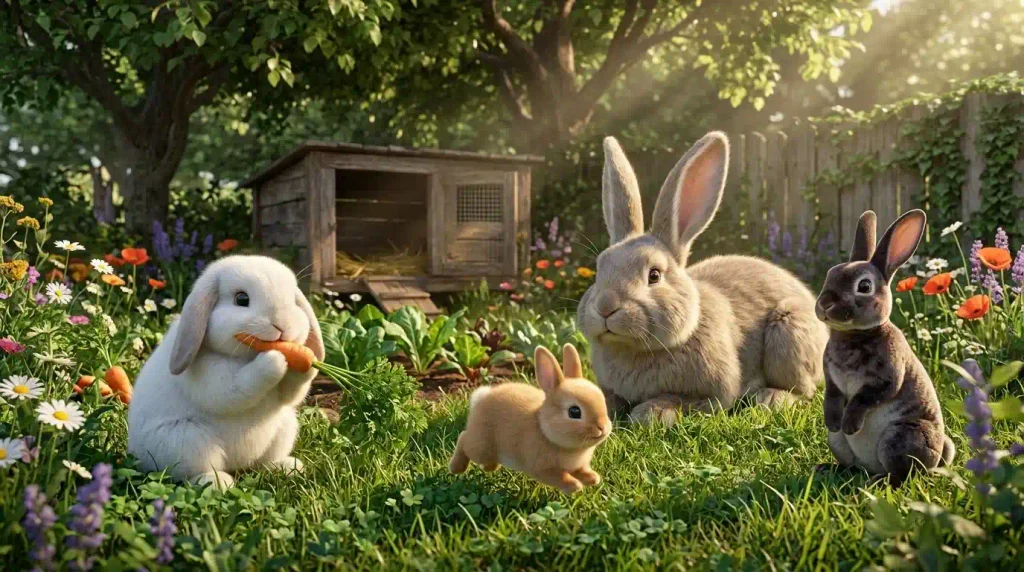
If you are looking for a fascinating fun facts rabbit overview, bunnies are full of incredible physical, social, and behavioral surprises. From high-speed running to complex vocalizations, these fluffy creatures are far more complex than most people realize.
First, an amazing fun fact about rabbits is that bunnies purr when happy, jump up to three feet high, and perform joyful acrobatic twists called binkies. Their physical traits allow them to thrive in both wild environments and loving household setups.
Second, a key fun facts rabbit detail involves their senses, like having nearly 360-degree vision and ears that independently rotate 270 degrees to spot danger. These built-in warning systems keep them safe from potential predators in the wild.
Finally, their unique digestive biology relies on continuous tooth growth and grass hay to prevent severe health issues. Understanding how their bodies function helps owners keep these marvelous animals healthy, happy, and thriving for years.
Amazing Rabbit Facts: Everything You Ever Wanted to Know About Bunnies

Have you ever wondered what your fluffy companion is trying to say when they suddenly twitch their nose or flip upside down in mid-air?
Rabbits are far more complex and entertaining than most people realize, making learning a fun facts rabbit deep dive absolute magic for animal lovers.
Whether you share your home with a hopping housemate or simply adore these long-eared creatures, you are about to discover a whole new world of bunny wonder.
The Secrets of Rabbit Communication and Social Life
Rabbits have a rich language that goes way beyond simple thumping on the carpet. They communicate using body posture, subtle scents, and surprising vocal sounds that tell a whole story once you know what to look for.
Deciphering the Joyful World of Binkies
When a rabbit feels pure, unadulterated happiness, it performs a famous move called a binky. During a binky, a bunny leaps high into the air, twists its torso mid-flight, and flicks its ears before landing softly.
It is the ultimate bunny happy dance, and seeing one in person is an absolute delight. Younger rabbits tend to binky with wild enthusiasm, while older bunnies might opt for a gentle half-binky head shake when pleased.
Why Do Rabbits Purr and Tooth-Click?
Cats are not the only pets that purr when they feel safe and content. Rabbits create a soft purring sound by gently grinding their teeth together while relaxing or being petted.
This gentle vibration feels remarkably warm and soothing to human fingers. However, loud, harsh tooth grinding is completely different and signals that a bunny is in severe pain or distress.
Understanding the Famous Rabbit Nose Twitch
A rabbit’s nose twitch is one of its most recognizable features, but it serves a very functional purpose. Rabbits have over 100 million olfactory receptors in their snouts, compared to just five million in humans.
Twitching opens up their nostrils wider, allowing them to process thousands of scent particles every second. When a rabbit stops twitching its nose entirely, it usually means it is deeply relaxed or sleeping peacefully.
Surprising Physical Superpowers and Anatomy

Beneath all that soft fur lies a body built for high-speed survival, razor-sharp awareness, and incredible agility.
Eyes That Can See Almost Behind Their Backs
Because rabbits are prey animals, their large eyes are placed on the sides of their heads. This anatomical layout provides them with nearly a 360-degree field of vision, allowing them to spot predators approaching from almost any angle.
The only blind spot a rabbit has is a tiny space right in front of its nose. To see an object right in front of its face, a rabbit turns its head sideways to bring it into focus.
The Incredible Science of Bunny Ears
A rabbit’s long ears are not just adorable decorations; they are high-tech radar dishes. Each ear can rotate independently up to 270 degrees to locate precise sound sources over vast distances.
Furthermore, these large ears play a vital role in body temperature regulation. Networked blood vessels inside the ears expand or contract to release or trap body heat as needed.
Fast Feet and Powerful Hind Legs
Rabbits are natural-born sprinters designed to outrun foxes, hawks, and coyotes in open fields. Domestic house rabbits can reach running speeds of up to 35 miles per hour over short stretches.
Their strong hind legs allow them to jump over three feet high and leap horizontal distances of nearly ten feet in a single bound.
Unique Eating Habits and Digestive Wonders
Feeding a rabbit is completely different from feeding a traditional cat or dog. Their herbivorous digestive systems require specialized diets to keep everything running smoothly.
The Truth About Eating Cecotropes
One of the most surprising aspects of rabbit biology is that they regularly eat their own droppings. However, they do not eat standard waste; they consume special nutrient-dense pellets called cecotropes.
Cecotropes are produced in a specialized chamber of the digestive tract and are rich in essential vitamins, proteins, and healthy bacteria. By consuming these pellets directly, rabbits ensure they get every bit of nutrition out of fibrous grass and hay.
Teeth That Never Stop Growing
A rabbit’s front teeth grow continuously throughout its entire lifetime, expanding about three to five inches every single year. In the wild, constantly chewing tough twigs, roots, and wild grasses keeps these teeth worn down to a manageable size.
For house pets, unlimited access to clean timothy hay is essential to prevent overgrown teeth, which can cause severe health problems.
Why Hay Is the Ultimate Bunny Superfood
While cartoons often show bunnies munching on bright orange carrots, grass hay is actually the true cornerstone of a healthy rabbit diet. Hay makes up about 80 to 90 percent of what a rabbit should eat every single day.
The long fibers in hay keep their complex digestive systems moving constantly, preventing a life-threatening condition known as gastrointestinal stasis.
An Overview of Domestic Rabbit Breeds
Domestic rabbits come in many shapes, sizes, and colors, making each breed unique. From tiny, playful bunnies to large, fluffy companions, different breeds have their own personalities, physical features, and care requirements. Understanding these varieties helps rabbit lovers choose suitable pets and appreciate their fascinating differences.
Small and Miniature Rabbit Breeds
Breeds such as the Netherland Dwarf and Holland Lop are popular for their compact bodies, adorable faces, and playful personalities. Their small size makes them appealing pets, although they still need plenty of space, exercise, and attention.
Medium-Sized and Popular Companion Rabbits
Holland Lops, Mini Rex, and Dutch rabbits are well-known for their distinctive appearances and friendly temperaments. Mini Rex rabbits have wonderfully soft, velvety fur, while Dutch rabbits are recognized by their attractive two-color markings.
Large and Giant Rabbit Breeds
Flemish Giants, French Lops, and Checkered Giants stand out because of their impressive size and distinctive features. Some giant rabbits can weigh more than 15 pounds, requiring larger living spaces, sturdy housing, and additional care.
Fascinating Domestic vs. Wild Rabbit Facts
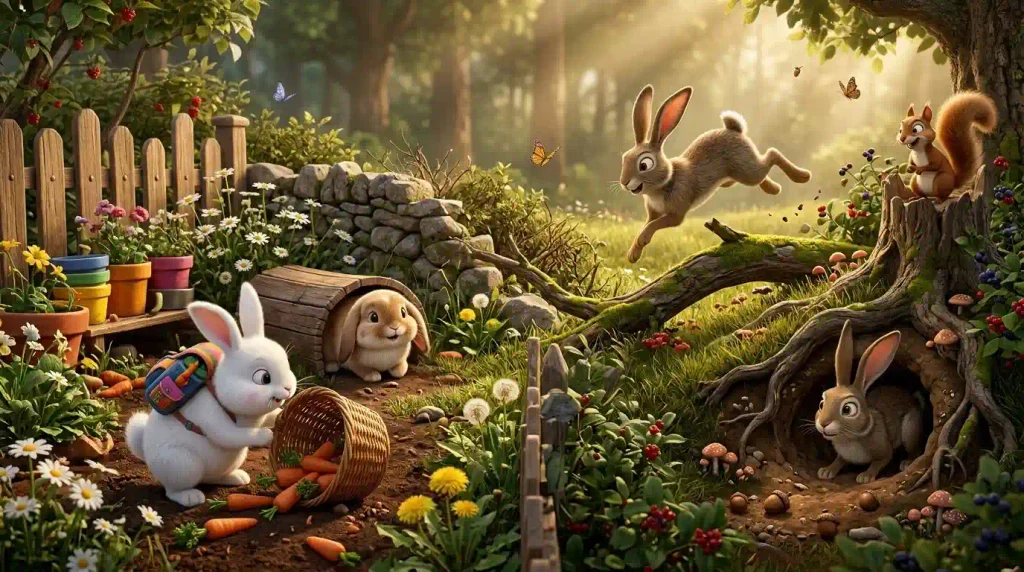
While pet rabbits look similar to wild cottontails, their genetics, habits, and lifestyles are strikingly different.
Wild European Rabbits vs. American Cottontails
Domestic house rabbits are all descendants of the wild European rabbit, not the native North American cottontail. European rabbits are social creatures that dig deep, interconnected underground tunnels called warrens.
On the other hand, American cottontails are solitary animals that build shallow nests on the ground surface and do not dig burrows.
Can Wild and Domestic Rabbits Interbreed?
Because domestic bunnies belong to an entirely different species than wild North American cottontails, they cannot mate or produce offspring together.
Even if you see a wild cottontail hopping near your backyard, pet rabbits remain genetically distinct from their wild neighbors.
Surprising Rabbit Intelligence and Behavior
Many people underestimate how clever and emotionally complex rabbits truly are. With patience and positive reinforcement, bunnies can learn amazing skills and show deep affection.
Litter Box Training Made Easy
Rabbits are naturally clean animals that prefer to deposit waste in one specific location. This instinct makes them remarkably easy to litter train inside a home.
Placing fresh hay right inside or right above the litter box encourages them to use the box consistently, as bunnies love to munch while doing their business.
Playing Games and Solving Puzzles
Rabbits love to play with toys, toss lightweight cups, knock down wooden blocks, and solve food puzzle toys. They enjoy rearranging their living spaces by digging at blankets, pushing cardboard boxes around, and chewing through chew-safe wooden items.
Providing environmental enrichment keeps their sharp minds active and prevents boredom-related destructive chewing.
Historical Curiosities and Fun Bunny Lore

Rabbits have captured human imagination for thousands of years, featuring in folklore, mythology, and modern popular culture.
The Origin of the Lucky Rabbit’s Foot
The superstitious belief that a rabbit’s foot brings good fortune dates back thousands of years to ancient Celtic cultures. Celts believed that because rabbits lived deep underground in burrows, they were in direct communication with earth spirits and gods.
Over time, carrying a rabbit foot became a widespread lucky charm tradition across Europe and North America.
Rabbits in Space and Exploration
While dogs and monkeys are famous for space missions, rabbits have also played a role in scientific history. In 1959, a Soviet space mission safely launched a rabbit named Marfusha alongside two dogs into suborbital space to study high-altitude flight safety.
Practice Exercise
Test your newfound bunny knowledge with these ten multiple-choice questions.
- What is the twisting mid-air leap performed by a happy rabbit called?
A. A zoomie
B. A binky
C. A pop
D. A hopscotch - How far can a rabbit’s ears rotate independently?
A. 90 degrees
B. 180 degrees
C. 270 degrees
D. 360 degrees - What percentage of a pet rabbit’s diet should consist of grass hay?
A. 20–30%
B. 40–50%
C. 60–70%
D. 80–90% - Which sense is enhanced by the twitching motion of a rabbit’s nose?
A. Hearing
B. Smell
C. Touch
D. Sight - What are the special nutrient-dense droppings that rabbits re-ingest called?
A. Cecotropes
B. Pellets
C. Enzymes
D. Fiber balls - Where is a rabbit’s primary blind spot located?
A. Directly behind its tail
B. Directly in front of its nose
C. Directly above its ears
D. On its far left side - Which rabbit breed is famously known as the “gentle giant”?
A. Netherland Dwarf
B. Holland Lop
C. Flemish Giant
D. Rex Rabbit - How fast can domestic rabbits run over short distances?
A. Up to 15 mph
B. Up to 25 mph
C. Up to 35 mph
D. Up to 50 mph - Domestic rabbits are direct descendants of which wild species?
A. American Cottontail
B. European Rabbit
C. Jackrabbit
D. Snowshoe Hare - Why do happy rabbits purr?
A. By vibrating their vocal cords
B. By rubbing their ears
C. By softly grinding their teeth
D. By thumping their feet
Answer Key
1. B | 2. C | 3. D | 4. B | 5. A | 6. B | 7. C | 8. C | 9. B | 10. C
FAQs
1. Do rabbits really like eating carrots as much as cartoons show?
Carrots should only be given to rabbits as an occasional treat due to their high sugar content. In the real world, feeding too many carrots can cause digestive upset and severe tooth decay. Stick to fresh hay and leafy greens for daily feeding.
2. Can pet rabbits live happily inside an apartment?
Pet rabbits make exceptional indoor companions for apartment dwellers because they are naturally quiet, clean, and easily litter-trained. As long as they get several hours of free-roaming exercise time each day in a bunny-proofed area, apartment living is completely ideal for them.
3. How long do domestic house rabbits usually live?
With proper indoor housing, a high-fiber diet, routine veterinary care, and spay or neuter surgery, domestic house rabbits typically live between 8 and 12 years. Some well-cared-for house bunnies even reach 14 or 15 years of age.
4. Why do rabbits thump their back legs on the floor?
Thumping a strong hind foot against the ground is a rabbit’s natural way of warning others about potential danger. In a home environment, a bunny might thump if it hears a sudden loud noise, smells an unfamiliar pet, or feels startled.
5. Do rabbits need to live in pairs or groups?
Rabbits are highly social creatures that thrive when living with a compatible, spayed or neutered bunny partner. While single house rabbits can do well if their human owners give them plenty of attention, bonded pairs usually lead happier, less stressful lives.
Conclusion
Exploring the world through a fun facts rabbit lens reveals just how extraordinary these quiet, hopping companions truly are. From high-speed sprints and 360-degree vision to joyful binkies and tooth-purrs, bunnies bring endless wonder into our daily lives.
Learning every fun fact about rabbits makes sharing a home with them so much more rewarding for pet parents. Understanding their subtle language, unique digestive systems, and playful personalities builds a stronger bond with your pet.
If you are thinking about bringing a bunny into your life, keep this fun facts rabbit guide in mind, set up a safe space, and connect with a local rabbit rescue today!

Zoey Carter is the creator and writer behind funsvibe.com, a friendly website where readers can discover interesting, entertaining, and useful content. She enjoys exploring different topics and turning fresh ideas into simple, engaging articles that are easy to understand. Zoey believes that good content should be informative while still feeling natural and enjoyable to read.
Through funsvibe.com, Zoey Carter focuses on sharing original, reader friendly content with a warm and conversational style. She enjoys researching new subjects, discovering helpful information, and presenting ideas in a clear way. Her goal is to make every visit enjoyable while giving readers something valuable to discover and remember.