
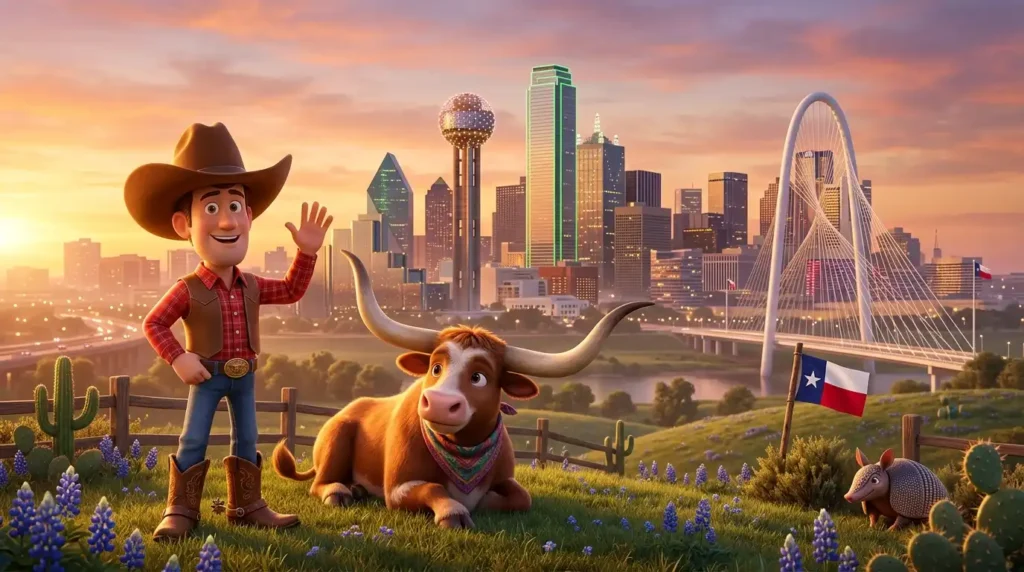
Dallas is famous for its vibrant culture, massive landmarks, and deep history. Knowing these fun facts Dallas offers gives you an insider look at iconic spots like the Reunion Tower, the nation’s largest urban arts district, and incredible inventions like the frozen margarita machine.
Dallas is a city where everything truly feels larger than life. Whether you are strolling through vibrant downtown neighborhoods or diving into rich Texas history, you will quickly find endless surprises around every corner.
Exploring the many fun facts Dallas boasts helps you appreciate how a small trading post transformed into a global modern powerhouse. From world-class art hubs to iconic pop culture history, this dynamic destination always has something fascinating to learn.
Let us jump right into these entertaining fun facts Dallas residents and travelers love sharing. You will discover hidden stories, wild achievements, and fun trivia that show why Big D is such a unique and exciting place to explore.
The Birth of Big D: Fascinating Historical Roots
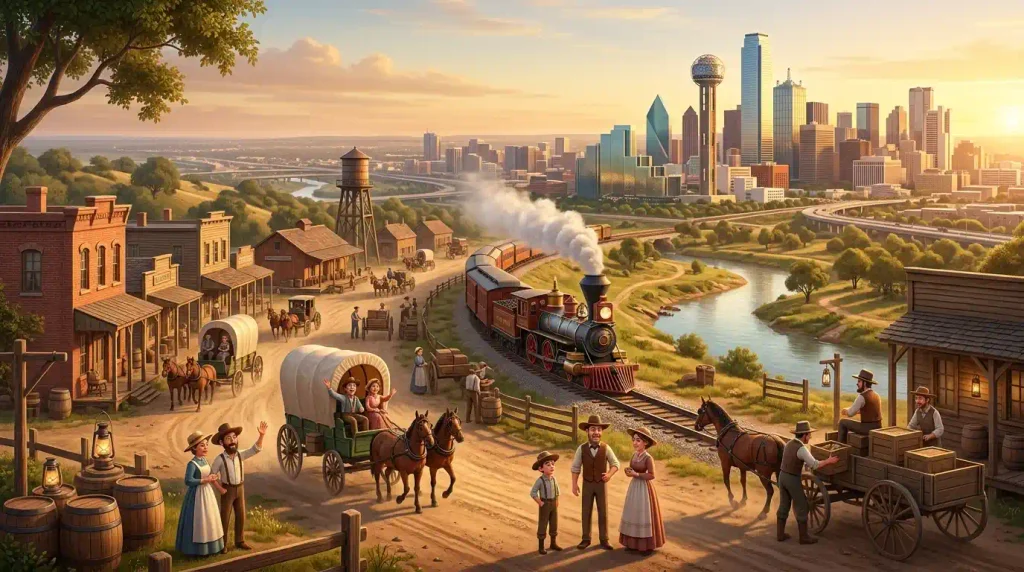
Every great city starts with a humble beginning, and Dallas is certainly no exception. Back in 1841, a pioneer named John Neely Bryan built a small single-room log cabin near the Trinity River. He established a trading post to deal with local Native American crews and passing settlers. That tiny wooden structure marked the official birth of what would eventually become one of the biggest metropolitan areas in the United States.
What makes the early history so interesting is how rapidly the town grew around that simple trading spot. People flocked to the area because of its strategic location for trade and transportation. Today, a reconstructed version of that historic cabin stands in Founders Plaza right in downtown Dallas. It serves as a gentle reminder of how simple life used to be before the modern skyscrapers took over the skyline.
Another surprising piece of local history involves a group of European idealists who moved to the area in 1855. They created a utopian socialist community named La Réunion on the west side of the Trinity River. Although their agricultural experiment collapsed after a few short years due to harsh weather and farming difficulties, the settlers stayed in town. They brought skilled artists, musicians, scientists, and tailors who gave the young frontier town a rich cultural boost that still influences the city today.
Giant Landmarks That Define the Skyline
When you look at the Dallas skyline, one structure instantly grabs your attention. The iconic Reunion Tower, known affectionately by locals as “The Ball,” stands 561 feet tall and features a massive spherical top. The sphere is wrapped in 259 custom LED light fixtures that put on breathtaking light shows every single night. Walking beneath it or taking an elevator to the top gives you an unmatched 360-degree view of the entire metropolis.
Beyond tall towers, the city is home to incredible green spaces that defy standard construction rules. Klyde Warren Park is a masterwork of urban engineering built directly over an active highway. Engineers created a 5.2-acre park that floats on top of the eight-lane Woodall Rodgers Freeway. It seamlessly connects downtown Dallas with the Arts District, providing a lush haven with food trucks, free yoga classes, and walking paths where heavy traffic once roared below.
The famous Pegasus sign sits high atop the Omni Dallas Hotel as an enduring symbol of Texas heritage. Originally placed on top of the Magnolia Building in 1934, this glowing red flying horse served as a welcoming beacon for travelers arriving during the Great Depression. The original winged horse was eventually restored and placed on a rotating pedestal, proving that classic symbols never truly fade away in Big D.
Cultural Treasures and World-Class Art Scene
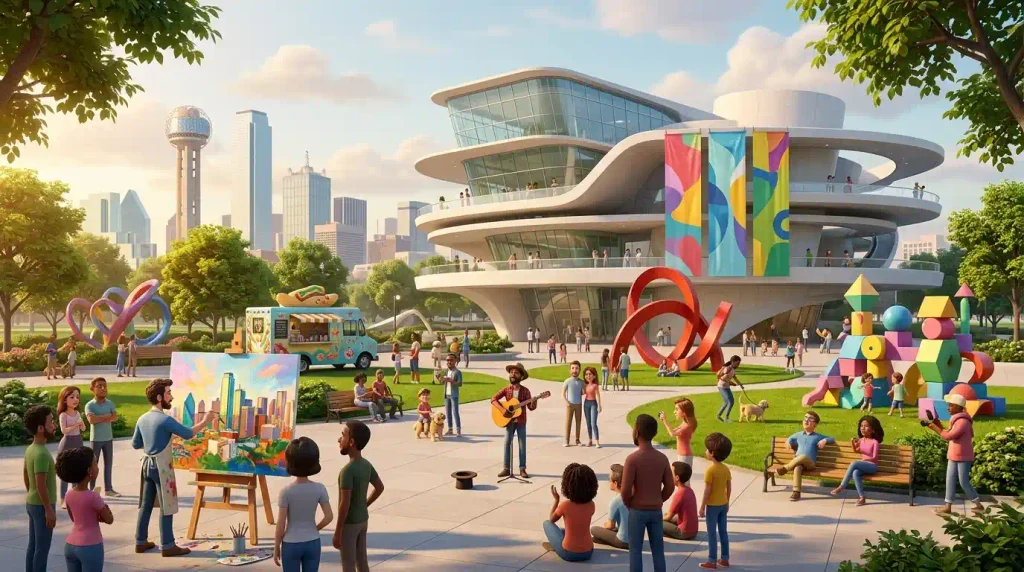
Did you know that Dallas holds the record for the largest contiguous urban arts district in the entire nation? Spanning a massive 19 continuous blocks across 68 acres, the Dallas Arts District is an absolute playground for culture lovers. You can spend an entire weekend walking between world-renowned museums, concert halls, and theaters without ever stepping outside the district’s borders.
The area features stunning architectural masterpieces designed by multiple Pritzker Architecture Prize winners. Among these gems is the Dallas Museum of Art, which offers free general admission to ensure everyone can enjoy classic and modern artworks. Right down the street, you will find the Nasher Sculpture Center, an indoor and outdoor museum showcasing one of the finest collections of modern sculpture in the world.
For performance art fans, the Morton H. Meyerson Symphony Center provides acoustic perfection that captivates audiences every night. The hall was carefully crafted with adjustable canopy walls and concrete chambers designed to optimize sound resonance. These fun facts Dallas arts enthusiasts cherish demonstrate how dedicated the community is to celebrating creativity in all its forms.
Highlighted Landmarks and Cultural Assets
Inventions and Culinary Innovations Born in Dallas
Dallas is responsible for giving the world some of its favorite treats and everyday conveniences. Perhaps the coolest culinary invention occurred in 1971 when local restaurateur Mariano Martinez transformed a soft-serve ice cream machine into the world’s first frozen margarita machine. He was tired of manually blending drinks during busy dinner rushes, so he created an automated process that changed Mexican restaurant culture forever. Today, that original prototype machine resides in the Smithsonian’s National Museum of American History.
Convenience stores as we know them were also born right here in Texas. Back in 1927, an employee of the Southland Ice Company started selling milk, eggs, and bread from an ice dock so customers did not have to travel to distant grocery stores. That simple setup proved so wildly successful that it evolved into the massive global retail chain known today as 7-Eleven.
Foodies also love celebrating the creation of the famous Fletcher’s Corny Dog, which debuted at the State Fair of Texas in 1942. Brothers Neil and Carl Fletcher developed a secret cornmeal batter recipe that made deep-fried hot dogs an instant sensation. Tens of thousands of these golden treats are devoured every single year at Fair Park during the annual fair festivities.
Sports Legends and Pop Culture Fame
Sports run deep in the veins of Texas, and Dallas boasts some of the most famous teams in the world. The Dallas Cowboys, often called “America’s Team,” are legendary for their massive fanbase and iconic star logo. Their home at AT&T Stadium features one of the largest high-definition video screens in sports history, stretching 160 feet from one 20-yard line to the other.
Pop culture history was changed forever in 1978 with the debut of the hit television drama series titled Dallas. The show followed the dramatic lives of the wealthy Ewing family and centered around the scheming oil tycoon J.R. Ewing. Millions of viewers across the globe tuned in, turning Southfork Ranch into an overnight tourist destination that still welcomes visitors today.
The city also made major history in the world of video games and digital entertainment. In the early 1990s, groundbreaking software developers based in the Dallas area created legendary video games like Doom and Wolfenstein 3D. These titles pioneered the first-person shooter genre and reshaped the entire computer gaming industry overnight.
Unique Local Wonders and Quirky Secrets
If you love unusual stories, Dallas has plenty of quirky facts hidden beneath its modern surface. For instance, the city features a subterranean network of underground tunnels and skybridges that spans several miles downtown. Built in the late 20th century to help workers dodge the scorching Texas summer heat, this underground concourse houses hidden restaurants, shops, and service centers.
Fair Park contains the largest collection of 1930s Art Deco exhibition buildings, art, and sculpture in North America. Built for the 1936 Texas Centennial Exposition, these historic structures remain vibrant cultural spots that host major events throughout the year. Standing among these majestic pastel structures feels like taking a direct step back into vintage American history.
Another surprising detail involves Big Tex, the world’s tallest cowboy who welcomes visitors to the State Fair of Texas every autumn. Standing an impressive 55 feet tall, Big Tex wears a giant 95-gallon cowboy hat and custom boots that require a crane to put on. His booming voice and friendly wave have been welcoming families to the fairgrounds since 1952.
Practical Tips for Exploring Dallas Facts in Person
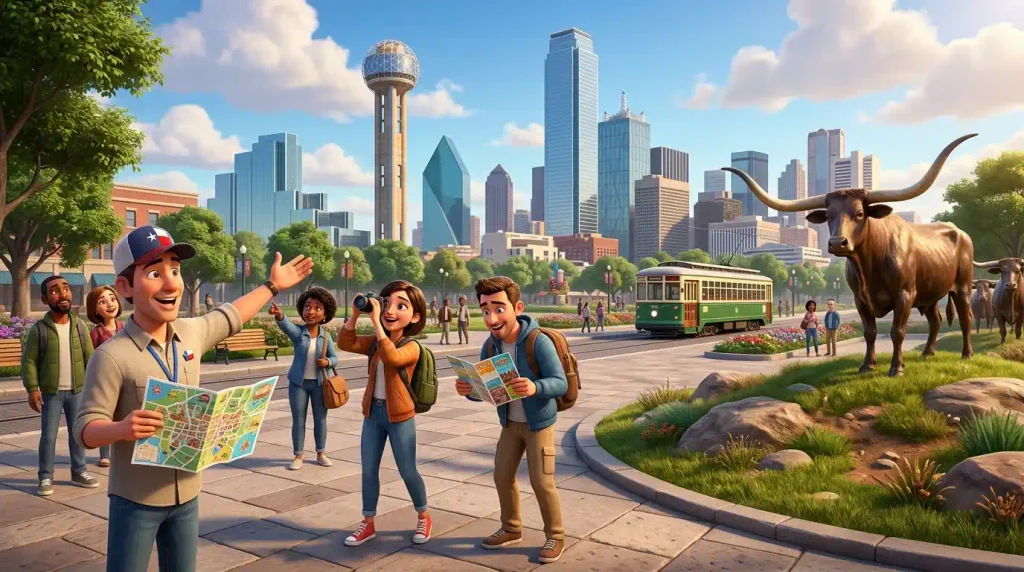
Visiting these historic spots firsthand is the best way to experience the stories that make the region special. When planning your trip, start your morning in the historic Downtown district where you can walk between the West End, Founders Plaza, and the Arts District with ease. Utilizing the public DART light rail system makes traveling between neighborhoods fast, cheap, and convenient.
Spring and autumn are undeniably the absolute best times of year to visit Texas for outdoor exploration. The weather is pleasantly warm, making it perfect for strolling through Klyde Warren Park, enjoying outdoor dining, or exploring the Dallas Arboretum and Botanical Garden. If you visit in October, you can catch the State Fair of Texas and meet Big Tex in person while grabbing a fresh Fletcher’s Corny Dog.
Always remember to bring comfortable walking shoes, stay hydrated during hot afternoons, and keep your camera ready for iconic photo ops. Exploring the city with a sense of curiosity helps you uncover small historical markers and local stories that most casual tourists completely miss.
Practice Exercise
- Who built the original single-room log cabin that marked the founding of Dallas in 1841?
A. John Neely Bryan
B. Mariano Martinez
C. Neil Fletcher
D. J.R. Ewing - What floating green space was constructed directly over an eight-lane sunken freeway?
A. Fair Park
B. Klyde Warren Park
C. Founders Plaza
D. Pioneer Plaza - Which famous drink machine invented in Dallas in 1971 now resides in the Smithsonian?
A. Automatic espresso machine
B. Frozen margarita machine
C. Slushie dispenser
D. Fountain soda dispenser - How tall is Reunion Tower, the iconic observation tower known as “The Ball”?
A. 350 feet
B. 450 feet
C. 561 feet
D. 700 feet - What major retail chain began in 1927 as an ice dock selling basic groceries?
A. Circle K
B. 7-Eleven
C. Wawa
D. Buc-ee’s - The Dallas Arts District is famous for holding which national title?
A. The oldest arts district in North America
B. The largest continuous urban arts district in the United States
C. The highest density of private art galleries
D. The largest outdoor sculpture park in Texas - What legendary television show centered around the wealthy Ewing family put Southfork Ranch on the map?
A. Dynasty
B. Dallas
C. Texas Rangers
D. Falcon Crest - Which famous fair mascot stands 55 feet tall and welcomes visitors to the State Fair of Texas?
A. Big Tex
B. Cowboy Bob
C. Maverick Mike
D. Texan Tom - What unique architectural style is prominently displayed throughout the historic buildings at Fair Park?
A. Gothic Revival
B. Art Deco
C. Victorian
D. Modernist Glass - What groundbreaking computer game created in the Dallas area helped pioneer the first-person shooter genre in the 1990s?
A. Doom
B. Halo
C. Quake II
D. Myst
Answer Key: A A B C B B B A B A
FAQs
What is Dallas most famous for historically?
Dallas is historically famous for being a major commercial center built around trade, oil production, and cotton farming. Its central location allowed it to become a primary railroad hub, driving rapid industrial expansion and turning it into a thriving modern business center.
Why is Dallas often called “Big D”?
The nickname “Big D” originated as a catchy term celebrating the city’s rapid growth, big ambitions, and larger-than-life Texas attitude. It became globally popular after being featured in songs, films, and tourism promotions throughout the mid-20th century.
What culinary treats originated in the Dallas area?
Dallas is the birthplace of the frozen margarita machine, invented by Mariano Martinez in 1971. The city is also famous for introducing Fletcher’s Corny Dogs at the State Fair of Texas and fostering the early growth of Tex-Mex cuisine.
How big is the Dallas Arts District compared to others?
The Dallas Arts District covers 68 acres across 19 continuous city blocks, making it the largest continuous urban arts district in the nation. It houses iconic performing arts halls, world-class museums, and beautiful public parks all within easy walking distance.
What makes Klyde Warren Park so unique to visit?
Klyde Warren Park is built on top of an active eight-lane sunken highway, creating a green bridge between downtown and uptown Dallas. Visitors enjoy daily food trucks, outdoor workouts, lawn games, and live music right over moving freeway traffic.
Where can you learn more about fun facts about Dallas history in person?
You can discover local history firsthand by visiting Founders Plaza, the Dallas Historical Society at Fair Park, and the Sixth Floor Museum. Walking tours through Deep Ellum and downtown also uncover rich historical details about the city’s colorful past.
Conclusion
Discovering these fun facts Dallas holds shows just how dynamic, innovative, and culturally rich this Texas metropolis truly is. From its humble origins as a riverside trading post to its rise as a global cultural hub, the city continues to surprise and delight people from all over the world.
Whether you are admiring the glowing lights of Reunion Tower, walking through the massive Arts District, or grabbing a bite from a legendary food stand, there is always a fascinating story waiting to be uncovered. Learning these unique details makes every visit to Big D far more rewarding and memorable.
Now that you are armed with these amazing fun facts Dallas offers, it is time to go out and experience the magic for yourself. Pack your bags, explore the city’s historic streets, and share these great trivia stories with your friends and family on your next Texas adventure!
Zoey Carter is the creator and writer behind funsvibe.com, a friendly website where readers can discover interesting, entertaining, and useful content. She enjoys exploring different topics and turning fresh ideas into simple, engaging articles that are easy to understand. Zoey believes that good content should be informative while still feeling natural and enjoyable to read.
Through funsvibe.com, Zoey Carter focuses on sharing original, reader friendly content with a warm and conversational style. She enjoys researching new subjects, discovering helpful information, and presenting ideas in a clear way. Her goal is to make every visit enjoyable while giving readers something valuable to discover and remember.