
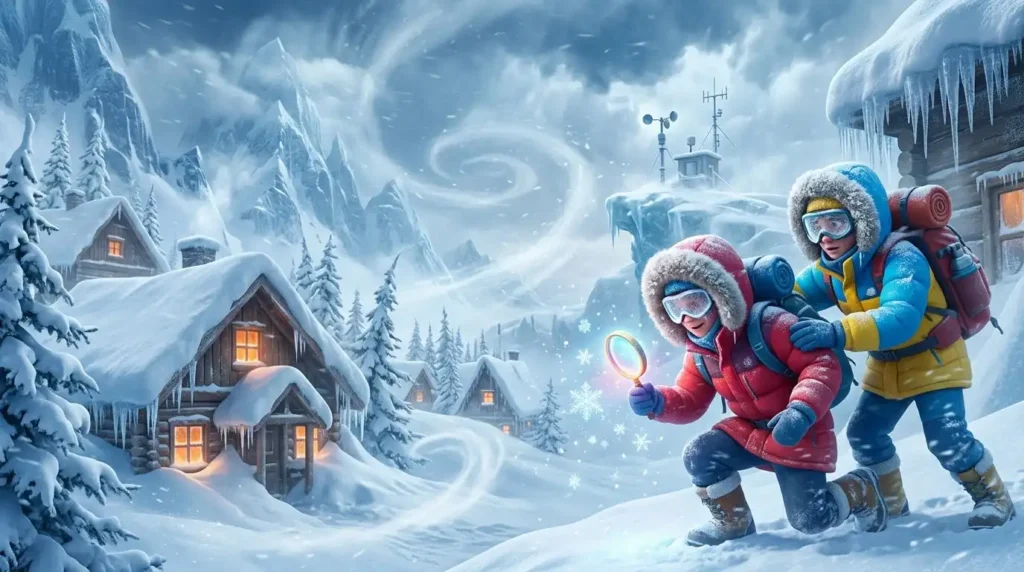
Blizzards are massive winter storms characterized by sustained winds of at least 35 miles per hour, blowing snow, and visibility under a quarter-mile for over three hours. Exploring fun facts blizzards helps us appreciate their incredible physical power, strange scientific phenomena, unexpected history, and surprising impact on global weather patterns.
Have you ever looked out a window during a howling winter storm and wondered what makes it so intense? Exploring fun facts blizzards reveals that these frozen tempests are far more complex than ordinary snowfalls.
These incredible atmospheric events blend fierce winds, sudden freezing temperatures, and blinding whiteout conditions into one wild nature show. When you learn these fun facts blizzards showcase, you gain a brand-new appreciation for how our planet works during the coldest months of the year.
The science behind these cold tempests involves massive transfers of energy across hundreds of miles of open sky. Cold Arctic air masses clash violently with warm ocean currents to create massive frozen tempests that can alter entire landscapes.
Whether you are a weather enthusiast, a student, or simply curious about extreme weather, discovering fun facts blizzards bring to light offers an exciting look into nature’s raw strength. Let’s explore the science, history, and surprising secrets behind the world’s most powerful winter storms.
What Defines a True Blizzard?
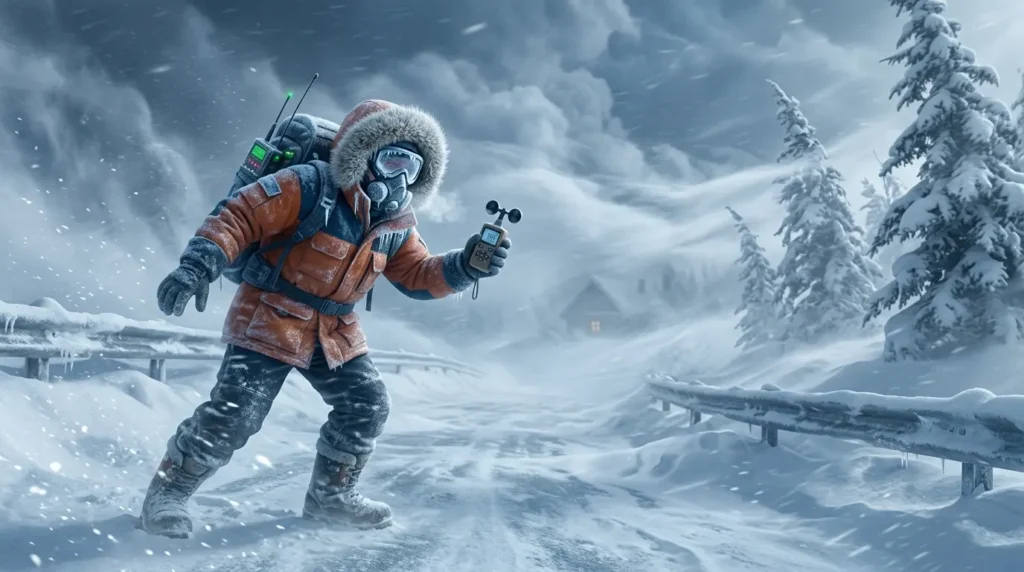
Not every big snowfall qualifies as a genuine blizzard, even if it feels freezing outside. Weather agencies have strict rules regarding wind speed, visibility, and duration before officially declaring one.
Knowing these specific criteria helps you distinguish between a standard snowstorm and an intense winter emergency.
The Official Weather Criteria
To earn the name, a storm must feature sustained winds or frequent gusts of 35 miles per hour or higher. It must also drop visibility to less than a quarter-mile due to falling or blowing snow.
Finally, these intense conditions must persist continuously for three hours or longer. If a storm falls short on time or wind speed, meteorologists simply call it a heavy snowstorm.
Why Blowing Snow Counts Just as Much
Surprisingly, a blizzard does not even require fresh snow falling from the sky to trigger an official warning. Strong winds can pick up loose snow already resting on the ground and whip it into a blinding mist.
Meteorologists call this event a ground blizzard. It creates dangerous whiteout conditions while the sky above remains completely clear and blue.
The Origin of the Word
The term originally had nothing to do with snow, weather forecasts, or winter storms at all. In early nineteenth-century America, people used the word to describe a sudden gun blast or a heavy blow from a fist.
An Iowa newspaper first used it in 1870 to describe a fierce, blinding winter snowstorm. The catchy name stuck instantly across the nation and quickly became standard meteorological terminology.
Mind-Blowing Science Behind Cold Tempests
The physics driving large winter storms involves incredible energy transfers across hundreds of miles of atmospheric space. Cold Arctic air masses clash violently with warm, moist ocean currents to create these massive systems.
Understanding these atmospheric dynamics shows just how much force nature packs into every single falling flake.
Massive Energy Outputs
A fully developed winter storm can unleash energy equivalent to dozens of atomic bombs over its lifespan. Moisture freezes rapidly inside rising updrafts, releasing latent heat that further fuels swirling wind patterns.
This atmospheric engine drives fierce gales that can rip tree branches down and disrupt power grids across multiple states.
How Whiteouts Distort Human Perception
During extreme blowing snow, light reflects in every direction off millions of suspended ice crystals simultaneously. This eliminates shadows, hides the horizon line, and destroys your brain’s ability to judge depth or distance.
People standing inside a severe whiteout can easily lose their balance, disorient themselves, and walk in circles just steps from safety.
Thunder and Lightning in the Snow
While rare, thunderstorm activity can actually occur right in the middle of a heavy snowstorm. Known as thundersnow, this phenomenon happens when strong convective updrafts rise rapidly within cold atmospheric air layers.
The falling snow muffles the acoustic wave, making the thunder sound like a low, eerie, metallic thud instead of a sharp crack.
Historical Winter Events That Made History

History shows us that severe winter storms can change the course of human events and alter regional development. From historic freezes in the American colonies to modern atmospheric tempests, certain storms leave lasting legacies.
These historic events highlight how vulnerable society can be when winter unleashes its full power.
The Great Blizzard of 1888
In March 1888, a sudden catastrophic storm paralyzed the northeastern United States with up to fifty inches of snow. Drift heights reached fifty feet, burying entire two-story homes and trapping thousands of residents inside.
This massive paralysis convinced city planners in New York to build the nation’s first subway system to keep transportation running smoothly.
The Children’s Blizzard of 1888
Earlier that same year, in January 1888, a deceptive storm struck the American Great Plains without any warning. The day began unseasonably warm, tempting schoolchildren to head outside without heavy coats or boots.
A sudden Arctic front dropped temperatures by forty degrees in minutes, trapping hundreds of students and teachers in blinding drifts.
The 1972 Iran Disaster
When thinking of frozen hazards, Iran might not be the first geographical location that springs to mind. However, in February 1972, a week-long series of storms dumped over twenty-six feet of snow across rural regions.
It holds the tragic record as the deadliest winter storm in recorded history, completely burying over four hundred remote villages.
Fascinating Snow Chemistry and Crystal Formation
Snow crystals are tiny marvels of organic micro-physics that form around invisible microscopic particles floating in the sky. Temperature and humidity levels inside clouds dictate the exact shape each crystal assumes as it falls.
Looking closely at frozen precipitation reveals an astounding variety of geometric architecture.
The Microscopic Engine of Every Snowflake
Every single snowflake requires a tiny particle of dust, pollen, or volcanic ash to begin growing inside a cloud. Water vapor condenses around this floating particle and freezes directly into tiny six-sided lattice structures.
Without these microscopic floating specks, water droplets in pure air could remain liquid down to minus forty degrees Fahrenheit.
The Myth of Identical Crystals
You have likely heard the adage that no two snowflakes are ever exactly alike. While simple six-sided micro-crystals can look identical under microscopic examination at early growth stages, complex stellar dendrites vary widely.
As a snowflake tumbles through changing atmospheric layers, subtle humidity fluctuations shape its unique branching pattern.
How Ice Acts as an Acoustic Sponge
A fresh layer of soft, fluffy snow acts as an exceptional natural sound absorber across vast landscapes. The spaces trapped between interlocking ice branches absorb acoustic vibration waves rather than reflecting them.
This creates the serene, peaceful silence you often notice immediately after a heavy snowfall stops.
Extreme Wildlife Adaptations for Frozen Hazards
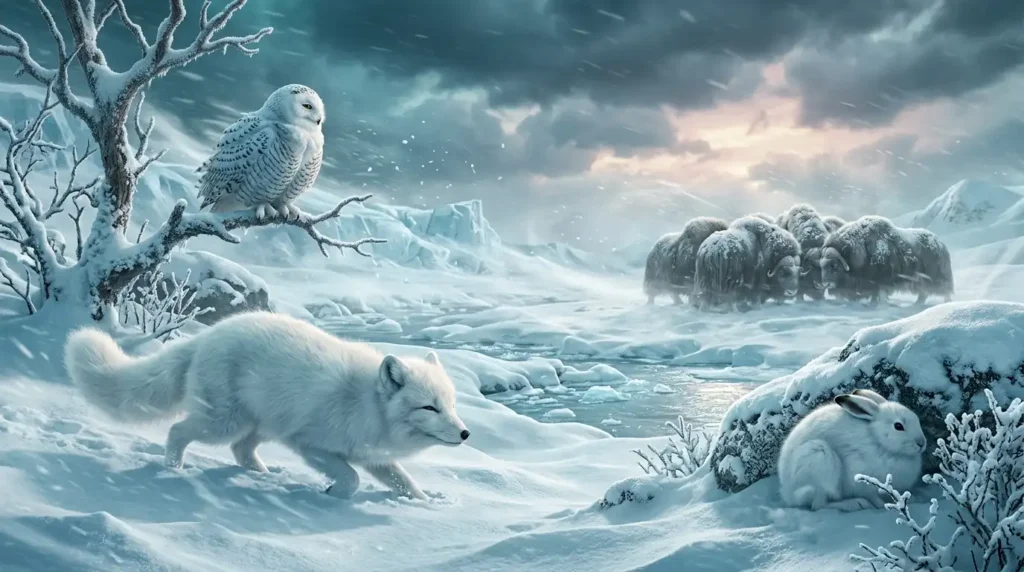
Animals living in high-latitude environments have evolved remarkable physical strategies to endure severe winter conditions. From thick insulating fur coats to biological antifreeze compounds inside bloodstreams, nature designs amazing adaptations.
These creatures’ strategies showcase nature’s resilience against freezing forces.
The Wood Frog’s Freeze-Thaw Magic
The North American wood frog copes with severe winter cold by allowing its entire body to freeze solid. It stops breathing, its heart halts completely, and special blood sugars prevent sharp ice crystals from puncturing delicate cellular walls.
When spring warmth arrives, the frog simply thaws out, resets its heart rate, and hops away unharmed.
Snowshoe Hares and Natural Camouflage
Snowshoe hares adjust to seasonal changes by shedding their brown summer coats for pure white fur in winter. Their extra-large hind feet feature dense fur pads that act like natural snowshoes on top of deep drifts.
This allows them to sprint quickly across soft snowpack surfaces while escaping hungry predators like lynx.
Emperor Penguins and Huddle Physics
Emperor penguins survive severe Antarctic cold by forming massive, highly organized huddle circles containing thousands of birds. They continuously rotate positions, with outer birds moving toward the warm interior center to share body heat evenly.
This cooperative behavioral system allows them to withstand sub-zero wind chills while incubating delicate eggs.
Surviving the Cold: Essential Tips and Safety Facts
Surviving a dangerous winter emergency requires preparation, calm thinking, and understanding human physiological limits. Cold environments siphon away body heat rapidly, creating risks like hypothermia and severe frostbite within minutes.
Equipping yourself with key survival facts keeps you safe when conditions turn severe.
The Danger of Wind Chill
Wind chill measures how fast heat leaves your exposed skin due to surrounding air movement. Strong winds blow away the thin layer of warm air your body naturally creates around itself.
An air temperature of twenty degrees Fahrenheit can feel like sub-zero conditions when driven by thirty-five-mile-per-hour wind gusts.
Vehicle Survival Protocol
If your vehicle becomes trapped in deep snow during a severe storm, staying inside the car is your safest choice. Leaving your car in zero-visibility conditions puts you at high risk of losing your bearings or being struck by plows.
Run the engine for only ten minutes each hour for heat, making sure the exhaust pipe remains clear of snow blockages.
Building Emergency Snow Shelters
Snow acts as an excellent thermal insulator because it traps millions of tiny dead-air pockets within its matrix structure. In extreme wilderness emergencies, digging a snow cave can save your life by blocking howling winds.
Inside a properly constructed snow shelter, trapped body heat can raise the interior temperature near thirty-two degrees Fahrenheit, even when outside air drops far below zero.
Unique Regional Winter Phenomena Around the Globe
Different geographical regions around the world experience distinct varieties of cold-weather tempests driven by local topography. Mountains, open oceans, and large inland lakes create specialized storm dynamics found nowhere else.
Exploring global weather variations shows how varied winter hazards can be across our planet.
The Power of Lake-Effect Snow
Lake-effect storms occur when icy Arctic winds sweep across long stretches of relatively warm lake water. The air picks up moisture and heat, rising rapidly into cold clouds that dump heavy snow downwind.
Cities near the Great Lakes can experience narrow bands of snowfall dropping three inches of snow per hour for days.
Nor’easters Along the Atlantic Coast
Nor’easters are powerful coastal tempests that form along the eastern seaboard of North America during cold months. These storms draw strength from the temperature contrast between icy continental air and warm Gulf Stream currents.
They bring severe blowing snow, hurricane-force wind gusts, and massive ocean surges that erode beaches and flood coastal roads.
Russian Burans Across the Steppes
In the vast flat steppes of Russia and Kazakhstan, severe winter windstorms are known locally as burans. These fast-moving storms sweep across open terrain with relentless force, driving blinding sheets of snow for hundreds of miles.
Their sudden approach can drop temperatures dramatically in minutes, catching unprepared travelers out in the open.
Modern Science and Storm Forecasting Technology

Predicting exact snowfall amounts and tracking wind vectors requires powerful computer models and advanced sensor networks. Satellite observations, Doppler radar arrays, and weather balloons continuously feed data into global forecast systems.
Modern technology gives communities critical time to prepare before severe conditions strike.
Doppler Radar and Supercomputers
Modern Doppler radar systems detect precipitation movement by measuring frequency shifts in reflected microwave signals. Advanced supercomputers process billions of data points to model atmospheric movement and predict storm tracks days in advance.
This early warning technology gives cities time to salt roads, prepare power crews, and issue emergency travel advisories.
The Role of Weather Balloons
Twice every day, meteorologists across the globe launch helium-filled weather balloons high into the stratosphere. These floating radiosonde packages transmit real-time measurements of air pressure, humidity, temperature, and wind speed.
This high-altitude atmospheric data provides critical inputs needed to initialize numerical weather prediction models.
Satellite Imaging Improvements
Geostationary weather satellites orbit high above Earth, capturing continuous high-resolution images of evolving cloud systems. Thermal infrared sensors track cloud-top temperatures, revealing regions where updrafts are intensifying.
This real-time tracking helps forecasters detect emerging cold-weather hazards long before they reach land.
Practice Exercise
Test your knowledge with these multiple-choice questions!
- What minimum wind speed is required for a storm to be officially classified as a blizzard?
A. 25 mph
B. 35 mph
C. 45 mph
D. 55 mph - How long must severe conditions persist before an official blizzard declaration is made?
A. 1 hour
B. 2 hours
C. 3 hours
D. 6 hours - What term describes a storm where strong winds blow existing snow around without new snow falling?
A. Coastal storm
B. Ground blizzard
C. Lake-effect storm
D. Flash freeze - Which city decided to build its first subway system largely due to the Great Blizzard of 1888?
A. Boston
B. Chicago
C. New York City
D. Philadelphia - What microscopic particle is typically required at the center of every snowflake to begin crystal growth?
A. Ice nucleus or dust speck
B. Salt crystal
C. Nitrogen molecule
D. Carbon dioxide bubble - Why does a quiet calm often settle over the landscape immediately after a heavy snowfall?
A. Cold air reduces human hearing sensitivity
B. Snow crystals absorb sound waves in trapped air spaces
C. Wind stops creating atmospheric pressure waves
D. Falling temperatures slow down sound velocity significantly - Which animal can freeze solid during winter and thaw out unharmed in spring?
A. Snowshoe hare
B. Wood frog
C. Arctic fox
D. Emperor penguin - How does snow insulate the inside of an emergency shelter?
A. It generates chemical heat when compressed
B. It reflects solar radiation inward
C. It traps millions of static dead-air pockets
D. It absorbs moisture to increase thermal mass - What warm ocean body feeds heat and moisture into powerful coastal Nor’easters?
A. Labrador Current
B. Gulf Stream
C. Arctic Ocean
D. Caribbean Sea - What phenomenon occurs when lightning and thunder happen inside a winter snowstorm?
A. Frost-thunder
B. Ice-lightning
C. Thundersnow
D. Winter-strike
Answer Key
1. B | 2. C | 3. B | 4. C | 5. A | 6. B | 7. B | 8. C | 9. B | 10. C
FAQs
1. Can a blizzard happen without fresh snow falling?
Yes, a storm can occur without new snow falling from the sky. Strong winds can lift loose snow off the ground and whip it into a blinding drift. Meteorologists call this event a ground blizzard because surface visibility drops dramatically while skies remain clear.
2. How cold does it have to be for a blizzard to form?
There is no specific minimum temperature requirement for one to occur. Air temperatures simply need to be cold enough for snow to fall or remain frozen on the ground. Most occur with air temperatures near or below freezing, but strong winds drive the danger.
3. Why is thundersnow considered such a rare event?
Thundersnow is rare because cold air usually lacks the convective energy needed to build thunderclouds. Winter air holds far less moisture and heat than summer air. When strong thermal updrafts do occur in winter, lightning strikes and muffled thunder can develop inside heavy snow bands.
4. What is the safest action to take if caught driving in a whiteout?
The safest action is pulling off the road carefully and remaining inside your vehicle. Turn on hazard lights to alert other drivers, and ensure your exhaust pipe stays free of snow. Leaving your vehicle during zero visibility puts you at high risk of getting lost.
5. How do snowplow crews handle zero-visibility conditions?
Snowplow drivers rely on specialized GPS tracking, route mapping, and high-intensity lighting systems during whiteout conditions. When visibility drops to absolute zero, plows often pull over temporarily for safety. Operating heavy equipment without sight poses extreme hazards to drivers and stranded vehicles alike.
6. Why does severe wind make cold air feel much colder?
Wind strips away the thin insulating layer of warm air your body produces around exposed skin. This accelerated heat loss causes your body temperature to drop far faster than in calm air. Meteorologists calculate this rapid heat loss using standard wind chill formulas.
7. Can tropical regions ever experience severe snowstorms?
Tropical lowlands never experience snow, but high-altitude mountain peaks near the equator certainly can. Mountains in Hawaii, South America, and Africa feature high elevations where freezing temperatures occur year-round. Severe winter weather can strike these high tropical summits during strong atmospheric cold fronts.
Conclusion
Exploring the intriguing world of fun facts blizzards reveals how fascinating these atmospheric tempests truly are. From high-wind physics and complex snow chemistry to historic storms and wild survival strategies, cold storms showcase the incredible power of our natural world.
Sharing these fun facts about the blizzards they contain with friends and family is a great way to spread curiosity about winter weather. You now possess expert knowledge on how whiteouts form, how animals survive freezing temperatures, and how modern meteorology keeps communities safe.
Next time cold air moves in and snow begins to swirl outside your window, remember these fascinating fun facts blizzards carry. Stay warm, prepare your emergency gear, and enjoy watching nature put on its most extraordinary frozen show!

Zoey Carter is the creator and writer behind funsvibe.com, a friendly website where readers can discover interesting, entertaining, and useful content. She enjoys exploring different topics and turning fresh ideas into simple, engaging articles that are easy to understand. Zoey believes that good content should be informative while still feeling natural and enjoyable to read.
Through funsvibe.com, Zoey Carter focuses on sharing original, reader friendly content with a warm and conversational style. She enjoys researching new subjects, discovering helpful information, and presenting ideas in a clear way. Her goal is to make every visit enjoyable while giving readers something valuable to discover and remember.