

Rats are exceptionally intelligent, highly social, and remarkably clean animals. They possess advanced problem-solving skills, show empathy toward peers, communicate using ultrasonic vocalizations, and maintain strict personal grooming routines. Exploring these surprising fun facts about rats reveals why these highly adaptable rodents are among the most fascinating creatures on our planet.
Think rats are just spooky sewer dwellers sneaking around in the dark? You are about to discover a whole new side to these misunderstood animals.
Learning the most surprising fun facts about rats will completely change how you view these brilliant little creatures. From giggling when tickled to saving human lives, rats are full of incredible secrets.
Let us explore the wild, quirky, and outright amazing world of rats together. You might just walk away with a newfound appreciation for them!
The Surprising Intelligence of Rats

Rats are vastly smarter than most people ever give them credit for. Their brain structures are remarkably similar to ours, which makes them absolute geniuses in the animal kingdom.
Master Problem Solvers
When it comes to figuring out complex puzzles, rats are top-tier thinkers. They can navigate intricate mazes, figure out tricky latches, and remember solutions for months.
If you hide food inside a puzzle box, a rat will methodically test different methods until it unlocks the treat. Their spatial memory allows them to map out entire buildings in their heads effortlessly.
Learning Abilities and Tricks
Did you know that pet rats can learn their own names just like dogs? They can also be trained to perform complex tricks, including high-fives, fetching small items, and running agility courses.
Rats respond wonderfully to positive reinforcement and gentle encouragement. Their eagerness to learn makes them one of the most trainable small pets in the world.
Understanding Cause and Effect
Rats do not just act on basic instinct; they actively process cause and effect. They can learn that pressing a specific lever dispenses a tasty snack at certain intervals.
If an action leads to a negative outcome, they remember it instantly and adjust their strategy. This flexible thinking helps them thrive in almost any environment on Earth.
Emotional Lives: Do Rats Have Feelings?
Beyond their raw brainpower, rats experience a rich emotional life that surprises almost everyone. They form deep social bonds and express a wide variety of feelings.
Rats Actually Laugh When Tickled
When rats play or get tickled by human friends, they make high-pitched vocalizations. Humans cannot hear these sounds without special equipment because they occur in the ultrasonic range around 50 kilohertz.
Scientists monitoring these frequencies discovered that rats actively enjoy being tickled in spots like the back of their necks. They even chase after human hands to get more tickles!
Deep Empathy for Their Friends
Rats genuinely care about the well-being of other rats. In famous scientific studies, a rat would routinely free a trapped companion before even touching a stash of chocolate treats.
Once the companion was free, the rat would frequently share the delicious reward. This proves that empathy and kindness are deeply wired into their social behavior.
Experiencing Stress and Joy
Just like us, rats display clear signs of happiness and anxiety. When a rat is extremely happy and relaxed, its ears tend to blush a soft pink and relax outward.
Conversely, if a rat feels stressed, it may exhibit behavioral changes or grind its teeth softly. Understanding these subtle cues helps us appreciate their emotional depth.
Incredible Physical Superpowers

Rats possess physical abilities that sound like something straight out of a comic book. Their bodies are built for ultimate survival, agility, and flexibility.
Super Strength Teeth That Never Stop Growing
A rat’s front teeth grow between 4 and 5 inches every single year! To keep them from growing too long, rats constantly gnaw on hard objects to wear them down.
Their tooth enamel is actually harder than iron or copper. This immense strength allows them to chew through tough substances like wood, cinder blocks, brick, aluminum, and even soft lead pipes!
Master Climbers and Jumpers
Rats are incredible athletes with phenomenal balance and coordination. They can jump vertically up to 3 feet in the air, which is equivalent to a human jumping onto a garage roof.
Their flexible spines and sharp claws allow them to scale vertical brick walls, walk along high-tension telephone wires, and shimmy up narrow pipes with ease.
Exceptional Swimming Capabilities
If you thought water would stop a rat, think again. Rats are extraordinary swimmers that can tread water for up to three full days straight without drowning!
They can hold their breath underwater for over three minutes at a time. This remarkable ability allows them to easily swim through subterranean pipes and sewer networks.
Social Structures and Communication
Rats are deeply social creatures that thrive in organized communities. Living alone is actually very difficult for them because they crave continuous companionship.
The Power of the Pack
A group of rats is officially known as a “mischief,” which suits their playful nature perfectly. Within a mischief, rats establish clear hierarchies, play together, and sleep in cozy piles.
They groom each other regularly to strengthen social bonds and maintain peace. A rat kept without any companions can easily become lonely and depressed.
Secret Ultrasonic Language
Rats speak to one another using a complex language of ultrasonic chirps and squeaks. Because these sounds are above the frequency range of human hearing, their conversations remain completely private to us.
They use different pitches to announce food discoveries, signal danger, or express affection to their babies. This hidden language keeps the mischief coordinated and safe.
Tail Language and Body Cues
A rat’s tail is not just for balance; it is a major communication tool. Sweeping or swishing a tail can indicate tension, excitement, or a warning to back off.
Positioning of the ears, whiskers, and posture also sends clear signals to other pack members. Reading these subtle body movements lets you know exactly what a rat is thinking.
Essential Summary of Rat Traits

Rats are intelligent, adaptable, and highly social animals with remarkable survival skills. Their sharp senses, flexible bodies, strong memories, and curious nature help them explore different environments. From communication and teamwork to impressive problem-solving abilities, these fascinating traits make rats much more interesting than their common reputation suggests.
Intelligence and Learning
Rats can learn quickly, remember routes, and solve simple problems using observation and experience.
Powerful Senses
Their excellent sense of smell, hearing, and touch helps them navigate surroundings and detect potential dangers.
Social Behavior
Rats often communicate through sounds, scents, and body language while forming social bonds with other rats.
Senses and Navigation Secrets
How do rats navigate pitch-black tunnels and find hidden food so quickly? They rely on an astonishing array of enhanced senses that make up for their somewhat blurry vision.
The Power of Whiskers (Vibrissae)
Rats use their whiskers, known as vibrissae, to paint a detailed picture of their surroundings in total darkness. These whiskers vibrate rapidly against surfaces to feel shapes and textures.
Each whisker is packed with nerve endings that send constant sensory feedback to the brain. This allows a rat to run at full speed through complete darkness without bumping into walls.
An Extraordinary Sense of Smell
A rat’s nose is one of the most powerful sensory tools in the animal kingdom. They have thousands of olfactory receptors dedicated to sniffing out subtle scents.
Rats can detect tiny traces of food, spot potential predators from far away, and recognize individual family members just by smelling them. Their noses are so accurate they can even pinpoint where a smell is coming from instantly.
Vision and Color Perception
While their smell and touch are super-powered, a rat’s eyesight is fairly basic. They are colorblind to red light and see the world in soft blues, greens, and grays.
However, their eyes are specially adapted to detect movement in low-light conditions. Some rat species can even move their eyes independently to watch for airborne predators above while foraging below.
Hygiene Myths vs. Surprising Clean Reality

One of the biggest misconceptions about rats is that they are dirty, gross creatures. In truth, rats are fanatically clean animals that take personal hygiene very seriously.
Self-Grooming Obsession
Rats spend up to a third of their waking hours washing themselves. They meticulously lick their fur, wash their faces with their paws, and clean between their toes repeatedly.
In fact, a domestic rat cleans itself far more frequently than the average house cat. They dislike feeling dirty or sticky and will clean up immediately after handling food.
Neat and Tidy Living Spaces
In the wild or in a cozy cage, rats like to organize their living areas neatly. They designate specific areas for sleeping, storing food, and eliminating waste.
They naturally avoid dirtying their sleeping nests, keeping their bedsheets made of leaves or paper clean. This organized lifestyle helps prevent the spread of disease within their nests.
Odor Control Habits
Because rats rely on stealth to avoid natural predators, they work hard to keep their bodies scent-free. A clean rat has very little natural odor compared to many other small mammals.
Any unpleasant smells associated with rats usually stem from uncleaned cages rather than the animals themselves. Regular maintenance keeps pet rats smelling surprisingly neutral and clean.
Heroic Rats Saving Human Lives
Rats are not just cool to learn about; they are actively working alongside humans to perform life-saving rescue missions across the globe!
Heroic African Giant Pouched Rats
In countries like Cambodia and Tanzania, trained rats known as HeroRATS are helping clear dangerous landmines. These special giant pouched rats are light enough to walk over hidden landmines without triggering them.
Using their amazing sense of smell, they locate explosives underground with 100% accuracy. A single rat can search an area the size of a tennis court in 20 minutes, a job that would take humans up to four days!
Sniffing Out Diseases
These same hero rats are trained to detect human diseases like tuberculosis in medical samples. A trained rat can screen hundreds of sputum samples in just a few minutes, vastly outperforming traditional lab microscopes.
Their quick work helps doctors diagnose patients faster, saving thousands of lives every single year. These incredible achievements prove just how valuable rats really are to humanity.
Search and Rescue Operations
Disaster response teams are now training rats to assist in earthquake search-and-rescue operations. Equipped with tiny backpacks containing location trackers and microphones, rats can easily squeeze through narrow rubble piles.
Once they locate a survivor trapped beneath collapsed buildings, they trigger a signal to alert rescue workers. Their small size makes them ideal candidates for navigating tight spaces safely.
Surprising Diets and Foraging Habits

Rats are legendary for their ability to survive on almost anything, but their eating habits are far more complex than simple scavenging.
Opportunistic Omnivores
Rats are true omnivores, meaning they eat both plants and animal matter. In the wild, their natural diet consists of seeds, nuts, fruits, grains, insects, and small invertebrate prey.
In urban areas, they adapt quickly to whatever food humans leave behind. This dietary versatility is the main reason rats have successfully colonized every continent except Antarctica.
Food Testing Techniques
Rats are naturally cautious about trying new foods, a trait known as neophobia. Because they physically cannot vomit, eating poisonous food could easily prove fatal to them.
To protect themselves, a rat will take a tiny bite of an unfamiliar food and wait to see if it feels sick. If it feels fine, it will return later to feast safely!
Food Hoarding Behaviors
When food is plentiful, rats do not just eat their fill; they build secret stashes for later. They carry morsels of food back to safe hideaways inside their nests.
This hoarding instinct guarantees the mischief has plenty of sustenance during harsh winter weather or unexpected food shortages. It demonstrates long-term planning and foresight.
Reproduction and Adaptation Mastery
How did rats become so common across the globe? Their biological drive and rapid reproductive capabilities play a major role in their global success.
Rapid Reproduction Rates
A female rat can mate up to several hundred times in a single day during her fertile window. Her gestation period lasts only about 21 days, yielding litters of 6 to 12 pups.
Because female rats can become pregnant again almost immediately after giving birth, one pair of rats could theoretically yield hundreds of descendants in a single year under ideal conditions!
Early Development of Pups
Rat pups are born hairless, blind, and completely dependent on their mother’s milk. However, they grow at an astonishingly fast pace.
By two weeks old, their eyes open and their fur is fully grown. By six weeks, they are fully independent and capable of starting families of their own.
Ultimate Environmental Adaptability
Whether living in tropical jungles, freezing desert landscapes, busy cities, or countryside barns, rats adapt effortlessly. They adjust their diets, shelter locations, and daily routines to match local conditions.
This incredible flexibility makes them one of the most resilient and widespread mammal species on planet Earth today.
Domestic Pets vs. Wild Cousins
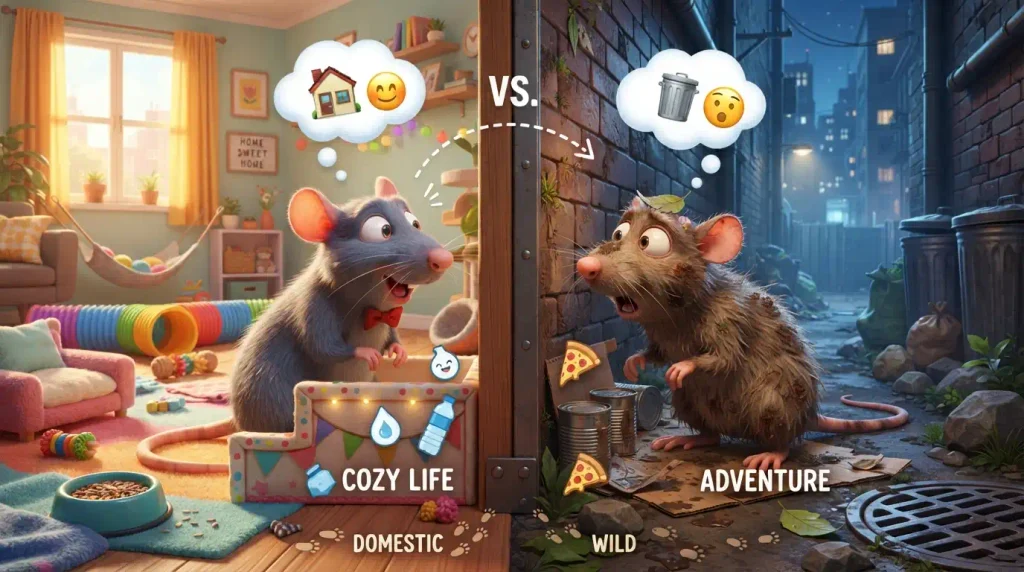
While wild rats and domestic pet rats belong to the same species (Rattus norvegicus), living alongside humans has changed pet rats dramatically.
The Fancy Rat World
Pet rats are often referred to as “fancy rats,” a term originating from the Old English phrase “to fancy,” meaning to like or appreciate. Fancy rats come in dozens of gorgeous coat colors, patterns, and hair types.
From hairless varieties to dumbo rats with oversized ears on the sides of their heads, domestic breeding has created many unique physical traits.
Gentle Temperaments
Through generations of careful breeding, pet rats have lost the wariness and aggression of their wild counterparts. They are affectionate, gentle, and eager to interact with human companions.
Many pet rats love nothing more than cuddling in a pocket, riding on their owner’s shoulder, or sleeping in a cozy lap while watching television.
Lifespan and Care Requirements
Domestic rats generally live between 2 and 3 years when provided with proper nutrition, a spacious cage, and regular veterinary checkups.
They require daily play time outside their cage, enrichment toys to keep their minds sharp, and clean bedding to stay healthy. Providing good care ensures a happy, thriving pet.
Common Myths and Misconceptions Debunked
Rats have suffered from bad public relations for centuries. Let us set the record straight on some of the most common myths surrounding these misunderstood rodents.
Myth: Rats Caused the Black Plague Alone
While rats are historically blamed for spreading the Black Death in medieval Europe, modern historians and scientists now know the situation was far more complex.
The plague bacterium was primarily spread by human fleas and lice jumping between people. Rats were simply caught up in the same crowded, unsanitary conditions as humans back then.
Myth: Rats Are Blind
Many people believe that rats navigate completely blind, but this is untrue. While their vision is not sharp, they can see shapes, movement, and light changes effectively.
They rely on a combination of vision, smell, whiskers, and auditory cues to create a complete 3D map of their surroundings.
Myth: All Wild Rats Carry Dangerous Diseases
While wild animals can carry pathogens, rats are not inherent disease bombs. Clean environments lead to clean animals.
Rats living away from polluted city waste pose very low risks, and captive-bred pet rats carry no wild diseases at all!
Fun and Mind-Blowing Trivia Bytes

To wrap up our deep dive, here are some lightning-fast fun facts about rats that will amaze your friends and family!
Rapid Fire Secrets
- A rat’s heart beats between 300 and 500 times per minute, compared to a human heart rate of around 70 beats per minute!
- Rats use their tails to regulate their body temperature because they cannot sweat like humans do.
- If a rat falls from a height of 50 feet, it can land safely on its feet without getting injured!
- Rats are known to dream while sleeping, with brain activity showing they replay mazes they ran during the day.
- A rat can squeeze its body through any hole that is large enough for its head to fit through, thanks to its flexible rib cage!
Practice Exercise
- What sound frequency range do rats use to laugh when they are tickled?
A. 10 kilohertz
B. 50 kilohertz
C. 100 kilohertz
D. 5 kilohertz - What is an official group of rats called?
A. A pack
B. A herd
C. A. Mischief
D. A colony - How much can a rat’s front teeth grow in a single year?
A. 1 to 2 inches
B. 4 to 5 inches
C. 8 to 10 inches
D. 12 to 15 inches - How long can a rat continuously tread water without drowning?
A. 12 hours
B. 24 hours
C. 48 hours
D. 72 hours - Why do rats test tiny bites of new food before eating a full portion?
A. They have small stomachs
B. They physically cannot vomit
C. They dislike unfamiliar tastes
D. They prefer saving food for later - Which sense do rats use to paint sensory pictures in pitch darkness using their whiskers?
A. Smell
B. Touch (vibrotactile)
C. Hearing
D. Sight - How high can an average adult rat jump vertically?
A. Up to 1 foot
B. Up to 3 feet
C. Up to 6 feet
D. Up to 10 feet - What heroic task are trained African Giant Pouched Rats performing in former war zones?
A. Carrying medical supplies
B. Detecting landmines
C. Herding livestock
D. Catching mosquitoes - How do rats primarily regulate their internal body temperature?
A. Through heavy panting
B. By sweating through their skin
C. Through blood vessels in their tail
D. By shivering their ears - How much of their waking time do rats spend actively grooming themselves?
A. Up to 5%
B. Up to 10%
C. Up to 33%
D. Up to 75%
Answer Key
1. B | 2. C | 3. B | 4. D | 5. B | 6. D | 7. B | 8. B | 9. C | 10. C
FAQs
1. Are rats clean enough to keep as pets?
Yes, rats are exceptionally clean pets that spend hours grooming themselves every day. They naturally keep their fur free from dirt and designate specific areas in their cage for waste. As long as their enclosure is cleaned regularly, pet rats remain virtually odorless and very hygienic.
2. Can pet rats learn their names and recognize their owners?
Rats are highly intelligent and easily learn to recognize their names, voices, and faces. They bond deeply with their owners and will come running to the cage door when called. Positive reinforcement with tasty treats makes training them to recognize commands very straightforward.
3. Why do rats constantly chew on hard objects?
Rats chew constantly because their front incisor teeth never stop growing throughout their lives. Gnawing on hard materials wears their teeth down to a manageable, sharp length. If they stop chewing, their teeth can grow too long and make eating food impossible.
4. Do pet rats get along well with other pets?
Rats are social within their own species, but they should generally be kept away from predatory household pets like cats and dogs. Because rats are small prey animals, interactions with larger pets can cause unnecessary stress or danger. Always supervise your rats safely in a secure environment.
5. How long do domestic pet rats typically live?
Domestic pet rats usually live between 2 and 3 years on average. Providing balanced nutrition, plenty of mental stimulation, companion rats, and regular veterinary checkups gives them the best chance for a long, healthy life. Loving care makes those years wonderfully rewarding.
Conclusion
Rats are far more fascinating than they may first appear. Their intelligence, social behavior, adaptability, and impressive senses reveal why they are such successful survivors. Exploring fun facts about rats can change the way we understand these clever and curious animals.
From problem-solving skills to unique communication habits, fun facts about rats offer plenty of surprising discoveries for curious readers. Whether you love animals or simply enjoy unusual information, these facts make rats an interesting subject to explore.
Overall, fun facts about rats show that these small rodents have remarkable abilities and behaviors that deserve a closer look.

Zoey Carter is the creator and writer behind funsvibe.com, a friendly website where readers can discover interesting, entertaining, and useful content. She enjoys exploring different topics and turning fresh ideas into simple, engaging articles that are easy to understand. Zoey believes that good content should be informative while still feeling natural and enjoyable to read.
Through funsvibe.com, Zoey Carter focuses on sharing original, reader friendly content with a warm and conversational style. She enjoys researching new subjects, discovering helpful information, and presenting ideas in a clear way. Her goal is to make every visit enjoyable while giving readers something valuable to discover and remember.