

The guitar is one of the most popular and recognizable musical instruments in the world. From acoustic melodies to powerful electric solos, guitars have played an important role in countless music styles. These fun facts about guitars reveal their fascinating history, unique designs, famous players, and surprising features.
Guitars have evolved significantly over hundreds of years. Early stringed instruments were quite different from modern guitars, but they helped inspire the designs we know today. Over time, improvements in materials, construction, and technology made guitars more versatile and widely popular.
One of the most interesting things about guitars is their incredible variety. Acoustic, electric, classical, bass, and specialty guitars can produce very different sounds. Some guitars are also famous for unusual shapes, rare materials, impressive sizes, or unique technological features.
Whether you are a beginner, musician, or simply a music fan, guitar trivia can make the instrument even more fascinating. From record-breaking guitars and legendary performances to surprising facts about guitar strings and sounds, there is plenty to discover about this iconic instrument.
The Astonishing History Behind the Six Strings
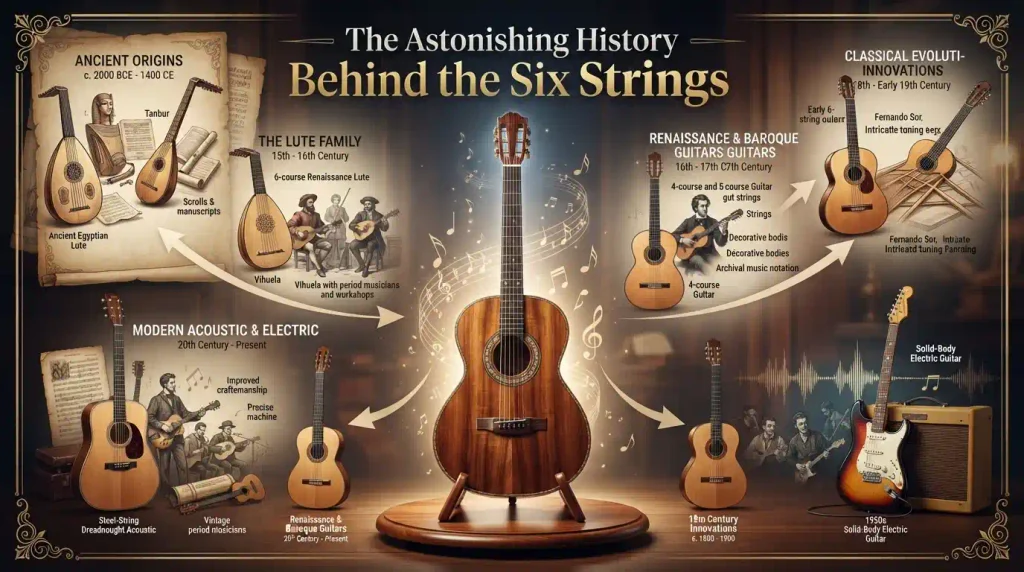
The journey of the guitar stretches back thousands of years. Early stringed instruments looked very different from what we see today. Ancient civilizations crafted simple devices using animal gut strings and carved wood. Over time, these basic designs transformed into the sleek acoustic and electric models hanging in music shops today.
The Oldest Known Guitar-Like Instrument
Archeologists discovered a 3,300-year-old stone carving depicting a Hittite musician playing a stringed instrument. This ancient device shared key traits with modern instruments, including a fretted neck and a sculpted body. It shows that humans have loved plucking strings for over thirty centuries.
How Spain Shaped the Modern Design
Antonio de Torres Jurado changed guitar history forever during the nineteenth century in Spain. He increased the body size and introduced fan bracing under the soundboard. His structural design gave acoustic guitars their rich volume and warm tonal character that we still enjoy today.
Mind-Blowing World Records and Extreme Guitars

People love pushing boundaries, and guitarists are no exception. Musicians and engineers constantly build inexplicable creations to break records and make history.
The Smallest Playable Guitar in the World
Nanotechnology scientists at Cornell University built a functioning guitar that measures just ten micrometers long. It is about the size of a single human blood cell! The tiny silicon strings must be plucked using specialized atomic force microscopy lasers.
The Largest Guitar Ever Constructed
The Academy of Arts Technology in Texas built a playable guitar measuring over sixty feet long. It weighs more than two thousand pounds and uses thick aircraft cables for strings. You need multiple people working together just to strum a single chord!
Strange Materials Used in Early Instrument Making
Modern manufacturing relies on high-grade woods like mahogany, spruce, and rosewood. However, historical luthiers used whatever materials were readily available in their local environments.
Strings Made from Animal Intestines
Before nylon and steel became popular, strings were crafted using animal gut, typically from sheep or cattle. Catgut was a common historical term, though cat intestines were actually never used. Gut strings produced a sweet tone but went out of tune quickly when humidity shifted.
Unexpected Shells and Carved Animal Bone
Early craftspeople adorned fretboards with polished seashells, mother-of-pearl, and real animal bones. In some ancient cultures, dried turtle shells formed the main sound bowl for rudimentary stringed instruments.
Fast Historical Comparisons Across Decades

Comparing different decades makes history easier and more exciting to understand. By looking at music, fashion, technology, entertainment, and major events, readers can quickly see how society changed over time. These comparisons highlight important trends, surprising differences, and cultural shifts while making historical facts simple, engaging, and memorable for everyone.
Music and Entertainment Trends
Explore how popular music, movies, television, and entertainment changed from one decade to another.
Technology Through the Decades
Discover how inventions and technological advances transformed communication, work, travel, and everyday life.
Fashion and Cultural Changes
Compare clothing styles, lifestyles, social trends, and cultural movements to see how each decade developed its unique identity.
Famous Players and Their Unusual Guitar Habits
Legendary musicians often develop unique relationships with their instruments. Their habits sometimes seem bizarre, but they helped create iconic sounds that changed popular music forever.
Jimi Hendrix Played Right-Handed Guitars Upside Down
Jimi Hendrix was left-handed, but left-handed instruments were rare and expensive in his youth. He simply flipped right-handed Fender Stratocasters upside down and re-strung them. This altered the tension on the strings and helped create his legendary tone.
Brian May Built His Instrument from a Fireplace
Queen’s lead guitarist built his famous “Red Special” guitar alongside his father in the 1960s. They used wood salvaged from an ancient oak mantlepiece and scrap metal parts. Decades later, Brian May still uses that exact homemade instrument on massive stadium tours.
How Science and Physics Make Guitars Work

When you pluck a string, it vibrates rapidly back and forth. These vibrations move through the bridge into the instrument body or electric pickups, producing the sound waves that reach your ears.
- String Vibration: Your finger or plectrum adds energy to the string, causing rapid oscillating movement.
- Bridge Transfer: The vibrating motion travels down through the bridge saddle and directly into the soundboard or pickups.
- Body Resonance: The guitar cavity amplifies the physical air movement, transforming physical motion into rich acoustic waves.
Practice Exercise:
- What material was traditionally used to make guitar strings before nylon and steel were invented?
A. Synthetic plastic
B. Twisted copper
C. Animal intestines
D. Woven silk threads - Who is widely credited with designing the modern classical acoustic guitar shape?
A. Antonio de Torres Jurado
B. Les Paul
C. Leo Fender
D. Orville Gibson - How long was the world’s largest playable guitar built in Texas?
A. 25 feet
B. 60 feet
C. 100 feet
D. 40 feet - What makes Brian May’s “Red Special” guitar unique?
A. It was made from solid gold
B. It was built using old fireplace wood
C. It has twelve necks
D. It uses laser beams instead of strings - How did Jimi Hendrix adapt right-handed guitars for his left-handed playing style?
A. He played them backwards without changing strings
B. He flipped them upside down and re-strung them
C. He added three extra strings
D. He shortened the neck - Which university crafted the world’s smallest microscopic guitar?
A. Harvard University
B. Oxford University
C. Cornell University
D. Stanford University - What part of an acoustic guitar transfers string vibrations into the instrument’s soundboard?
A. Tuning pegs
B. The bridge
C. The truss rod
D. Strap buttons - Approximately how old is the earliest known carving depicting a guitar-like instrument?
A. 500 years
B. 1,000 years
C. 3,300 years
D. 10,000 years - What metal became the standard material for electric guitar strings in the twentieth century?
A. Aluminum
B. Pure Gold
C. Nickel-wound steel
D. Titanium alloy - Which Spanish music style heavily influenced early classical guitar construction?
A. Salsa
B. Flamenco
C. Reggaeton
D. Samba
Answer Key
- C | 2. A | 3. B | 4. B | 5. B | 6. C | 7. B | 8. C | 9. C | 10. B
FAQs
1. What is the most expensive guitar ever sold?
The most expensive guitar ever sold at auction is Kurt Cobain’s 1959 Martin D-18E acoustic-electric. It sold for over six million dollars in 2020. Cobain played this instrument during Nirvana’s famous MTV Unplugged session in 1993, making it an iconic piece of rock history.
2. Who invented the first solid-body electric guitar?
Les Paul and Paul Bigsby developed early prototypes, but Leo Fender mass-produced the first commercially successful solid-body electric guitar in 1950. Originally called the Broadcaster, it later became famous worldwide as the Fender Telecaster, revolutionizing popular music production permanently.
3. Why do acoustic guitars have a hollow body?
Acoustic guitars have hollow bodies to amplify sound naturally through resonance. Plucking a string moves air inside the soundboard body, pushing acoustic waves outward through the sound hole so listeners can hear music clearly without electrical amplifiers.
4. How many strings did ancient guitar predecessors have?
Ancient predecessors typically featured four strings or four pairs of strings called courses. Over several centuries, European craftspeople added extra strings to expand the instrument’s tonal range until the standard six-string layout gained widespread adoption during the late eighteenth century.
5. Can cold weather ruin a guitar?
Yes, extreme cold and rapid temperature changes can severely damage wood instruments. Cold weather dries out moisture, causing wood fibers to shrink, crack, or warp, which ruins string action and structural integrity over extended exposure periods.
Conclusion
Exploring these fun facts guitar players and fans treasure shows just how deeply rooted this six-stringed marvel is in human history. From ancient stone carvings to microscopic nanotechnology, the guitar has constantly evolved alongside human creativity and innovation.
Behind every icon like Jimi Hendrix or Brian May lies an incredible story of ingenuity, custom craftsmanship, and structural design. Knowing the science, history, and wild world records behind your instrument adds a whole new dimension of appreciation every single time you pick up a plectrum.
Whether you are a seasoned performer or a curious beginner, there is always something new to learn about this timeless instrument. Grab your favorite axe, practice your favorite chords, and share these fascinating stories with your fellow music lovers today!

Zoey Carter is the creator and writer behind funsvibe.com, a friendly website where readers can discover interesting, entertaining, and useful content. She enjoys exploring different topics and turning fresh ideas into simple, engaging articles that are easy to understand. Zoey believes that good content should be informative while still feeling natural and enjoyable to read.
Through funsvibe.com, Zoey Carter focuses on sharing original, reader friendly content with a warm and conversational style. She enjoys researching new subjects, discovering helpful information, and presenting ideas in a clear way. Her goal is to make every visit enjoyable while giving readers something valuable to discover and remember.