
A fun facts game is an interactive trivia activity where players answer intriguing, surprising, or quirky questions across various topics. Whether played with physical cards, mobile apps, or online platforms, it turns learning into entertainment, bringing people together through friendly competition, laughter, and shared curiosity.
Have you ever wondered why flamingo feathers turn bright pink, or which country actually invented ice cream? Playing a fun facts game is easily one of the best ways to satisfy your curiosity while spending quality time with friends and family.
Whether you are hosting a cozy weekend game night, running a remote team meeting, or looking to pass the time on a long road trip, a well-planned fun facts game brings instant energy to any room. It challenges what you think you know and leaves everyone laughing over unexpected trivia.
In this ultimate guide, you will discover how to host your own event, explore top-tier trivia themes, and learn clever tricks to keep every player thoroughly engaged from start to finish.
What Makes a Fun Facts Game So Addictive?
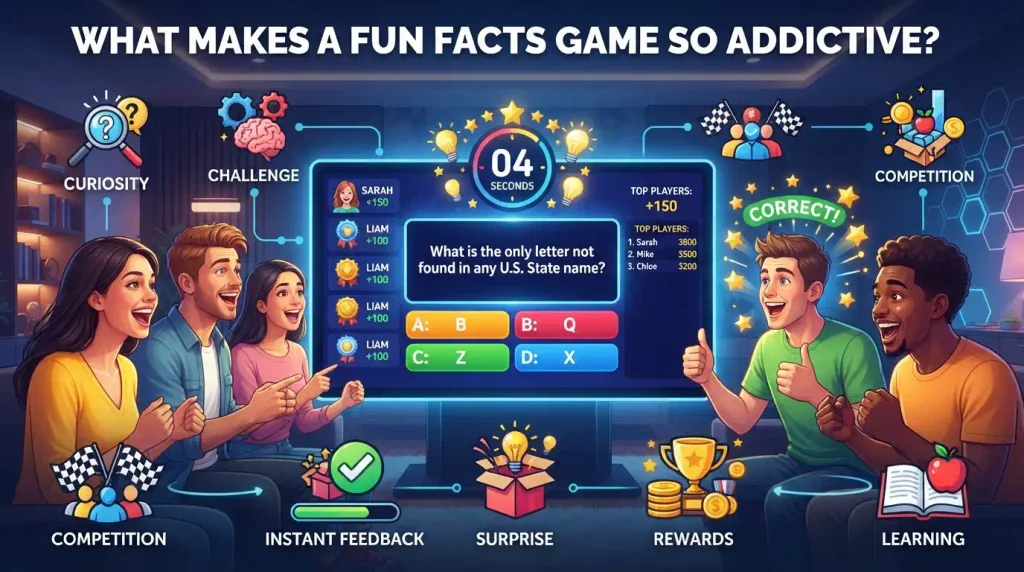
At its core, a fun facts game works because it taps directly into human curiosity. We naturally love discovering strange nuggets of truth, especially when they shock us or prove our initial guesses entirely wrong.
Unlike traditional academic quizzes that can feel like tough school exams, trivia games focus heavily on surprise and entertainment. You do not need a degree in history to win; you just need an open mind and a love for quirky information.
The Psychology Behind Trivia and Learning
When you guess a correct answer during a game, your brain releases a small splash of dopamine, which is the chemical responsible for pleasure and motivation. This instant reward system makes learning completely effortless and deeply satisfying.
Furthermore, discovering unexpected information creates a state of mind called cognitive dissonance. When a reality contradicts what you previously believed—like learning that bananas are actually berries, but strawberries are not—your brain pays extra attention to process the new information.
Social Bonding Through Shared Discovery
Playing trivia games creates immediate common ground among players of all ages. When an entire group gasps at an unbelievable piece of news together, it breaks the ice faster than almost any other party activity.
It encourages healthy debate, friendly banter, and shared laughter. You walk away from the table not just with a score, but with great memories and cool stories to share at your next dinner party.
Popular Categories for Your Next Trivia Night
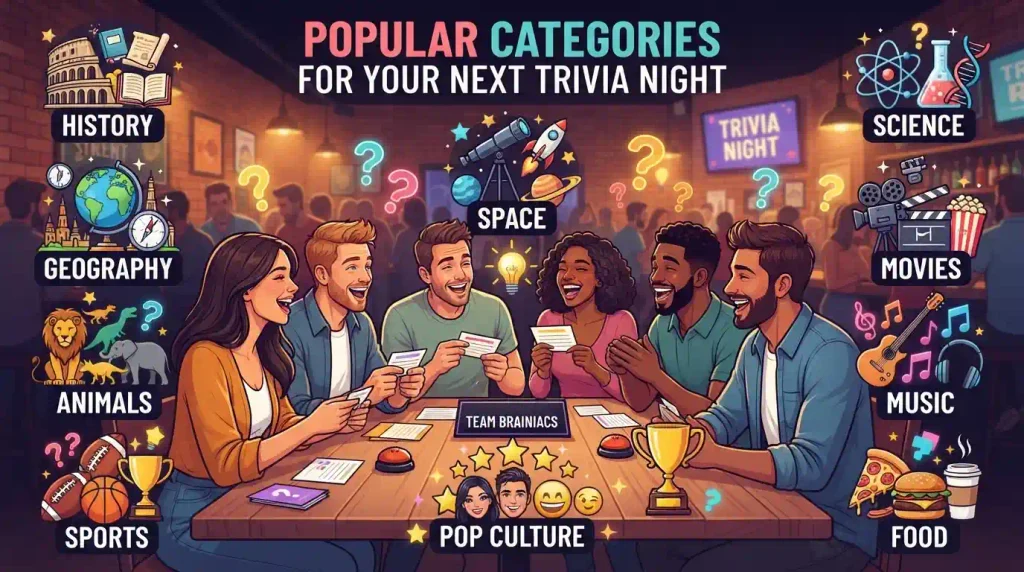
To keep your game dynamic and exciting, it helps to mix up the subjects. Rotating through diverse categories ensures that every single player gets a chance to shine in their favorite domain.
Pop Culture and Entertainment Trivia
Pop culture trivia touches on movies, trending music, popular television shows, and viral internet moments. It is usually a massive hit with mixed age groups because everyone consumes media in different ways.
- Which actor famously turned down the lead role in The Matrix?
- What was the first animated feature film ever released in full color?
- Which famous musical artist holds the record for the most Grammy wins of all time?
Strange Science and Nature Wonders
Nature is naturally full of bizarre, unbelievable facts that sound completely made up. Science rounds tend to produce the biggest reactions of disbelief from the audience.
- Wombat poop is famously shaped like a cube to prevent it from rolling away.
- An octopus actually has three functioning hearts and blue blood.
- Honey never truly spoils; archaeologists have found edible honey in ancient Egyptian tombs that is thousands of years old.
Unexpected World History Facts
History is far stranger than most high school textbooks make it out to be. Historical trivia shines a bright light on weird historical events, eccentric leaders, and odd coincidences.
- The shortest war in recorded human history lasted less than 45 minutes between Britain and Zanzibar in 1896.
- Cleopatra lived chronologically closer to the building of the first Pizza Hut than to the construction of the Great Pyramid of Giza.
- In ancient Rome, people regularly used human urine as a mouthwash to whiten their teeth.
Food, Cooking, and Culinary Quirks
Food trivia is universally relatable because everybody loves to eat. Learning about the origins of popular dishes and weird agricultural facts is always a crowd-pleaser.
- Ketchup was originally sold during the 1830s as a patent medicine to cure stomach aches.
- Apples, peaches, and strawberries all belong to the same biological family as the rose flower.
- Cashews grow on the bottom of giant tropical fruits called cashew apples.
Comparative Overview of Game Formats
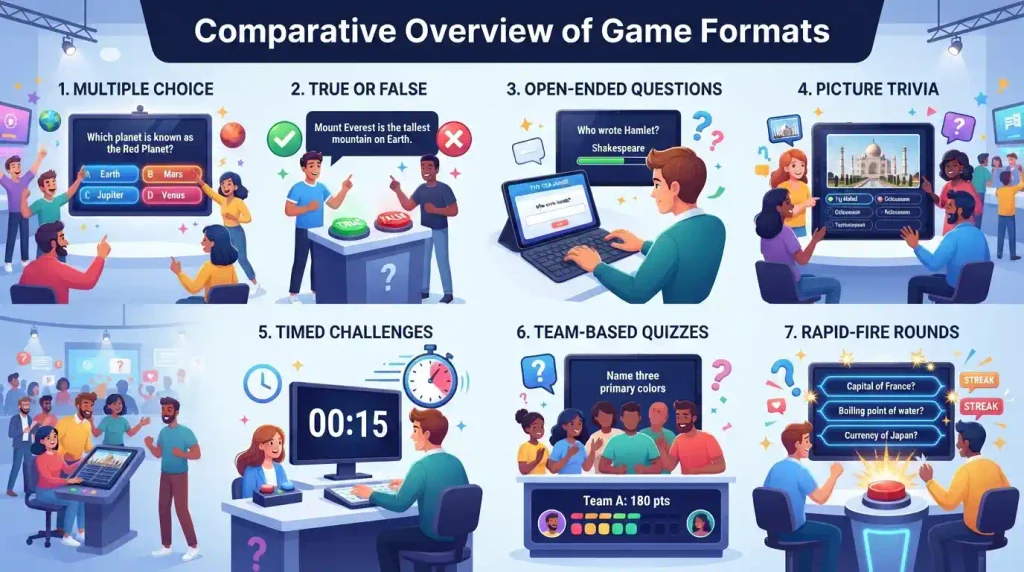
Different game formats offer unique ways to entertain, challenge, and engage players. From traditional board games to video games, quizzes, card games, and multiplayer competitions, each format creates a different experience. Understanding their features, rules, and interaction styles helps players choose games that best match their interests, skills, and preferences.
Traditional Games
Board and card games encourage face-to-face interaction, strategy, and friendly competition.
Digital Games
Video and mobile games provide immersive experiences with graphics, challenges, and interactive gameplay.
Multiplayer Games
Multiplayer formats focus on teamwork, communication, competition, and social interaction.
How to Organize a Fantastic Trivia Night at Home
Hosting a memorable game night does not require a massive budget or complex equipment. With a little strategic planning, you can transform your living room into an exciting game show arena.
Step 1: Choose an Engaging Host
The game host sets the tone for the entire event. Pick someone who is naturally energetic, articulate, and comfortable speaking in front of a group.
A great host does more than just read questions aloud. They react to unbelievable guesses, add extra context to answers, and keep the game moving forward without long awkward pauses.
Step 2: Prepare a Balanced Question Deck
Aim for a total of 30 to 40 questions split across four or five distinct rounds. Mix easy questions to build confidence with challenging questions to separate the leaders.
- Round 1: Easy warm-up questions (Multiple Choice).
- Round 2: Picture round or sound clip round.
- Round 3: Specific theme (e.g., 90s Movies or World Geography).
- Round 4: High-stakes double points lightning round.
Step 3: Set Up Comfortable Teams
If you have more than six guests, split them into small, balanced teams of three to five people. Mixing different age groups and backgrounds per team makes the competition far more balanced and fun.
Give each team scratch paper, colorful pens, and encourage them to pick a silly, creative team name. Writing down answers prevents people from shouting over each other.
Step 4: Offer Fun Prizes and Penalties
Small incentives instantly raise the stakes and make the game feel more competitive. You do not need expensive items to get people excited.
- A quirky trophy bought from a thrift store.
- A basket of gourmet snacks or chocolates.
- Bragging rights and a custom certificate.
- A lighthearted penalty for the last-place team, such as cleaning up the snack table.
Top Digital Platforms for Playing Online
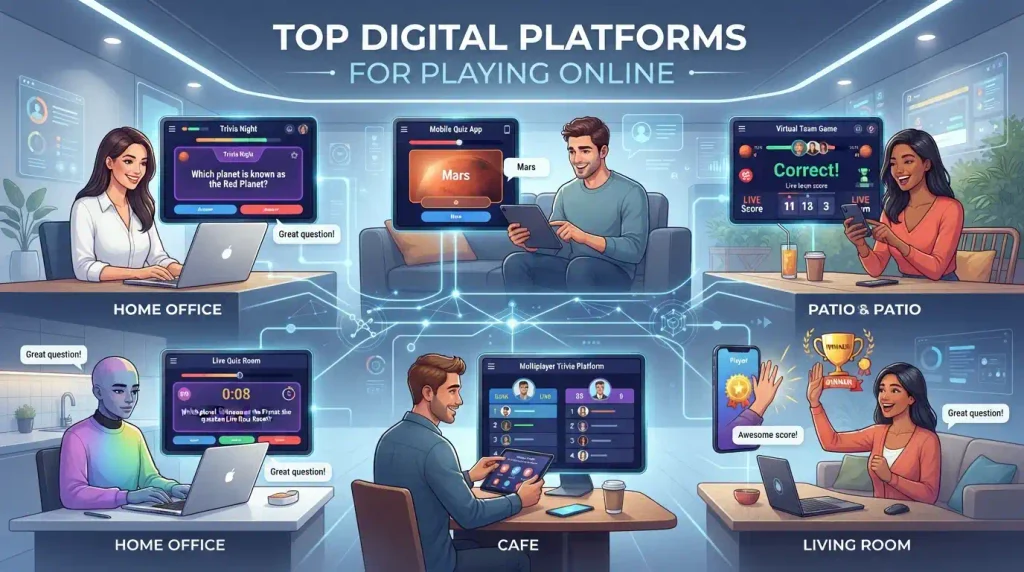
If your friends and family are spread out across the globe, digital platforms make remote gaming completely seamless. You can run high-energy trivia games right from your browser or smartphone.
Kahoot!
Kahoot! is a massive hit for corporate virtual events and classrooms alike. Players use their mobile phones as controllers to select answers displayed on a shared screen. Points are awarded for both accuracy and speed, which makes the leaderboard change constantly.
Jackbox Games
The Jackbox Party Pack series features several hilarious trivia-based titles like You Don’t Know Jack and Trivia Murder Party. It combines classic trivia with quirky humor, dark comedy, and unexpected twists that keep everyone entertained.
Crowdpurr
Crowdpurr allows creators to build custom interactive trivia games for live streaming or in-person crowds. It supports live picture rounds, video clips, and instant real-time player scoring visible on screen.
DIY Game Mechanics to Spice Up Your Rules
Standard question-and-answer setups can occasionally get repetitive after a few rounds. Try incorporating these creative twists to keep your players on their toes.
The Confidence Wager
Instead of receiving a flat point for every right answer, let teams wager between 1 and 5 points based on how confident they feel about their answer. If they are correct, they gain those points; if they are wrong, they lose them entirely.
True or False Trap
Present players with incredibly wild statements. Half of them are true, and half are clever fabrications. Teams must correctly identify the fakes without getting misled by believable stories.
The Chain Reaction
In this mode, the last word or concept of one answer leads directly into the clue for the next question. It rewards players who pay close attention to the flow of the game.
Creative Trivia Themes for Theme Nights
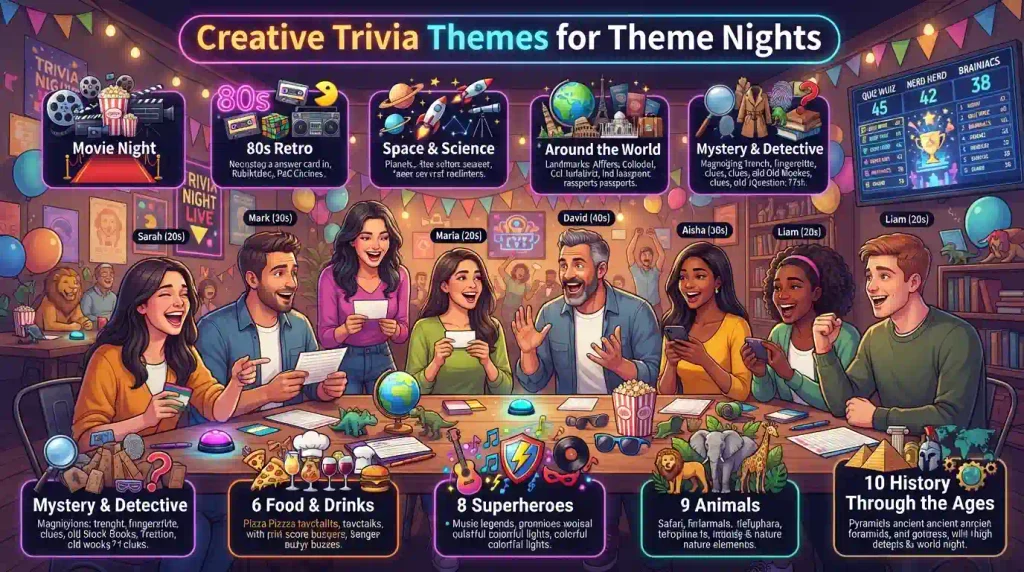
Matching your game questions to a specific holiday or gathering theme makes the entire event feel far more curated and intentional.
90s Nostalgia Night
Take your players back in time with questions focused on classic cartoons, retro video game consoles, boy bands, and famous fashion disasters of the 1990s.
Spooky Halloween Trivia
Focus entirely on urban legends, scary movie lore, real-world monsters of the deep ocean, and strange historical customs surrounding death and Halloween.
Globe-Trotter Geography
Skip simple capital cities and dive deep into peculiar regional laws, strange geographic borders, unusual national flags, and unique global traditions.
Practice Exercise
- What color is a hippo’s sweat?
A. Clear
B. Red
C. Blue
D. Yellow - Which animal is known to hold hands while sleeping so they do not drift apart?
A. Sea Otters
B. Seals
C. Dolphins
D. Penguins - What was the original color of Coca-Cola’s famous Santa Claus suit marketing standard before it became universally red?
A. Blue
B. Green
C. Santa was already dressed in red in artwork long before Coca-Cola ads
D. Purple - Which planet in our solar system spins clockwise on its axis?
A. Mars
B. Jupiter
C. Venus
D. Saturn - What is the main structural component of a bird’s feather and human fingernails?
A. Collagen
B. Keratin
C. Chitin
D. Cartilage - Which famous historical figure was once attacked by thousands of wild rabbits?
A. George Washington
B. Napoleon Bonaparte
C. Winston Churchill
D. Julius Caesar - How many hearts does a giant Pacific octopus have?
A. 1
B. 2
C. 3
D. 4 - What is the only fruit that carries its seeds on the outside?
A. Blackberry
B. Strawberry
C. Fig
D. Raspberry - In which country were modern board games first invented historically?
A. Ancient Egypt
B. China
C. Greece
D. Mesopotamia - What percentage of a watermelon is composed purely of water?
A. 75%
B. 82%
C. 92%
D. 98%
Answer Key
B, A, C, C, B, B, C, B, D, C
FAQs
1. What makes a good trivia question for parties?
A great trivia question should be intriguing and clear. It ought to spark conversation, sound surprising when answered, and avoid overly obscure or boring jargon.
2. How long should a casual trivia night last?
A standard home trivia event should run between 60 and 90 minutes. This provides plenty of time for 30 to 40 questions while keeping energy levels consistently high.
3. How do I stop players from cheating on their phones?
Establish a strict “phones away” rule before starting the game. You can collect phones in a designated basket or design fast-paced timed rounds where searching online takes too long.
4. What is the best team size for trivia?
The ideal team size is three to five players. This setup allows everyone to participate meaningfully without creating too much noise or internal debate.
5. Can I host a fun facts game online for free?
Yes, platforms like Kahoot!, Quizizz, and Google Forms allow you to create and run free interactive trivia games easily over video calls.
Conclusion
Running a fun facts game is an unbeatable way to spark joy, build connections, and learn weird facts about the world around us. Whether you prefer digital platforms or traditional physical cards, trivia brings people together effortlessly. Gathering a few friends, building your question list, and starting your own game night is simple. Give it a try soon—you will be amazed at what you learn along the way!

Zoey Carter is the creator and writer behind funsvibe.com, a friendly website where readers can discover interesting, entertaining, and useful content. She enjoys exploring different topics and turning fresh ideas into simple, engaging articles that are easy to understand. Zoey believes that good content should be informative while still feeling natural and enjoyable to read.
Through funsvibe.com, Zoey Carter focuses on sharing original, reader friendly content with a warm and conversational style. She enjoys researching new subjects, discovering helpful information, and presenting ideas in a clear way. Her goal is to make every visit enjoyable while giving readers something valuable to discover and remember.