
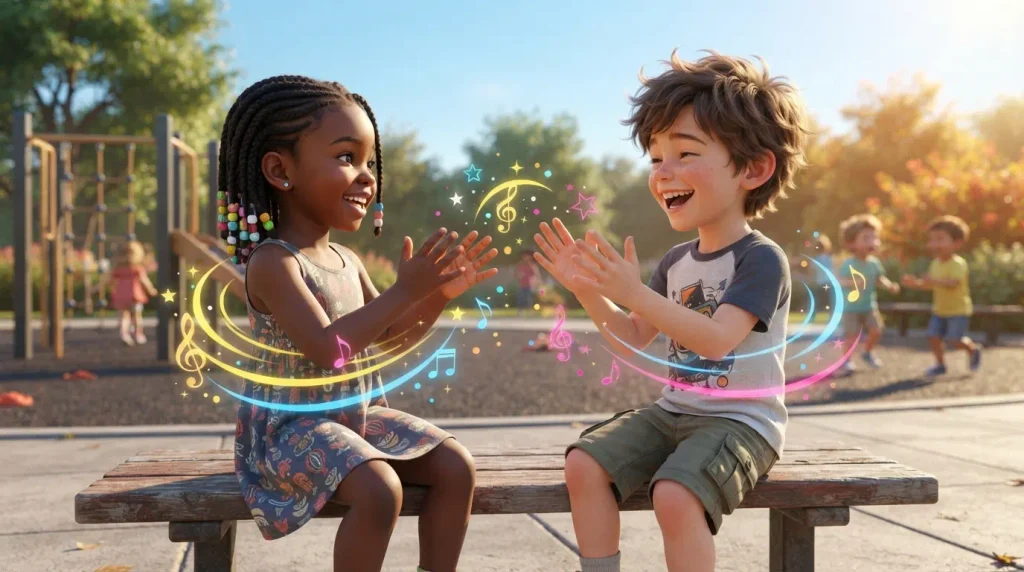
Fun hand games are quick, interactive games played using only your hands, requiring zero equipment. They range from classic strategy games like Rock Paper Scissors and Ninja to rhythmic clapping routines like Patty Cake. These games build coordination, improve focus, and provide instant entertainment for people of all ages anywhere.
Remember sitting on a long school bus ride or waiting in an endless doctor’s office line with nothing to do? We have all been there, staring at the clock and wishing time would speed up so we could finally reach our destination.
That is where fun hand games come in to save the day and turn tedious moments into exciting challenges. Learning a few simple games instantly turns boring downtime into a lively, interactive bonding experience with friends and family.
Whether you want to test your rapid reflexes or master complex clapping routines, these fun hand games offer endless entertainment. They require zero screens, batteries, or setup, making them the perfect way to stay entertained anywhere.
In this guide, we will explore everything from classic quick-reaction challenges to strategic counting routines. You will quickly discover how simple fun hand games can brighten your day and sharpen your mind at the same time!
What Are Fun Hand Games and Why Are They So Popular?
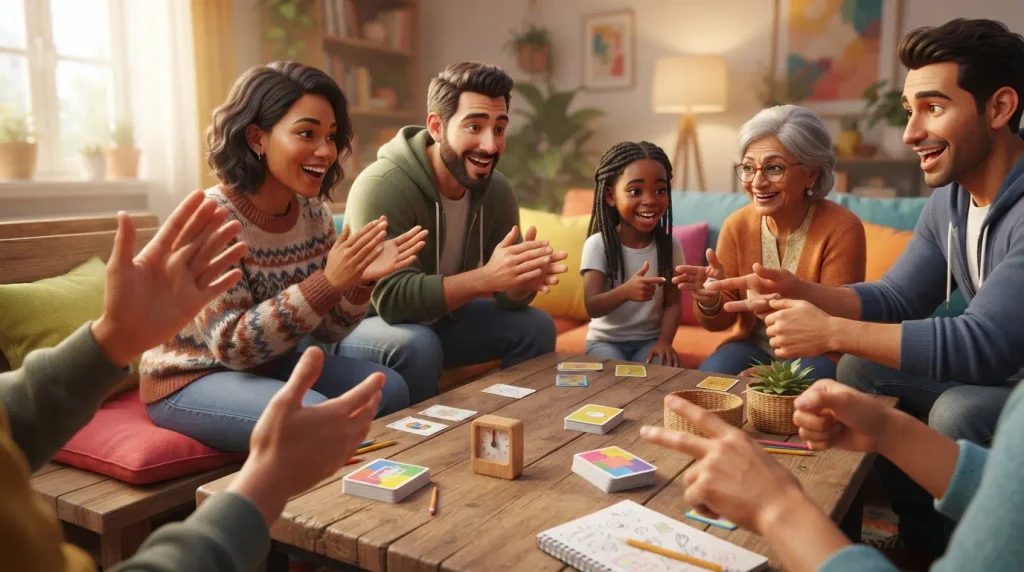
Fun hand games are simple, physical activities that two or more people play using only their hands and fingers. They do not require boards, cards, or electronic devices, which makes them completely free and portable.
These activities have existed for centuries across almost every culture on Earth. People love them because they break the ice, pass the time quickly, and bring instant laughter to any group setting.
The Brain and Body Benefits of Playing Hand Games
Playing hand games is not just a way to kill time; it is actually a fantastic workout for your brain and nervous system.
- Hand-Eye Coordination: Synchronizing your movements with a partner builds motor skills and sharpens spatial awareness.
- Cognitive Agility: Rapidly deciding which move to make next improves your reaction times and critical thinking skills.
- Memory Retention: Remembering complex clapping sequences or hidden hand patterns exercises both short-term and long-term memory.
- Social Bonding: Direct eye contact and physical interaction help build quick connections and trust between players.
Why Hand Games Outshine Digital Screens
In a world full of smartphones, hand games offer a refreshing break from blue light and digital sensory overload.
They force you to engage directly with the person sitting across from you. You cannot tap a screen to win; you have to pay attention, read body language, and move fast.
The Ultimate Classification of Hand Games
Fun hand games come in many forms, from quick competitive challenges to creative activities for groups. They can be classified by skill, number of players, movement, and setting. Understanding these categories makes it easier to choose an enjoyable activity for children, friends, families, or casual gatherings.
Competitive Hand Games
Games like Rock, Paper, Scissors focus on quick decisions and friendly competition.
Creative Hand Games
Finger patterns, rhythm challenges, and imitation games encourage creativity and coordination.
Group Hand Games
Circle games and team challenges bring several players together for interactive entertainment.
Classic Reaction and Reflex Hand Games
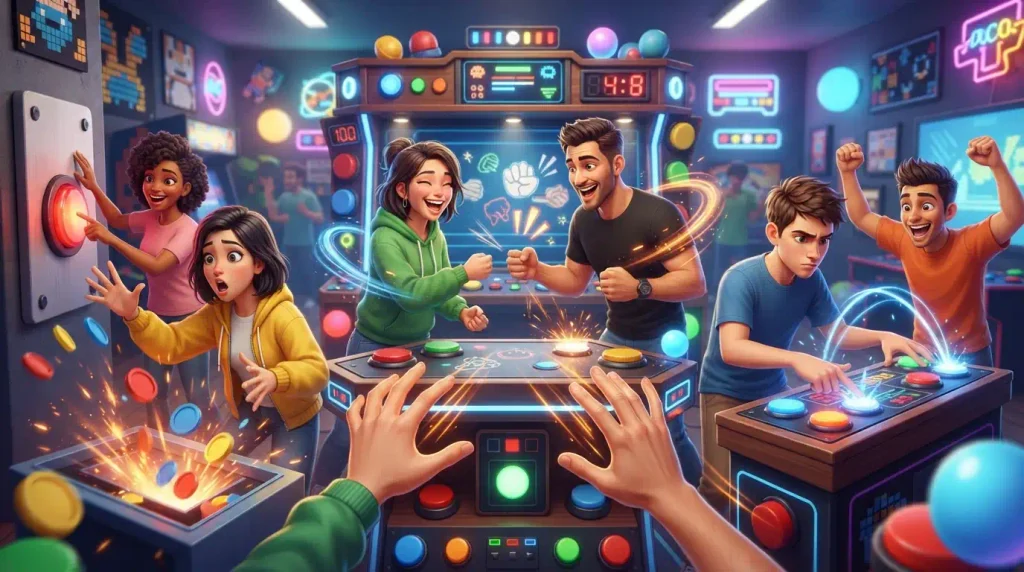
Reflex games test how fast your brain can tell your hands to move. They are fast-paced, competitive, and usually involve a lot of dramatic giggles.
Slap Hands (Red Hands)
Slap Hands is the ultimate test of pure reaction speed between two competitors.
How to Play Slap Hands Step-by-Step
- Player A places their hands palms-up at waist level.
- Player B places their hands directly over Player A’s hands, facing palms-down, hovering lightly without touching.
- Player A attempts to quickly pull one or both hands out and slap the back of Player B’s hands.
- If Player A hits Player B, Player A gets another turn. If Player B dodges in time, the players swap roles.
Tips for Winning
Try to throw off your opponent’s rhythm by flinching slightly without actually committing to a full slap. Watching your opponent’s wrists instead of their fingers gives you a split-second head start on dodging.
Ninja
Ninja is a dynamic, full-body hand game that feels like stepping straight into an action movie.
Setting Up the Game
All players stand in a circle, touching shoulder to shoulder. On the count of three, everyone shouts “NINJA!” and jumps backward into a striking martial arts pose.
Playing and Eliminating Opponents
- Players take turns moving in a strict clockwise order.
- On your turn, you can make one single continuous motion to strike an opponent’s hand or wrist.
- If you swipe at an opponent, they can make one single defensive motion to dodge your attack.
- If your hand hits an opponent’s hand or arm below the elbow, that arm is out and must be placed behind their back.
- If both of a player’s arms are hit, they are eliminated from the circle.
Strategy and Counting Hand Games
If you prefer games that require tactical thinking over raw physical speed, counting and strategy hand games are perfect choices.
Chopsticks
Chopsticks is a mathematical strategy game played with fingers, where simple addition determines the winner.
Basic Rules of Chopsticks
Both players start by holding out two hands, with one index finger extended on each hand. This represents a value of one on each hand.
Making Moves and Transferring Points
- Player A uses one of their hands to tap one of Player B’s hands.
- The number of fingers on Player A’s tapping hand is added to the total on Player B’s receiving hand.
- For example, if your hand has 1 finger and you tap an opponent’s hand with 1 finger, their hand now shows 2 fingers.
- If a hand reaches exactly 5 fingers (or more, depending on house rules), that hand is “dead” and must be folded into a fist.
- A player loses when both of their hands are out of the game.
Split Rules
If you have a hand with 4 fingers and your other hand is dead, you can use your turn to “split” your score, redistributing fingers so both hands have 2.
Rock Paper Scissors (And Advanced Variations)
Everyone knows the basic rules: Rock beats Scissors, Scissors beats Paper, and Paper beats Rock.
The Psychology of Winning
Most casual players do not throw completely random moves. Male players statistically open with Rock more often than any other move.
If someone loses a round, they are very likely to switch to the move that would have beaten the throw that just defeated them.
Rock Paper Scissors Lizard Spock
Popularized by modern pop culture, this expanded version adds two new hand signs to reduce ties in larger groups:
- Scissors cuts Paper and decapitates Lizard.
- Paper covers Rock and disproves Spock.
- Rock crushes Lizard and smashes Scissors.
- Lizard poisons Spock and eats Paper.
- Spock smashes Scissors and vaporizes Rock.
Rhythmic Clapping Hand Games
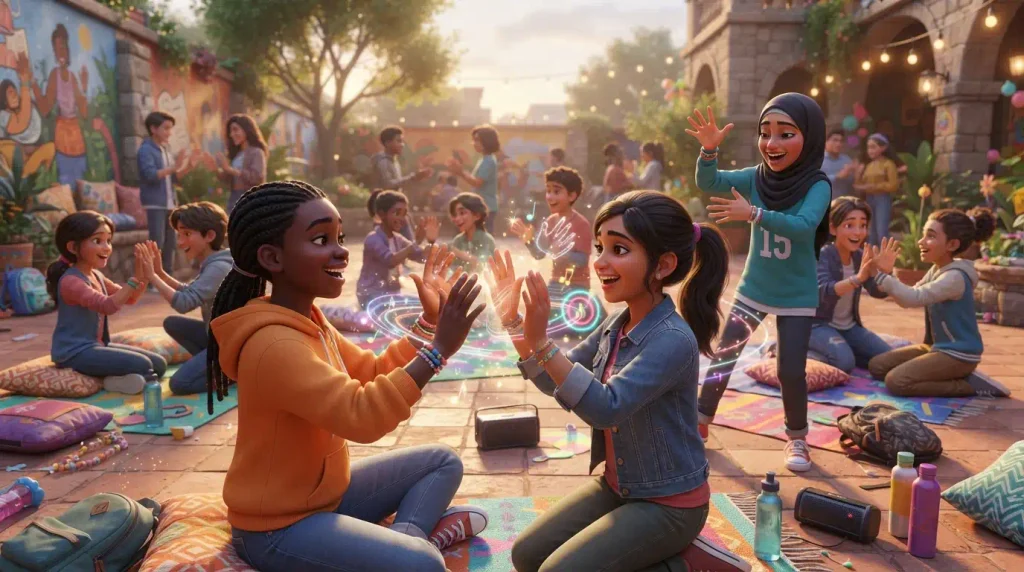
Rhythmic clapping games combine vocal chants, physical beats, and memory. They are wonderful for building coordination and social bonding.
Patty Cake (Pat-a-Cake)
Patty Cake is one of the oldest recorded nursery rhyme hand games, making it ideal for younger kids learning motor skills.
Steps for Patty Cake
- Alternate clapping your own hands with slapping your partner’s hands open-palmed.
- Sing: “Pat-a-cake, pat-a-cake, baker’s man. Bake me a cake as fast as you can.”
- Roll your hands over each other when singing “Roll it.”
- Pat your hands on your knees when singing “Mark it.”
- Trace the letter “B” in the air and end with a big double palm clap to “Put it in the oven for baby and me.”
Miss Mary Mack
Miss Mary Mack is a staple playground game across North America, famous for its strict three-part clapping cadence.
The Classic Clapping Sequence
- Beat 1: Cross your arms over your chest and tap your shoulders.
- Beat 2: Uncross your arms and slap your own thighs.
- Beat 3: Clap your own hands together in front of your chest.
- Beat 4: Clap your right hand to your partner’s right hand.
- Beat 5: Clap your left hand to your partner’s left hand.
- Beat 6: Clap both hands against your partner’s hands.
Repeat this rhythm continuously while singing the classic rhyme about Miss Mary Mack dressed in buttons down her back.
Group Hand Games for Parties and Campfires
When you have four or more people, hand games become chaotic, hilarious group activities that break down awkwardness instantly.
Down by the Banks
This classic elimination game keeps everyone on their toes while sitting in a circle.
How to Circle Up
- Everyone sits in a circle, holding their hands out to the sides.
- Place your right palm face-up over your neighbor’s left palm.
- Pass a slap clockwise around the circle on every beat of the song: “Down by the banks of the hanky panky, where the bullfrogs jump from bank to banky…”
The Sudden Elimination Moment
The song ends with the words: “With an eeps, ipps, opps, flop, play SLAP!”
The player whose hand is about to be slapped on the word “SLAP” must pull their hand away in time. If they get slapped, they are out. If they pull away safely, the slapper is out!
Concentration 64
Concentration 64 demands steady timing, fast speech, and a deep memory pool.
Maintaining the Beat
Keep a steady rhythm by completing four motions: tap thighs twice, clap hands twice, snap right fingers, snap left fingers.
Naming the Categories
Speak in sync with the snaps. The leader chants: “Concentration (snap snap), sixty-four (snap snap), no hesitate (snap snap), or repeat (snap snap). Category is (snap snap)… Names of Fruits!”
Players take turns naming items in that category on the snaps without breaking the beat or repeating an answer.
How to Teach Hand Games to Beginners
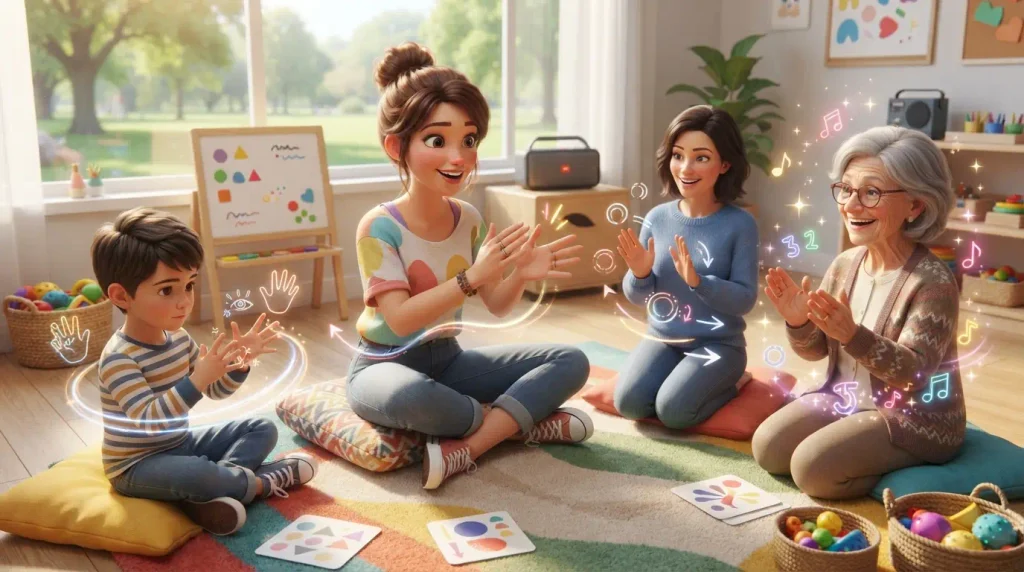
Introducing fun hand games to newcomers can be tricky if you move too quickly. Following a gentle, progressive method ensures everyone learns without feeling stressed.
Start with Slow-Motion Demos
Demonstrate the hand patterns at one-third of normal speed. Break down complicated clapping patterns into two-piece chunks before stitching the whole routine together.
Use Verbal Cues
Attach clear vocal words to movements. Saying “Cross, Thighs, Clap, Partner” out loud creates an auditory pathway in the brain that makes physical muscle memory develop much faster.
Practice Exercise:
Understanding Fun Hand Games
1. What makes a hand game easy to play?
A. Expensive equipment
B. A large playing area
C. Simple movements and few materials
D. Complicated instructions
2. Which activity is commonly played using hand movements?
A. Rock, Paper, Scissors
B. Swimming races
C. Treasure hunting
D. Bicycle racing
3. Why can hand games work well during short breaks?
A. They need hours of preparation
B. Most can begin quickly
C. They require outdoor equipment
D. Players must build a game board
Playing With Friends and Family
4. Which choice can make a hand game more enjoyable with friends?
A. Adding friendly challenges
B. Removing all interaction
C. Making every round silent
D. Using complicated equipment
5. What is a useful way to include younger children?
A. Increase the difficulty immediately
B. Use complicated scoring
C. Keep instructions simple
D. Require advanced skills
6. When several people want to join, what can help?
A. Ending the activity
B. Creating turns or small groups
C. Limiting play to one person
D. Removing the rules
Creative Hand Game Ideas
7. Which activity can encourage quick thinking?
A. Silent reading
B. Drawing alone
C. Watching a movie
D. Fast-response hand challenges
8. How can players create a new hand game?
A. Combine simple movements with clear rules
B. Avoid explaining the objective
C. Remove turns completely
D. Make every round identical
9. What can improve a hand game’s replay value?
A. Using the same challenge every time
B. Adding different rounds or variations
C. Making participation optional for everyone
D. Removing interaction between players
Quick Review
10. Where can many fun hand games be played?
A. Only in sports centers
B. Only on playgrounds
C. In many indoor or outdoor settings
D. Only in classrooms
Answer Key: 1. C | 2. A | 3. B | 4. A | 5. C | 6. B | 7. D | 8. A | 9. B | 10. C B | 8: C | 9: B | 10: B
FAQs
1. What are fun hand games?
Fun hand games are physical, interactive activities played using only your hands and fingers. They require no equipment or devices, making them great portable choices for children and adults to pass the time anywhere while building coordination and focus.
2. Why are hand games good for child development?
Hand games build crucial fine motor skills, bilateral coordination, and hand-eye balance in young children. They also support social growth by teaching turn-taking, rhythm, eye contact, and cooperative play without relying on screen entertainment.
3. How do you win at Chopsticks every time?
Winning at Chopsticks consistently requires tracking future mathematical combinations and utilizing splits effectively. Focus on forcing your opponent into asymmetrical finger counts that make it impossible for them to attack without eliminating their own remaining hand.
4. Can hand games help improve reaction speed?
Yes, reflex-based hand games like Slap Hands and Ninja directly challenge your central nervous system to react quickly to physical cues. Practicing these games sharpens visual recognition, decreases reflex lag, and improves spatial awareness under pressure.
5. Are hand games suitable for adults during team building?
Absolutely, hand games serve as fantastic, lighthearted icebreakers for adult workplace teams or social gatherings. Games like Ninja or Rock Paper Scissors tournaments reduce awkwardness, encourage healthy competition, and create shared laughter very quickly.
Conclusion
Learning a wide collection of fun hand games is one of the easiest ways to bring instant entertainment to any setting. Whether you are stuck in a crowded waiting room or gathering around a campfire, these simple activities offer unmatched social connection and quick mental stimulation.
From fast-paced reflex tests to deep strategic counting, there is a distinct style of play suitable for every age and group size. You do not need expensive technology or long setup times to enjoy these versatile fun hand games with your friends and family.
Next time you find yourself reaching for your smartphone out of habit, challenge the person next to you to a round of fun hand games instead! You will be amazed at how quickly laughter fills the room when you trade screen time for genuine interaction.

Zoey Carter is the creator and writer behind funsvibe.com, a friendly website where readers can discover interesting, entertaining, and useful content. She enjoys exploring different topics and turning fresh ideas into simple, engaging articles that are easy to understand. Zoey believes that good content should be informative while still feeling natural and enjoyable to read.
Through funsvibe.com, Zoey Carter focuses on sharing original, reader friendly content with a warm and conversational style. She enjoys researching new subjects, discovering helpful information, and presenting ideas in a clear way. Her goal is to make every visit enjoyable while giving readers something valuable to discover and remember.